

Partition’s unresolved legacy continues to shape Pakistan’s instability, say Shashi Tharoor and Declan Walsh
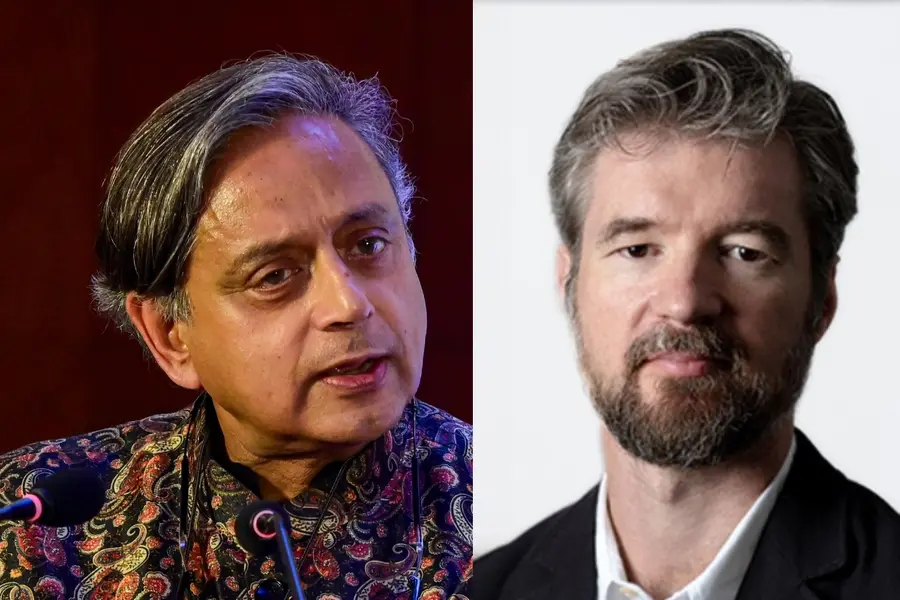
Speaking at the session ‘Shadows That Refuse to Fade’, Dr Shashi Tharoor and Declan Walsh argued that the events of 1947 remain an active force in Pakistan’s national psyche, influencing its institutions, politics, and relationship with India even decades later.
Walsh, who lived and reported from Pakistan for nearly a decade, said Partition was not merely a historical rupture but a continuing psychological condition. “The border is not just a line on a map,” he observed, noting that the violence, chaos, and displacement of 1947 still weigh heavily on the country’s sense of insecurity.
He added that when he began researching for his book ‘The Nine Lives of Pakistan: Dispatches from a Precarious State’, history became unavoidable. Because “the catastrophic events of Partition, the bloodshed, the chaos — all of it still weighs heavily”.
He also pointed to British responsibility in how Partition unfolded, stating that colonial officials had largely escaped moral and political accountability for the manner in which the subcontinent was divided. The hurried transfer of power, he argued, left behind fragile institutions and unresolved conflicts that continue to haunt the region.
Dr Tharoor reinforced this view by situating Pakistan’s post-Partition trajectory within a cycle of mistrust and failed peace efforts. Referring to India–Pakistan relations, he said every major Indian attempt at reconciliation had eventually collapsed due to violence or betrayal, from Kargil and the Mumbai attacks to Pathankot and Pulwama. These repeated breakdowns, he noted, have prevented Pakistan from escaping what he described as its “founding anxieties”.
The discussion also highlighted how colonial-era structures shaped Pakistan’s internal power dynamics. Walsh traced a direct continuity between British security frameworks and the dominance of Pakistan’s military establishment. “Structurally, the intelligence services and military power are rooted in colonial design — meant to control a frontier rather than govern a citizenry,” he said, noting that Pakistan inherited an army larger than the state could sustain. As a result, he pointed out, Pakistan’s very first national budget allocated nearly 67 per cent to defence.
Tharoor summed up this imbalance with a pointed observation: “In India, the state has an army. In Pakistan, the army has a state.” He argued that this structural reality has made civilian governance fragile and reform difficult, with power repeatedly consolidating in unelected institutions.
Both speakers agreed that Pakistan’s continued entanglement with the legacy of Partition has hindered its ability to imagine new national narratives. Walsh remarked that the country remains “trapped in repeating patterns — without new national stories or directions”, while Tharoor stressed that India, by contrast, has increasingly outgrown its hyphenation with Pakistan economically and diplomatically, though it is repeatedly pulled back by unresolved tensions.
The session placed present-day instability within a long historical continuum, moving the conversation beyond immediate provocations. By linking contemporary crises to the unresolved trauma of 1947, the speakers offered a deeper explanation for why reform, civilian supremacy, and lasting peace in Pakistan have remained elusive.
In doing so, the dialogue at MBIFL underscored a central insight: that without confronting the shadows of Partition, the region continues to relive them.
Published: 31 Jan 2026, 07:27 pm IST
ABOUT THE AUTHOR
Related Topics
Disclaimer: Kindly avoid objectionable, derogatory, unlawful and lewd comments, while responding to reports. Such comments are punishable under cyber laws. Please keep away from personal attacks. The opinions expressed here are the personal opinions of readers and not that of Mathrubhumi.