

Poets play with time. We freeze a moment on the page
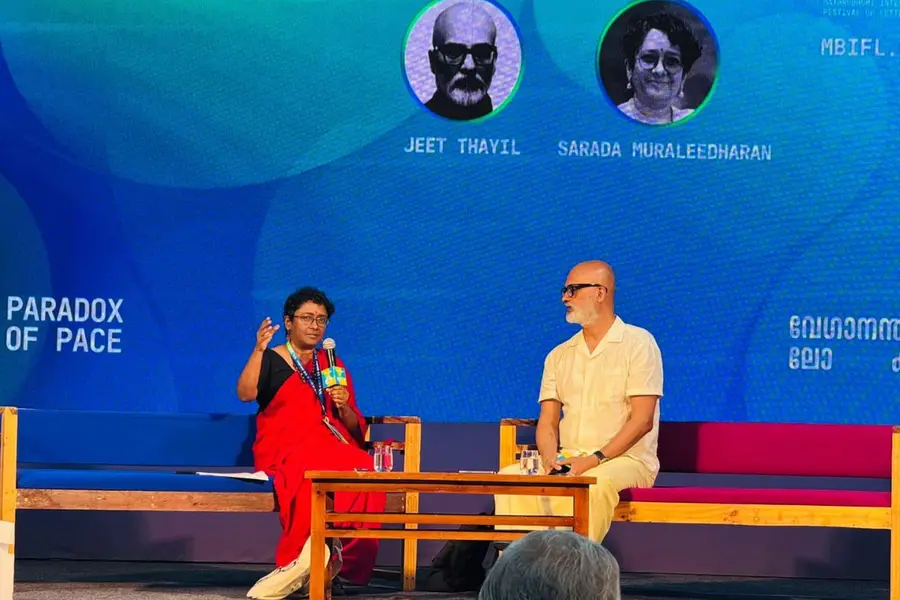
At the Mathrubhumi International Festival of Letters (MBIFL) 2026, the session titled “The Intoxication of Words” brought poet-novelist-musician Jeet Thayil into conversation with Sarada Muraleedharan and what followed was less a formal literary discussion and more an unmasked, reflective walk through how writing is born, shaped and survived.
Jeet Thayil, Sahitya Akademi Award-winning poet and author of Narcopolis and Elsewhereans spoke about form, grief, rhythm, displacement and the strange honesty poetry demands. The conversation moved between craft and confession, with Thayil often answering with disarming candour and dry wit.
Here are excerpts from the conversation:
Q: You’ve said you don’t like rigidly categorising prose and poetry. When you sit down to write, how do you decide the form?
Jeet Thayil: You never really know what form a piece will take until you begin. A poem and a novel come from very different emotional states for me. I write novels when I’m unhappy, it’s like a 9-to-5 job. Poetry happens when I’m happy. A poem pushes itself through you. A novel is a journey of years. Moments of inspiration are rare there and you are your own boss, which makes it worse, because that boss is incredibly demanding.
Q: When does the moment of epiphany happen — what triggers a poem?
Jeet Thayil: Usually a line or an image. Sometimes something I overhear in a conversation. It strikes in a particular way and I know something will come of it, so I note it down. Poets play with time. We freeze a moment on the page. When you manage to transpose that instant truthfully, that’s the poem.
Q: Your poetry collections are structured as personal, political and intensely personal. Why that design?
Jeet Thayil: The sections are equal in size. The first is personal but universal, readers often find entry there. The second responds to changes India has been subjected to in recent years, often against our intentions. The third deals with grief. Even at its most private, there are moments where readers move past the obscurity and find recognition.
Q: Why put yourself out there so personally in poetry?
Jeet Thayil: There must be something wrong with me to put it all out there for strangers to read. I would actually advise poets against it. But grief has its own mechanics. When you lose someone and people come to console you, you often end up consoling them. Writing can function like ritual and rituals exist for a reason.
Q: What is it like to read such personal poems in public?
Jeet Thayil: Strange. The public mask we wear, it slips when you read a poem aloud. It strips something away. It’s a vulnerable act.
Q: There’s a strong sense of memory, death and return in your work — almost a compulsion to revisit.
Jeet Thayil: Experience drains through you if you don’t write it. Travel, loss, shock, they pass unless structured on the page. Only when you write do you understand what happened. A poem teaches you something about the moment. Often you understand it only later. There are secrets inside poems, that’s one of their greatest values.
Q: You’re also a musician. There’s rhythm in your poetry — but not always a pleasing rhythm. Is that intentional?
Jeet Thayil: Yes. Rhythm doesn’t have to be pleasurable. But I never listen to music while writing. If there are lyrics playing, it’s fatal, it kills the complex rhythm of what you’re trying to make on the page.
Q: Displacement and dislocation appear in both your poetry and your novel Elsewhereans. Who are the “Elsewhereans”?
Jeet Thayil: It’s about a couple who’ve lived outside Kerala too long and discover that Kerala is no longer home in the way they imagined. Cities change. You change. You feel you don’t belong. That sense of emotional migration — that’s where the title “Elsewhereans” comes from.
Published: 31 Jan 2026, 04:07 pm IST
ABOUT THE AUTHOR
Related Topics
Disclaimer: Kindly avoid objectionable, derogatory, unlawful and lewd comments, while responding to reports. Such comments are punishable under cyber laws. Please keep away from personal attacks. The opinions expressed here are the personal opinions of readers and not that of Mathrubhumi.