
CCEA approves 57 new Kendriya Vidyalayas across India, with ₹5862 Cr outlay. Expansion aims to meet demand, create jobs, and offer uniform education to 86,640 students.
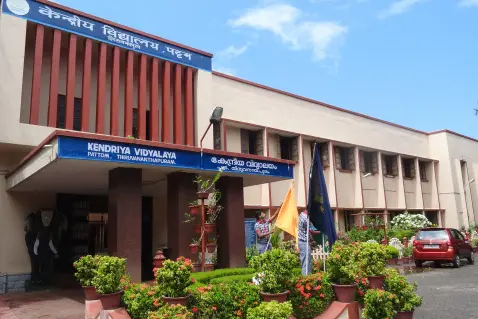
New Delhi: The Cabinet Committee on Economic Affairs (CCEA), chaired by Prime Minister Narendra Modi, on Wednesday approved the opening of 57 new Kendriya Vidyalayas (KVs) under the civil sector across India, with a total outlay of over ₹5,862 crore. The expansion will be implemented over nine years from 2026-27.
The plan includes capital expenditure of approximately ₹2,585.52 crore and operational expenditure of around ₹3,277.03 crore. Of the 57 new KVs, 20 will be established in districts that currently have no KV despite a significant population of Central government employees. Additionally, 14 KVs are planned for Aspirational districts, four in left-wing extremism-affected areas, and five in the North East and hilly regions.
The proposal, along with the earlier approval for 85 KVs, aims to meet growing demand while ensuring pan-India expansion. Seven KVs will be sponsored by the Ministry of Home Affairs, with the remaining 50 under state or union territory authorities.
Each full-fledged KV, catering to approximately 1,520 students from Balvatika to Class 12, employs 81 staff. With the new approvals, around 86,640 students will benefit, and 4,617 direct permanent employment opportunities will be created. Construction and allied activities will also provide jobs for many skilled and unskilled workers.
Kendriya Vidyalayas were first approved in November 1962 to provide uniform-quality education for the children of transferable and non-transferable Central government employees, including those in Defence and Paramilitary forces. The “Central Schools Organisation” operates under the Ministry of Education. Currently, there are 1,288 functional KVs, including three abroad in Moscow, Kathmandu and Tehran, with a total enrolment of about 1.36 million students as of 30 June.
IANS
Published: 01 Oct 2025, 04:36 pm IST
Disclaimer: Kindly avoid objectionable, derogatory, unlawful and lewd comments, while responding to reports. Such comments are punishable under cyber laws. Please keep away from personal attacks. The opinions expressed here are the personal opinions of readers and not that of Mathrubhumi.
