
As Pope Francis, one of the greatest revolutionaries in the history of Christianity, has passed into history, the world eagerly awaits his successor.
He personified and also led the tectonic changes which are transforming the global Catholic Church. Francis was the first non-European Pope in the last 1200 years and the first Latin American, the first Jesuit, and the first from the Southern Hemisphere to head the Catholic Church. More than a symbol of change, he was a change-maker too. Pope Francis stood out from all his predecessors in his relentless efforts to make the Church less elitist and more inclusive. He appointed women as full voting members in the synods to transform the notoriously male-dominated Church. He stood for migrant and marginalised communities to emphasise the importance of social justice and softened the homophobic Catholic Church’s approach towards sexual minorities and divorcees. He kept away from the ostentatious ways of the Church leadership to embrace the poor and the humble. He opened the doors of the traditionally European-dominated Catholic Church leadership to members from Asia, Africa and Latin America. Even representatives from small countries in Africa and Asia found a place in the all-powerful Collegium of Cardinals, thanks to Francis.
Also Read

So all eyes are now on the Vatican to know if Pope Francis’s successor, to be elected by the Collegium of Cardinals by May second week, will be a person who will take his inclusive and truly catholic vision forward, in both body and spirit. Logically, the next step after Francis’s revolutionary innings should be to elect a pontiff from either Asia or Africa, which are also the continents where the Catholic Church has a growing presence in contrast to its European citadels, where it is losing clout. Though there are cardinals who are “papabile” (potential candidates to be pontiff), a Pope from these continents may have to wait for some more time to come. Europe still dominates the 252-member Collegium of Cardinals, of which 136 are below 80 years with voting power to elect the new pope. Next comes Asia, which has 37 cardinals of whom only 24 are electors, constituting only 17% of the collegium. Africa is third with 11 of its 18 cardinals being electors. Latin America, from which Pope Francis came, has 15 electors among its 17 cardinals. Though the numerical strength of Cardinals from regions matters much in deciding the pontiff, it isn't the only factor, as the Latin American Francis’s unexpected election in 2013 demonstrated.
Therefore, a pope from Asia or Africa is not impossible, though it is improbable for now. The 37 cardinals from Asia belong to 18 countries, and India tops with six of them. Among them, as many as three belong to Kerala: Cardinal George Alancherry (80), Major Archbishop Emeritus of Syro Malabar Church; Cardinal Mar Baselios Cleemis Thottunkal (65), Major Archbishop of Syro Malankara Church; and Cardinal George Jacob Koovakad (51), the Vatican-based Prefect of the Dicastery for Interreligious Dialogue, who is the first Indian directly elected by Pope Francis. The other three Indian Cardinals are Oswald Garcia (80), Archbishop of Mumbai, Filipe Neri Antonio Sebastiano do Rozario Ferraro (72), Archbishop of Goa and Daman and Anthony Poola (63), Archbishop of Hyderabad, who made history as the first Indian Dalit Cardinal. All the three belong to the Latin Catholic rite whereas those from Kerala belong to the Syro Malabar Church. However, only four of the Indian cardinals have voting power as Alancherry and Garcia have reached 80.
Though Indians are in the majority among the current Asian Cardinals, the most “papabile” is considered to be Luis Antonio Tagle (68) of the Philippines, the former Archbishop of Manila, according to experts, if the mantle falls on an Asian. Tagle was very close to Pope Francis, and is even called the “Asian Francis”. His biggest hurdle to becoming the pontiff is said to be that he is too progressive! Though Tagle defends the Church’s traditional opposition to abortion and contraception, he is openly sympathetic to the poor, the LGBTQ community and also divorcees. The second in line among Asian cardinals, according to many Church observers, is India’s Oswald Garcia, though his age is a key hurdle. The third prominent Asian papabile is Cardinal Ignatius Suharyo (74) of Indonesia. Though not seen as a front runner, the Archbishop of Jakarta is seen as a symbolic candidate from the world’s largest Muslim majority country with a sizable Catholic minority.
Will we ever see an Indian Pope? India is home to one of the largest Catholic communities in Asia, with an estimated 23 million members, of whom most belong to the Latin rite. Kerala has the largest Catholic community, numbering nearly 4 million, and has the largest contingent of priests (40000) and nuns (25000). Among the seven saints canonised by the Catholic Church with Indian links, four are from Kerala. All of them were elevated to sainthood during Pope Francis time. There are many more from the state who are at various stages of the canonisation process.
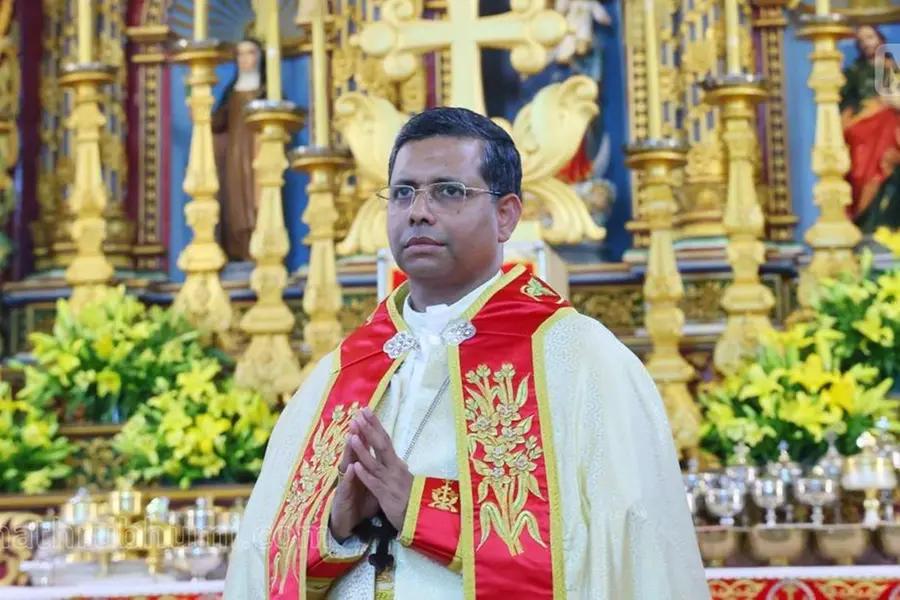
What has made the chances of seeing not just an Indian but a Malayali pope in the future brighter is the recent and phenomenal rise of Cardinal George Jacob Koovakad within the Holy See. The first Indian to be directly selected by Pope Francis as Cardinal (December 2024), Koovakad, at 51, is now the most important member in the Vatican’s highest echelon, a position no other Indian prelates have ever held. He has now been put in charge to lead the ceremonial and procedural steps for conducting the conclave of Cardinals to elect the new pope.
Look at what the Catholic Bishops Conference of India’s portal, Catholic Connect, says of Koovakad’s present role in the new pontiff’s election: One of his primary duties will be to publicly draw lots to assign roles to nine cardinal electors: three Scrutineers, who count the votes; three Infirmarii, who collect ballots from electors unable to be present in the Sistine Chapel due to illness; and three Revisers, who verify the accuracy of the vote count. This ritual act, conducted within the Sistine Chapel, marks the formal commencement of the conclave’s voting process. In addition, Cardinal Koovakad will oversee the opening and closing of the Sistine Chapel doors whenever necessary, such as when the Infirmarii leave to gather votes from the electors who are ill and when they return. He will also supervise the burning of ballots, conducted immediately after vote verification, in the presence of the Scrutineers, the Secretary of the Conclave, and the Masters of Ceremonies.
Upon the successful election of a new pope, it will be Cardinal Koovakkad’s duty to summon the Secretary of the College of Cardinals and the Master of Papal Liturgical Celebrations into the hall of election to initiate preparations for the official announcement of the new pontiff.
Born in 1973 in Thiruvananthapuram, Koovakkad belonged to Chethipuzha under the Changanassery diocese. Ordained as a priest in 2004, he entered the Holy See Diplomatic Services two years later. A personal favourite of Pope Francis, he served in apostolic nunciature at various Asian, Latin American and African countries like Algeria, South Korea, Iran, Costa Rica, Venezuela. In 2021, Pope appointed Koovakkad as the head of the organisation of Apostolic Journeys and has been widely credited for the highly successful international visits of the pontiff. In October 2024, he was appointed titular archbishop of Nisbis of the Chaldeans in Turkey and subsequently received episcopal ordination from Mar Raphael Thattel, major archbishop of the Syro-Malabar Church’s Ernakulam-Angamaly archdiocese.
When Koovakad was anointed Cardinal at St Peter’s Basilica, Prime Minister Narendra Modi hailed it as a moment of great joy and pride for India. At that time, India Today wrote about an incident that sheds light on Koovakad’s closeness to the pope: “Beyond his professional accomplishments, Koovakad's personal qualities have endeared him to the Pope. A touching anecdote highlights their bond: when Koovakad's 95-year-old grandmother fell ill, Pope Francis personally video-called her, expressing his concern and offering words of comfort. The Pope spoke in Italian, with Koovakad translating into Malayalam. The pontiff reportedly continued to inquire about her health in subsequent interactions, underscoring the deep connection between the two.”.
Let’s await the day when Cardinal Koovakad will have his tryst with destiny.
Published: 26 Apr 2025, 09:58 am IST
Related Topics
Disclaimer: Kindly avoid objectionable, derogatory, unlawful and lewd comments, while responding to reports. Such comments are punishable under cyber laws. Please keep away from personal attacks. The opinions expressed here are the personal opinions of readers and not that of Mathrubhumi.