
CJP is not a political party in the conventional sense. It was born out of the angry reaction of one person, Mr Abhijeet Dipke
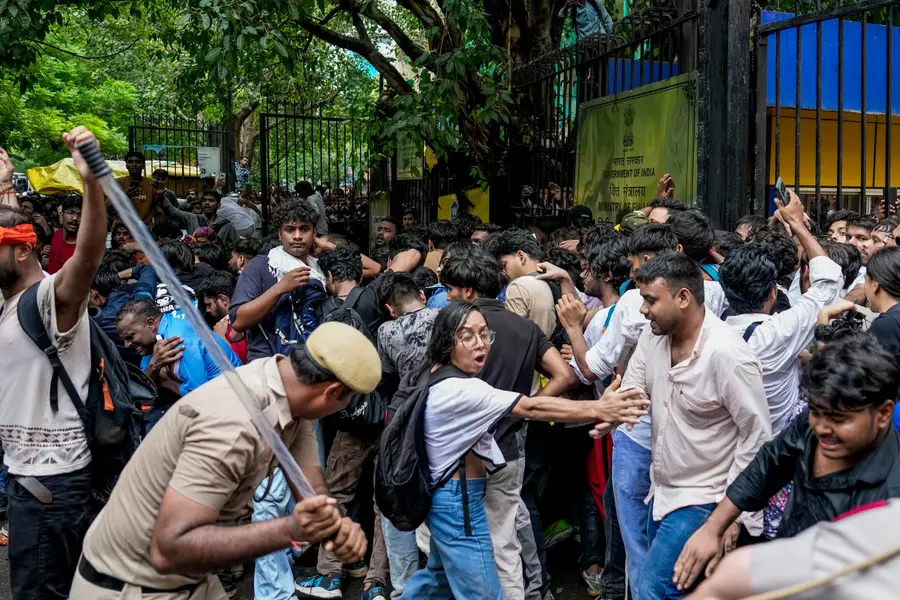
The Jantar Mantar agitation started by the Cockroach Janata Party (CJP) taught a lesson that was not learned by political parties in 79 years of democratic politics in India. The first hint of such a ‘lesson’ was visible earlier this year, but of that a little later.
Hitherto, history has taught us that political parties, through struggle and winning elections, can bring about change. That lesson still remains true. Congress led the movement that won independence. By winning successive elections, Congress erected several pillars of Indian democracy such as Constitutional rule, secularism, reservation, linguistic states, an independent central bank, devolution of resources, etc. Regional parties — for example, the Dravidian parties — won elections in states and asserted the primacy of the State’s language, States’ rights, cultural identity, land reforms, etc. The JP-led movement in 1975 replaced a central government and enacted Constitutional safeguards for liberty. The AASU movement in 1978 triggered legal provisions to control cross-border migration. In fact, it can be confidently asserted that all major changes in the governance of India were brought about by political parties through struggle and elections.
Also Read

Unusual Qualifications
CJP is not a political party in the conventional sense. It was born out of the angry reaction of one person, Mr Abhijeet Dipke. Evidently, Mr Dipke and some of his friends were deeply hurt by a seemingly provocative remark. Mr Dipke started a platform and asked “What if all cockroaches got together?”. He declared that anyone can join the platform who is ‘unemployed, lazy, chronically online and having the ability to rant professionally’. Apparently, there are many including students and scholars who meet the unusual qualifications! There are also many who are employed but are chronically online and can rant professionally. These include honourable men and women such as artistes, teachers, doctors, nurses, advocates, businesspersons, journalists, other professionals and junior government employees.
The platform has a founder-leader, spokespersons, grit and little else. As far as is known, there is no organization, no membership, no registration, no declaration of policies, or any other features of a political party. Yet, through a 35-day protest, CJP has obliged two Cabinet ministers to negotiate, extracted the resignation of a minister, forced the government to withdraw the cases against the protesters, and got written commitments from the government. This is unprecedented.
Hint of New Phenomenon
As I said, the first hint of such a space beyond and outside political parties was sighted in 2026 in Tamil Nadu. Mr Joseph Vijay announced a political party (Tamilaga Vettri Kazhagam or TVK) in February 2024 but it not take the ‘form’ of a regular party; by all accounts it remained an amorphous Fans’ Association. Mostly, the office bearers of the Fans’ Association became office bearers of TVK at various levels. TVK candidates were selected defying conventional political wisdom — ignoring caste, religion, gender, legacy, wealth, etc. Over 200 of the 234 candidates did not have or spend money. In the vast majority of constituencies, TVK candidates did not have the semblance of a campaign. Many TVK candidates were strangers to the constituency concerned and they had few booth agents or polling agents or counting agents. Mr Vijay held a few roadshows and spoke at fewer meetings. Apparently, the only things that mattered to the voters were ‘Mr Vijay’ and the ‘whistle’ symbol. The alchemist was the social media (Instagram and YouTube): Mr Vijay was seen everywhere and he was heard in every home. TVK won in 108 constituencies against the two formidable political and election machines of DMK and AIADMK, and polled 35 per cent of the votes.
No political party, no leader, no journalist, and no pollster foretold a TVK victory. When election results poured in, it was received with as much surprise by the TVK as it was received with shock by the established political parties.
The political change in Tamil Nadu was brought about by citizens occupying the space beyond and outside political parties. Following the Tamil Nadu example, it is not beyond imagination that change can be brought about by citizens who may not know each other, may not talk to each other, may not belong to an organization, but vote in the same manner and elect sufficient number of representatives to form a government.
Challenge to Political Parties
Political parties should closely examine the phenomenon of the election result in Tamil Nadu and the outcome of the Jantar Mantar protest. Organized political parties may not become obsolete but traditional concepts such as High Command, Executive Committee, General Council, Mahasabha, membership and party elections may become irrelevant. The obnoxious phrase ‘vote bank’ may vanish.
The citizens have shed silence thanks to the mobile, Twitter (now X), FaceBook and Instagram; now, they seem to have shed fear. Khaki or blue, police, lathis, tear gas, guns, and arrest/detention no longer intimidate the youth, and older citizens may follow. I wish the political space beyond and outside political parties will grow larger.
Gen Z and other protesters have challenging tasks ahead of them:
- First, they must drag the Universities out of medievalism and obscurantism.
- They must stand up to the brute force of the uniformed police, moral policing, and
- Bajrang Dal-like ‘enforcers’.
- They must fight against legislated morality and discrimination.
- Gen Z must stop the oppressive corruption in local revenue and registration offices, hospitals, ration shops, local bodies, etc.
After Jantar Mantar, every change for the better seems possible.
Published: 02 Aug 2026, 10:08 am IST
Disclaimer: Kindly avoid objectionable, derogatory, unlawful and lewd comments, while responding to reports. Such comments are punishable under cyber laws. Please keep away from personal attacks. The opinions expressed here are the personal opinions of readers and not that of Mathrubhumi.