
A missile strike on Riyadh's King Khalid International Airport killed 12 people and injured more than 300, marking the deadliest attack in a Gulf Arab country since the Iran war began.
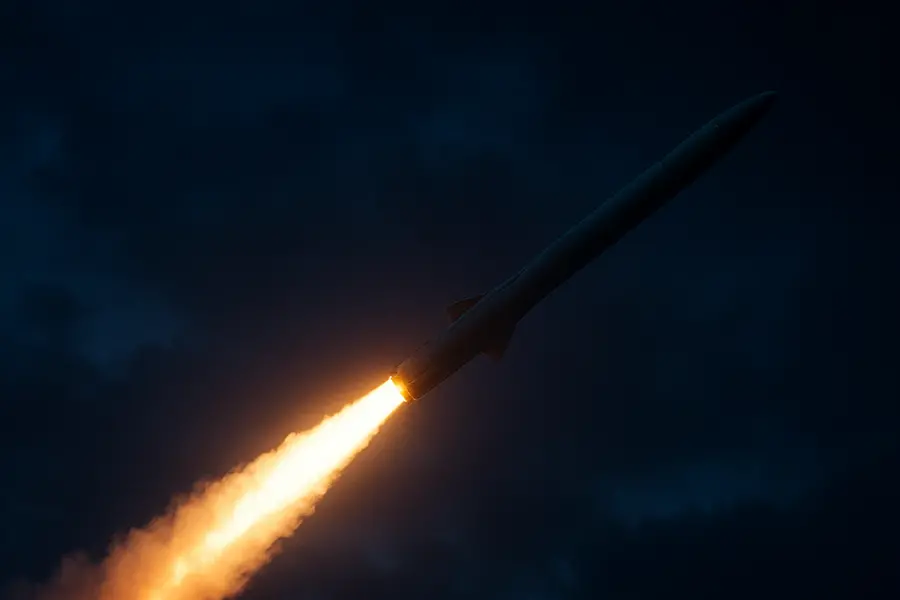
Riyadh: At least 12 people were killed and more than 300 injured in a missile attack on an international airport in Saudi Arabia's capital, Riyadh, civil aviation authorities said early Sunday.
Several of the injured are in critical condition. The Saudi-led coalition fighting Houthi rebels in Yemen blamed the Iran-backed group for the attack.
Also read | ‘Stay indoors’: India warns nationals after Saudi airport attacks kill 3, injure 36
The strike was the deadliest attack in any Gulf Arab country since the Iran war began, as the conflict's expanding fronts have intensified fighting between the Houthis and Saudi-backed Yemeni government forces.
A missile hit a complex housing terminals 3 and 4, which handle domestic flights at King Khalid International Airport, a regional official told The Associated Press (AP) on condition of anonymity, saying they were not authorised to speak to the media.
According to Saudi authorities, the fatalities included four Saudi citizens, two Bangladeshi nationals, and one citizen each from Palestine, the United States, Egypt, Jordan, Syria and Sudan. The injured were being treated at several hospitals.
Trump weighs US involvement in strikes against Houthis
The latest attack, one of several targeting the airport over the past week, is expected to increase pressure on Saudi Arabia's allies, including the United States, to provide military support. Riyadh has so far appeared keen to avoid an all-out war with the Houthis.
US President Donald Trump said on Saturday that Washington was considering joining Saudi strikes against the rebels.
"We may. We're going to look at it," he said. "We just found out about the recent attack. So we'll make a decision. We move very quickly."
The Saudi-led coalition accused the Houthis of carrying out the attack, describing it as a "fully-fledged war crime" and vowing a firm response. The airport does not have any military facilities, it said.
The rebels had not issued an immediate response to the latest accusation. Earlier on Saturday, however, they accused Saudi Arabia of attacking Sanaa International Airport in Yemen's capital, which is under Houthi control.
The Houthis had claimed responsibility for attacks earlier in the week on King Khalid International Airport that killed three Saudis, including a pilot.
The recent escalation has also seen attacks on other Saudi airports, military facilities and oil infrastructure. The surge began after a Saudi-led coalition launched a major military offensive against the Houthis in an attempt to reverse their recent territorial gains.
Saudi civil aviation authorities announced earlier on Saturday that airport operations had been suspended following the attacks. Police maintained a heavy presence, all entrances were blocked and lights around the airport complex were dimmed.
Flights were diverted to other airports, according to flight-tracking service Flightradar24. The United States, Britain, Germany, Australia and Canada were among the countries that advised their citizens to avoid the airport.
Houthi attacks put pressure on key US ally
The attacks on Saudi Arabia, the world's largest oil exporter, have unsettled energy markets and heightened regional tensions.
Despite the latest strike, Saudi Arabia's Energy Ministry continued promoting a major international energy conference scheduled to begin in Riyadh on Sunday.
The Houthis had largely remained on the sidelines of the Iran war until recently. Their expanding involvement has provided Tehran with another means of putting pressure on a key US ally in the region.
Saudi Arabia and the Houthis have been fighting since 2015, when the kingdom intervened in Yemen's civil war in support of the internationally recognised government.
A period of relative calm following a 2022 ceasefire ended in July, when the Houthis resumed attacks. The rebels said Saudi Arabia had fired on Sanaa airport while a plane from Iran was attempting to land. The incident revived tensions over the Saudi-led blockade, which has largely isolated Houthi-controlled areas.
The conflict has since intensified, with the Saudi-led coalition providing air support to Yemeni government forces seeking to reverse recent Houthi advances along the Red Sea.
Those advances have given the rebels greater surveillance capabilities over shipping routes along the Red Sea, a crucial alternative to the Strait of Hormuz, where Iran has been attacking vessels.
Saudi Arabia faces shortage of missile interceptors
Saudi Arabia is running low on missile interceptors and has sought air defence assistance from France, Britain, Pakistan and Egypt, regional officials told AP last month.
One of the officials also noted that the United States had seen its own interceptor stockpiles dwindle during the war with Iran.
US support for the latest offensive against the Houthis has included intelligence sharing, target identification and operational planning, officials have said.
Meanwhile, Saudi Arabia's Foreign Minister and his Omani counterpart spoke by phone on Saturday about the importance of "supporting diplomatic solutions to de-escalate tensions" in the region.
Oman, which lies across the Strait of Hormuz from Iran, has previously played a mediating role in regional conflicts.
Airlines suspend flights as Saudi airspace risks grow
The Houthis issued a warning to international airlines this week, telling them "for the last time" about the potential consequences of operating in Saudi airspace, which the rebels described as a theatre for their military operations.
Even before the latest attack, several airlines had suspended flights to and from Riyadh and other Saudi airports for varying periods. They included Air India, FlyDubai, Lufthansa Group and Pakistan International Airlines.
The European Union Aviation Safety Agency had also expanded its guidance on Saudi airspace, citing the Houthis' ability to strike targets deeper inside the kingdom, including Riyadh, and what it described as a "greater focus on aviation infrastructure."
Published: 11 Oct 2026, 06:19 am IST
ABOUT THE AUTHOR

Related Topics
Disclaimer: Kindly avoid objectionable, derogatory, unlawful and lewd comments, while responding to reports. Such comments are punishable under cyber laws. Please keep away from personal attacks. The opinions expressed here are the personal opinions of readers and not that of Mathrubhumi.