
West Asia is no longer a region searching for reconciliation. It is one searching for limits, says Harikrishnan S
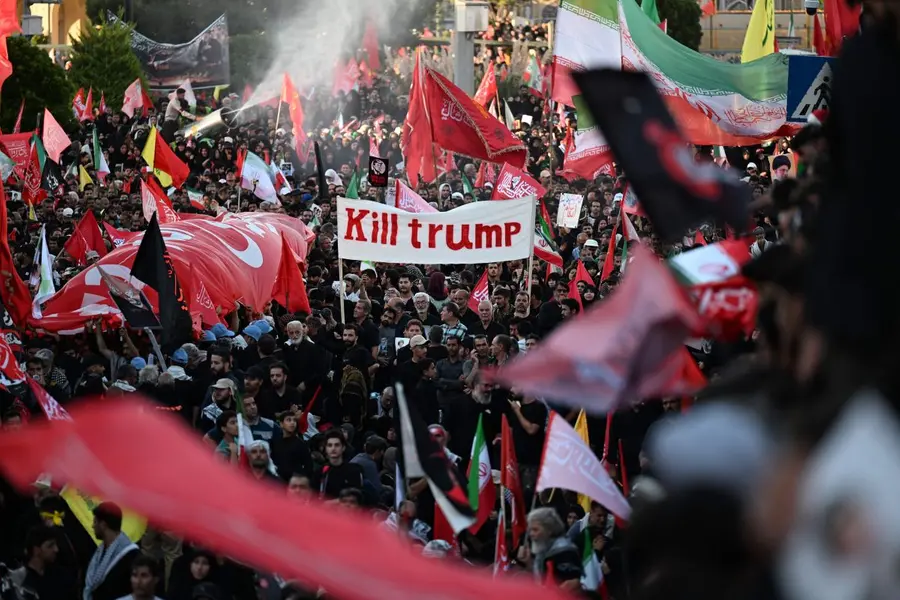
Every war begins with a declared objective, but very few end with one. Somewhere between the first missile and the thousandth funeral, objectives give way to compulsions, strategy yields to survival, and the pursuit of victory is quietly replaced by the determination not to lose. That is where the West Asian conflict finds itself today.
The collapse of the latest understanding between the United States and Iran has surprised only those who mistook a pause for a settlement. The memorandum that briefly raised hopes of a reduction in tensions has dissolved under the weight of realities that neither side was prepared to abandon.
American forces continue to strike Iranian assets, Iran continues to demonstrate that it can impose costs on American bases and commercial shipping, Israel has resumed military operations with renewed intensity, and the Houthis have once again become active participants in a conflict that has steadily expanded far beyond its original geography.
The Strait of Hormuz, through which a significant share of the world's energy supplies must pass, has become less a shipping lane than a theatre of strategic messaging. The instinctive response is to ask where all this is headed. But the more appropriate question is whether it is headed anywhere at all.
Also Read: From chokepoints to strategic stalemate
For decades, every major conflict in the region has been accompanied by elaborate discussions about peace. Diplomats have flown across continents, summits have been convened, declarations have been signed, and photographs have been taken with carefully choreographed optimism. Yet the region has repeatedly demonstrated that peace is not merely the absence of war. It is the presence of political conditions that make war unnecessary. And those conditions simply do not exist today.
The objectives of the principal actors are no longer compatible. The United States insists that international shipping cannot be subjected to the strategic calculations of Tehran. Iran insists that no security architecture in the Gulf can function while ignoring Iranian interests.
Israel has steadily moved towards the conviction that military superiority must be maintained through sustained pressure rather than periodic deterrence. The various armed groups aligned with Tehran do not see themselves as isolated organisations pursuing local agendas. They increasingly regard themselves as components of a wider regional confrontation. None of these positions leaves much room for a comprehensive political settlement.
That does not necessarily mean the region is destined for an uncontrollable war. History does offer another possibility, although it is hardly an inspiring one. The Cold War never produced trust between Washington and Moscow. What it eventually produced were boundaries. Both sides discovered, through repeated crises, where escalation became too dangerous. They established channels of communication not because they wished to become friends, but because they finally understood the catastrophic consequences of misunderstanding each other.
Also Read: Israel's real problem may no longer be Iran
The absence of peace did not prevent the emergence of rules. It is those rules, rather than peace itself, that the Middle East may eventually be forced to seek. Commercial shipping may become an unwritten red line. Certain categories of infrastructure may gradually become unacceptable targets. Military retaliation may continue, but within limits understood by all participants, even if never acknowledged publicly.
Such arrangements would not resolve a single political dispute, nor would they diminish the bitterness that has accumulated over decades. They would merely recognise an uncomfortable reality that no side is capable of achieving decisive victory without inviting consequences it cannot control.
Unfortunately, even such a fragile equilibrium demands something that is increasingly in short supply. It demands leaders whose political futures are not inextricably tied to the continuation of conflict. And this is where Israel's internal politics acquire significance far beyond its borders.
Benjamin Netanyahu remains one of the most consequential political figures in the region, not merely because he leads Israel during one of its gravest security crises but because his own political survival has become the subject of intense domestic contestation. His legal troubles, the fragile arithmetic of coalition politics, and the pressures exerted by ideological allies have combined to create a political environment in which compromise carries enormous risks. It would be simplistic to argue that Israel's military decisions are driven solely by one man's legal predicament. Nations do not wage wars merely to preserve individual careers. Security establishments have their own assessments, military planners their own objectives and intelligence agencies their own calculations.
Iran's missile capabilities, Hezbollah's arsenal and Hamas's continued existence are concerns that extend well beyond the office of the Prime Minister. Yet it would be equally naive to pretend that domestic politics plays no role in shaping strategic decisions. Throughout history, leaders under severe internal pressure have often found external conflicts politically less hazardous than internal reckonings. Whether this is deliberate strategy or the natural consequence of political incentives is a question historians will continue to debate.
What cannot be denied, though, is that prolonged conflict frequently postpones political accountability. That is what makes the present moment unusually dangerous. A regional order built upon carefully managed escalation can survive only if every principal actor ultimately accepts that there are limits beyond which military action becomes self-defeating.
If even one participant concludes that perpetual confrontation is politically preferable to an imperfect peace, the entire structure becomes unstable. The danger, therefore, lies less in spectacular acts of aggression than in ordinary miscalculation.
A tanker sunk in Hormuz, an attack that kills large numbers of American personnel, an Israeli strike that crosses an Iranian threshold or an Iranian response that exceeds American expectations could transform a controlled confrontation into something no participant originally intended.
The tragedy is that nobody appears to possess a realistic blueprint for peace, yet almost everyone has a detailed plan for the next military operation. Perhaps that is the defining characteristic of the West Asian strategic landscape today. It is no longer a region searching for reconciliation. It is one searching for limits. Until those limits are discovered, not through diplomacy alone but through painful experience, the world will continue to witness ceasefires that are little more than intermissions, agreements that postpone rather than resolve conflict, and negotiations conducted in the shadow of missiles already prepared for launch.
Peace, for now, remains an aspiration. Rules may be the only achievable substitute. The unfortunate truth is that even those rules will be written not in conference rooms but on battlefields.
The author is a National Award winner for Best Narration and an independent political analyst. Views expressed are personal.
Published: 14 Jul 2026, 03:10 pm IST
Related Topics
Disclaimer: Kindly avoid objectionable, derogatory, unlawful and lewd comments, while responding to reports. Such comments are punishable under cyber laws. Please keep away from personal attacks. The opinions expressed here are the personal opinions of readers and not that of Mathrubhumi.
