
The central issue is no longer whether Iran constitutes a threat or whether Israel possesses overwhelming military capabilities. The real question is whether Israel is losing legitimacy, something that cannot be replenished through military strength alone, says Harikrishnan S
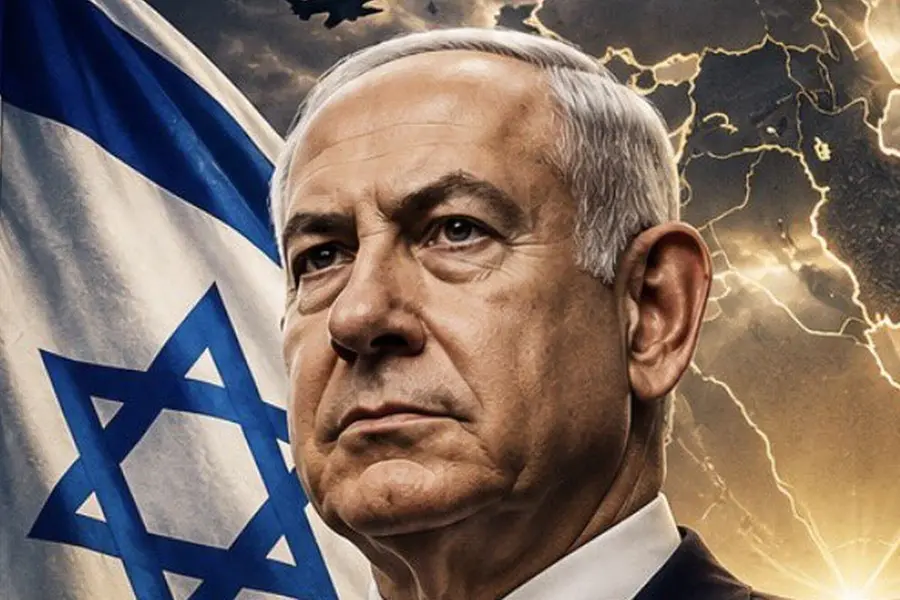
For years, Israel's political leadership has argued that Iran represents the central challenge to peace and stability in West Asia. Whether the issue was Iran's nuclear programme, its missile capabilities, or its support for armed groups across the region, the message remained consistent.
The world, Israel insisted, should focus its attention on Tehran. That argument is becoming increasingly difficult to sustain, not because Iran has become less powerful or less ambitious, but because Israel's own actions have altered the political landscape in ways that even its closest allies can no longer ignore.
The latest and extraordinarily severe findings from the United Nations regarding the treatment of Palestinian children in Gaza are significant not merely because of the allegations they contain. They are significant because they reflect a wider shift in global opinion that has been building for many months.
Also Read: 'Ran tank over child, shot baby in the head...' Israel brutal acts against Gaza children emerge
Language that was once confined to activists, academics and human rights organisations has now entered mainstream diplomatic discourse. Questions about war crimes, crimes against humanity, and even genocide are no longer being asked only by Israel's traditional critics. They are increasingly being raised in forums and capitals that were once instinctively sympathetic to Israel's position. This matters because Israel's greatest strategic asset was never its military superiority alone. It was legitimacy.
For decades, Israel enjoyed the benefit of the doubt across much of the Western world. Governments may have disagreed with particular policies, settlement expansion or military operations, but there remained a broad consensus that Israel was fundamentally acting in pursuit of security. That assumption enabled Israel to mobilise diplomatic support, shape international narratives and ensure that regional threats, particularly Iran, remained at the centre of global attention. Today, that consensus is fraying.
The problem for Israel is not simply that criticism has increased. Democracies can withstand criticism. The problem is that many governments now appear less willing to accept Israeli claims without scrutiny and less willing to assume that every military action is driven solely by security concerns.
This shift has coincided with growing questions about the political calculations of Prime Minister Benjamin Netanyahu. His critics, both within Israel and abroad, have long argued that prolonged conflict serves important domestic political purposes. It delays a reckoning over security failures, preserves fragile political coalitions and keeps national attention focused on external threats rather than internal divisions. His supporters reject this interpretation and point to the very real dangers Israel faces.
Also Read: ‘I didn't ask for permission’: Netanyahu details Trump conversation on Iran
Yet politics and security are not mutually exclusive. A genuine threat can exist alongside political incentives to emphasise or prolong confrontation. That possibility is increasingly being discussed openly, including by governments that once avoided such conversations altogether.
The recent tensions involving Iran illustrate the changing dynamics. Israel has consistently portrayed Iran as the paramount strategic threat in the region. There is substantial evidence supporting concerns about Iran's regional activities and military ambitions. However, there is also a growing perception among many observers that the Iranian threat has become intertwined with a broader political project pursued by sections of the Israeli right.
Whether one agrees with that assessment or not, the perception itself is becoming consequential. It is shaping diplomatic calculations in Europe, influencing public opinion in North America and affecting how policymakers interpret Israeli actions.
This is where the evolving position of the United States becomes particularly important. The alliance between Washington and Jerusalem remains deep and extensive. Military cooperation, intelligence sharing and strategic coordination continue. Yet recent rhetoric from leading figures within the American administration suggests a subtle but important distinction.
Support for Israel's security does not necessarily imply support for every Israeli strategic objective. That distinction may prove more significant than any individual policy announcement. For decades, Israeli leaders could reasonably expect that major confrontations with regional adversaries would eventually draw the United States into alignment with Israel's preferred approach.
Increasingly, however, Washington appears to be asking a different question. Does a particular conflict serve American interests? This is not hostility towards Israel, but a reflection of a broader American reassessment of foreign policy commitments.
The United States is showing signs of wanting to manage its relationships according to its own priorities rather than those of any ally, however close. The emerging diplomatic engagement with Iran underscores this reality. If Washington ultimately focuses on constraining Iran's nuclear programme while allowing Tehran a path towards economic normalisation, Israel may find itself confronting a situation remarkably similar to one it fiercely opposed during the era of the nuclear agreement negotiated under Barack Obama.
There is an irony here. After years of confrontation, sanctions and escalating rhetoric, the United States may once again conclude that its interests are best served through a negotiated accommodation that manages rather than eliminates the Iranian challenge. Such an outcome would represent a strategic setback for Israel, not because Iran would suddenly become dominant, but because Israel's ability to shape international priorities would have diminished.
That is the deeper story unfolding today. The central issue is no longer whether Iran constitutes a threat. It very well does. Nor is the central issue whether Israel possesses overwhelming military capabilities. It very well does. The real question is whether Israel is losing something that cannot be replenished through military strength alone.
Legitimacy, once eroded, is difficult to restore. Military defeats can be reversed, and economic setbacks can be overcome. Diplomatic isolation, however, often develops gradually and then persists for decades. Israel is not isolated today. It remains a powerful state with strong allies and formidable institutions. Yet for perhaps the first time in a generation, it finds itself confronting a world that is increasingly sceptical of its leadership, increasingly critical of its conduct and increasingly unwilling to subordinate every regional concern to the question of Iran.
For years, Israel argued that the world's attention was focused on the wrong problem. It may now discover that the world's attention has shifted to Israel itself.
The author is a National Award winner for Best Narration and an independent political analyst. Views expressed are personal.
Published: 25 Jun 2026, 11:28 am IST
Disclaimer: Kindly avoid objectionable, derogatory, unlawful and lewd comments, while responding to reports. Such comments are punishable under cyber laws. Please keep away from personal attacks. The opinions expressed here are the personal opinions of readers and not that of Mathrubhumi.
