
When a ceasefire is declared but not clearly accepted by all parties and when praise for progress is followed by actions that negate that progress, the signal loses coherence. Over time, it becomes noise. And in a crisis environment, noise is dangerous, says Harikrishnan S
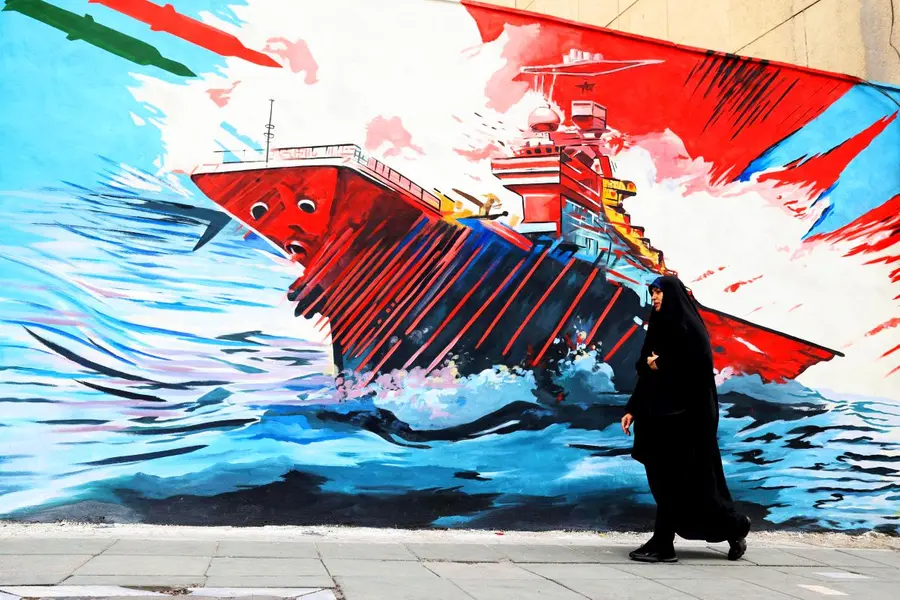
There is a certain pattern to the way this crisis (Iran-US) has unfolded, and it is hard to ignore once you see it. A ceasefire is announced with some flourish; signals are sent that talks are possible. And then, almost immediately, the ground shifts. Strikes resume somewhere else, some condition or the other is added, and a promise is walked back upon. Just when it looks like things might stabilise, another move resets the board. The latest indefinite extension of the ceasefire fits perfectly into this pattern.
On paper, it sounds like restraint. In practice, it continues the blockade, leads to ongoing maritime confrontations, and yields no clear agreement from the other side. That is not a ceasefire in any meaningful sense. It is a pause declared by one party while the underlying pressure remains fully intact. This is where the contradiction becomes impossible to ignore.
You cannot simultaneously de-escalate and escalate and expect the other side to respond as if only one of those signals matters. Extending a ceasefire while tightening economic and military pressure is not a clever balancing act. It is a mixed message, and mixed messages are read as weakness or manipulation depending on who is listening.
Also Read: US-Iran meet in Islamabad: Vance moves, but motives mute
Iran, for its part, has read it as both. What we are seeing now in the Strait of Hormuz is not an accident or an emotional overreaction. It is a calculated response to a strategy that tries to have it both ways. When pressure is maintained while talks are proposed, the only leverage available to the weaker side is to raise the cost of that pressure. And, in this case, the lever is geography. A narrow waterway through which a significant portion of the world's energy supply flows is not just a map feature, but a strategic equaliser.
It is important to be precise here. Iran does not control the Strait in any absolute sense. It cannot seal it off indefinitely against a determined naval force. But it does not need to. All it needs to do is to make passage uncertain, risky, and expensive. A handful of incidents, a few ships turning back, a spike in insurance rates, and the effect is achieved. Traffic slows. Markets react. Pressure builds not just on Washington, but globally. That is the game now. Not total closure, not total dominance, but calibrated disruption.
Against that, the current American approach looks increasingly incoherent. The objective seems to be to force concessions without offering any meaningful relief from the pressure. The assumption behind it is that sustained coercion, combined with intermittent diplomatic openings, will eventually compel compliance. But that assumption rests on a stable signalling environment. It requires the other side to believe that concessions will be met with reciprocal moves. That belief is currently absent.
Consider the sequence of events. Talks are floated, sometimes even praised as promising. Then actions are taken that undercut those very talks. Ships are intercepted, pressure is increased, and military signalling continues. From the outside, it does not look like a negotiation, but more like a test of endurance. And endurance is precisely what Iran has prepared for over decades.
There is also a deeper structural issue here. The stated objectives, whether openly declared or implicitly pursued, are maximalist. Dismantle nuclear capabilities, roll back missile programs, sever regional networks, and ideally reshape the political order itself. These are not bargaining positions. They are end states that would require overwhelming force and long-term occupation to achieve.
Also Read: A ceasefire built for headlines, not peace
Trying to inch toward them through pressure tactics while avoiding full-scale war creates a gap between ambition and method. That gap is where this crisis now sits. On the other side, the objectives are more limited and therefore more attainable. Maintain regime stability. Preserve strategic deterrence. Ensure that external pressure carries a cost. None of these requires victory in a conventional sense. They require survival and the ability to impose friction.
This asymmetry matters. One side is trying to transform the other. The other is trying to resist transformation. History suggests which of those goals is easier to sustain over time.
None of this means the situation is static or resolved. Far from it. What we are looking at is a dynamic stalemate. Actions continue, signals are sent and misread, risks accumulate, but there is no clear pathway to a decisive outcome. The danger lies in the belief that the current approach can be sustained indefinitely without unintended consequences.
Also Read: Inside the world's toughest nuclear cleanup mission ever
Maritime confrontations have a way of escalating quickly. One miscalculation, a misidentified vessel, a strike that causes unexpected casualties, and the entire framework of controlled pressure can collapse into open conflict. At the same time, the political need to project strength complicates any move toward genuine de-escalation. Walking back a blockade or easing pressure in a visible way carries domestic and international costs. It can and will be framed as retreat. So instead, we get semantic adjustments and partial measures. The blockade is not quite a blockade. The ceasefire is not quite a ceasefire. The talks are always just about to resume. That is not strategy in the classical sense, but improvisation under constraint.
There is also the question of credibility. Repeated cycles of announcement and reversal erode trust, not just with the adversary but with partners and observers. When a ceasefire is declared but not clearly accepted by all parties, when conditions shift without warning, and when praise for progress is followed by actions that negate that progress, the signal loses coherence. Over time, it becomes noise. And in a crisis environment, noise is dangerous.
Also Read: Trump's absurd Strait stunt
The immediate future is likely to be more of the same. Limited incidents at sea. Continued pressure measures. Attempts to restart talks, possibly through intermediaries. Occasional gestures that hint at de-escalation, followed by moves that contradict them. Shipping through Hormuz will ebb and flow, never fully secure, never completely halted. Not a stable equilibrium, but a managed instability.
The question is not who is winning in any simplistic sense. It is whether the current approach is moving the situation toward any of the stated objectives. On that count, the answer is difficult to avoid. The nuclear issue remains unresolved. The missile program is intact. Regional networks continue to operate. And the Strait of Hormuz has become an even more potent point of leverage than it was before. If anything, the range of problems has expanded. This is why characterising the situation matters. Calling it a victory obscures the lack of tangible gains. Calling it a catastrophic failure may be premature, given that the conflict is still unfolding. But describing it as a strategic deadlock, shaped by contradictory signalling and asymmetrical leverage, is closer to the mark.
The risk is that this deadlock is not static. It is under constant pressure, with each side probing for advantage and reacting to the other’s moves. In such an environment, the line between controlled escalation and unintended war is thin. And right now, that line is being tested almost daily.
The author is a National Award winner for Best Narration and an independent political analyst. Views expressed are personal.
Also Read: Will the US Navy scrap its most high‑tech aircraft carrier?
Published: 22 Apr 2026, 04:07 pm IST
Disclaimer: Kindly avoid objectionable, derogatory, unlawful and lewd comments, while responding to reports. Such comments are punishable under cyber laws. Please keep away from personal attacks. The opinions expressed here are the personal opinions of readers and not that of Mathrubhumi.
