

The educational question facing Kerala today is fundamentally different from the question confronted by earlier generations. We have gone far beyond the earlier challenge of bringing Kerala’s children into schools or achieving universal literacy
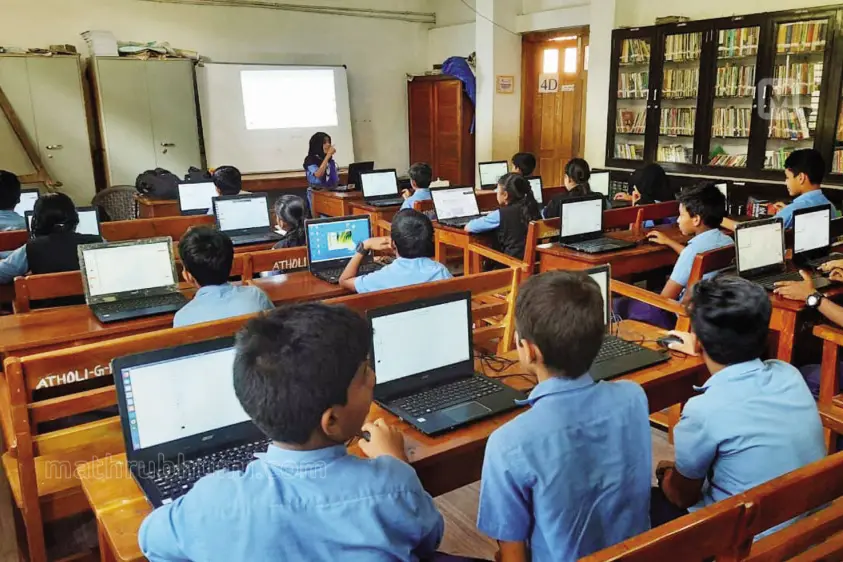
Education is one of the great continuities of human civilisation. Every generation enters a world it did not create, inherits a body of knowledge it did not produce, and leaves behind ideas and institutions that will shape lives it will never witness. What distinguishes human beings is not simply the ability to acquire knowledge, but the capacity to preserve it beyond the individual, subject it to scrutiny, add to it and transmit it across generations. Language, memory, teaching, books, institutions and scientific inquiry have enabled Homo sapiens to transform individual experience into collective knowledge, and collective knowledge into civilisation.
Education is the principal process through which this inheritance is transmitted, examined and renewed. Its purpose, therefore, extends far beyond preparing individuals for employment or awarding academic qualifications. It determines what a society chooses to remember, what it is willing to question, what it considers worthy of knowing and, ultimately, what kind of future it is capable of imagining.
Also Read
Human civilisation advances because knowledge is cumulative. A child born today does not have to rediscover fire, invent writing, establish mathematics or understand the basic principles of vaccination from first principles. Each generation inherits an intellectual world built by those who came before it. Yet inheritance is not the same as acceptance. Human beings inherit discoveries alongside errors, wisdom alongside prejudice, and institutions alongside assumptions that may once have appeared self-evident but have subsequently been disproved.
The intellectual character of a society is therefore shaped by the manner in which it treats what it inherits. Where inherited ideas are accepted without examination, education becomes an instrument of reproduction. Where they are subjected to reason, evidence and debate, education becomes an instrument of renewal. The responsibility of education is not to preserve everything handed down to us, but to cultivate the judgement necessary to distinguish what deserves preservation from what requires revision or rejection.
Education is consequently not a warehouse of accumulated information. It is one of civilisation's principal mechanisms for correcting itself.
This distinction is especially important today because the quantity of information available to humanity has grown at a pace unprecedented in history. Digital networks have placed libraries, archives, scientific papers, news reports and countless competing interpretations within the reach of billions of people. Artificial intelligence is accelerating this transformation further. Yet, as T.S. Eliot famously reminded us, access to information does not automatically produce knowledge, and knowledge does not necessarily produce wisdom. The more abundant information becomes, the more important becomes the capacity to evaluate its reliability, understand its context and recognise the difference between evidence and assertion.
The scientific method offers perhaps the clearest institutional expression of this intellectual discipline. Science does not derive its authority from claiming that every proposition is permanently true. Its strength lies in its willingness to test, challenge and revise its own conclusions. Observation, hypothesis, experimentation, evidence, criticism, replication and revision form a method through which humanity attempts to distinguish reliable knowledge from conjecture.
Scientific temper, therefore, is not merely familiarity with scientific facts. It is a habit of mind: curiosity, scepticism, respect for evidence, willingness to acknowledge uncertainty and readiness to change one's conclusion when better evidence becomes available. These qualities are indispensable not only in laboratories but in public life.
Democracy requires much the same intellectual discipline. A democratic citizen must be able to distinguish evidence from assertion, argument from propaganda, and legitimate disagreement from deliberate misinformation. Democracy cannot be reduced to the periodic act of casting a vote. It depends upon citizens capable of questioning authority, understanding institutions, evaluating competing claims and respecting the rights of those with whom they disagree.
Education is therefore part of the moral and intellectual infrastructure of democracy. A society that teaches its citizens to ask questions is better equipped to resist arbitrary authority. A society that encourages reasoned disagreement is more capable of sustaining democratic institutions. The classroom, at its best, is not merely a place where answers are delivered; it is a place where the habit of asking better questions is cultivated.
Yet intellectual development cannot end with scientific or political rationality. Knowledge without ethical responsibility can become an instrument of domination. Scientific and technological advancement can improve human life, but it can also intensify warfare, environmental destruction, surveillance, exploitation and inequality when divorced from moral judgement. Education must therefore cultivate not only intelligence but responsibility; not merely competence but compassion; not only the capacity to solve problems but the wisdom to decide which problems are worth solving and for whose benefit.
The journey from literacy to knowledge, from knowledge to understanding and from understanding to humanism is among the most important trajectories of education.
Kerala's own history demonstrates the transformative power of this process. At the time of Independence, literacy remained far from universal across India. Kerala subsequently pursued a distinctive path through public education, social reform, libraries, adult literacy campaigns and widespread access to schooling. According to the 2011 Census, Kerala's literacy rate had reached 93.91 per cent, compared with 47.18 per cent in 1951. Female literacy rose from 36.43 per cent in 1951 to about 92 per cent in 2011, dramatically narrowing the gender gap. The figures are undoubtedly even better today, as the next census will undoubtedly confirm.
These figures represent much more than educational statistics. They form part of a wider history of social mobility, public participation and the erosion of traditional structures of exclusion. Education helped enlarge the social base of public life and created generations for whom reading, argument and participation became ordinary parts of citizenship.
But past achievement cannot become a substitute for future ambition. The educational question facing Kerala today is fundamentally different from the question confronted by earlier generations. We have gone far beyond the earlier challenge of bringing Kerala’s children into schools or achieving universal literacy. Now our challenge is to build universities and colleges capable of generating knowledge at the highest standards, attracting outstanding scholars, nurturing original research and contributing to global intellectual debates. That is a much harder task.
Kerala has considerable institutional assets on which to build. The University of Kerala, established in 1937 as the University of Travancore, is among India's oldest universities. In the 2025 India Rankings, it was placed fifth among State Public Universities. The State also possesses universities, affiliated colleges, specialised research centres, libraries, archives, laboratories, botanical resources and institutions with long intellectual traditions.
Yet institutional longevity is not the same as academic excellence. A university does not become globally significant merely because it is old, large or well known. Its true strength lies in the quality of its faculty, the freedom of its scholars, the seriousness of its research, the intellectual ambition of its students and the standards by which academic excellence is recognised. There was a time in the 1960s and early 1970s when the top ten performers in the UPSC rank list invariably included at least one graduate of a Kerala University. That has sadly no longer been the case for most of the past half-century.
Kerala's next educational transformation must therefore take place within higher education. This does not necessarily mean dismantling existing institutions. It means reconstructing them around contemporary standards of scholarship. Institutions with histories stretching back decades should become centres of living intellectual activity rather than monuments to earlier achievements. Recruitment and promotion should be governed by transparent and credible academic standards. Research funding should reward originality and quality. Institutional leadership should be entrusted to people with demonstrable academic and administrative competence.
Merit must be protected not as an abstract slogan but as a principle of institutional design. Universities also require autonomy. Academic institutions cannot produce genuinely original scholarship if every significant intellectual or administrative decision is vulnerable to external interference. But autonomy must be accompanied by accountability, and academic freedom must coexist with rigorous standards of evidence, professional ethics and institutional responsibility.
Internationalisation should be another essential element of Kerala's higher education strategy. The State should aspire to universities in which scholars from different parts of India and the world can teach, conduct research and collaborate with students. Distinguished visiting professors should not be invited merely for ceremonial lectures. They should be encouraged to spend meaningful periods in Kerala, supervise research, collaborate with local scholars and establish lasting academic networks. Such openness would not weaken Kerala's intellectual identity. It would strengthen it by placing Kerala's scholarship within a wider global conversation.
(To be continued)
Published: 01 Sept 2026, 08:00 am IST
ABOUT THE AUTHOR
Disclaimer: Kindly avoid objectionable, derogatory, unlawful and lewd comments, while responding to reports. Such comments are punishable under cyber laws. Please keep away from personal attacks. The opinions expressed here are the personal opinions of readers and not that of Mathrubhumi.