

AI can retrieve, organise, translate and generate information at extraordinary speed. But it cannot remove the need for human judgement
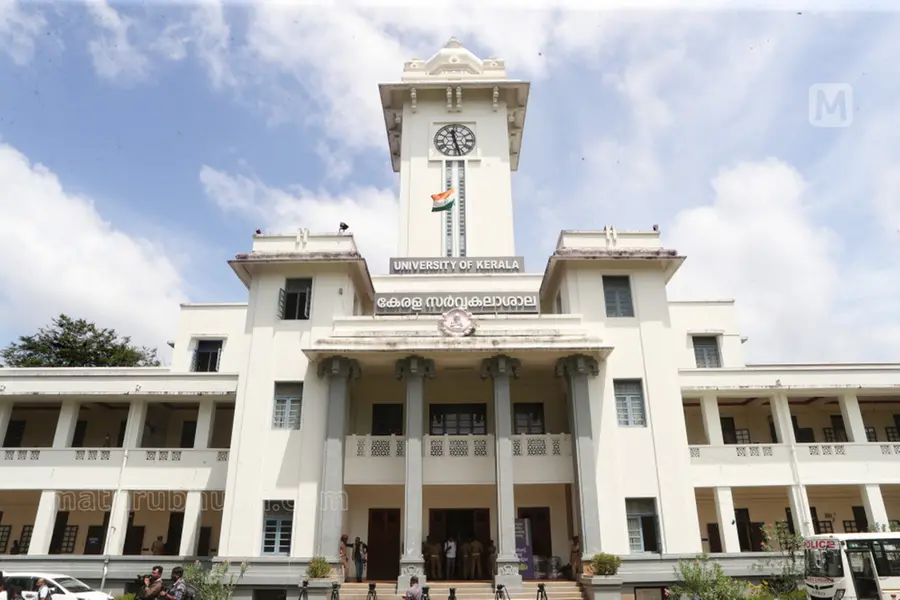
In my last column, we discussed the vital qualities of education and then reforms that Kerala needs to undertake to make its education ready for the 21st century. Today, I develop further on that theme, discussing both the hardware and software of educational development.
Hardware? Yes, the physical infrastructure of knowledge deserves equal attention. Libraries must evolve from repositories of books into dynamic centres of scholarship, connected to international databases and digital repositories. Laboratories must meet contemporary research requirements. Archives and museums should be treated as research infrastructure rather than merely custodial institutions. Botanical gardens should be recognised as living scientific resources for taxonomy, biodiversity research, conservation and education. Kerala already possesses many such assets. The challenge is to connect them.
A university library, a botanical garden, an archive, a museum, a laboratory and a field research station should not exist as isolated institutional islands. They should form part of an interconnected knowledge ecosystem in which researchers and students can move across disciplines and institutions. This is particularly important because the great challenges of our time do not respect academic boundaries. Climate change cannot be understood through atmospheric science alone. Biodiversity loss involves ecology, economics, law and ethics. Artificial intelligence raises questions in computer science, philosophy, economics, sociology and public policy. Food security involves agriculture, climate, trade, nutrition and social justice. Urbanisation requires engineering as well as political economy, public administration and sociology. Kerala's universities should therefore become places where disciplines meet rather than territories in which they remain isolated.
Also Read: The knowledge we inherit, the future we create(Part I)
The relationship between teaching and research must also change. A university that merely transmits established knowledge will eventually lose its intellectual vitality. Students should encounter research methods early in their academic lives. They should learn how knowledge is produced, not merely what textbooks currently say. Undergraduates should have opportunities to work with researchers, examine primary sources, conduct experiments, analyse data and participate in projects whose conclusions are not already known. This would transform the student from a consumer of knowledge into a participant in its creation.
Specialisation is indispensable to serious scholarship, but scholarship achieves its fullest public value when it can illuminate the society around it. Higher education has a purpose larger than producing specialist professionals. It should produce minds capable of connecting specialised knowledge with history, society, ethics and public life.
This prompts a more demanding question: what kind of intellectual culture should Kerala's universities create for the next generation? The answer cannot be found simply in more buildings, more courses or more degrees. It requires a culture that rewards curiosity, protects independent thought, encourages disagreement and recognises scholarship for the contribution it makes to knowledge and society. Universities must become places where students encounter ideas that challenge their assumptions, where intellectual disagreement is treated as productive rather than threatening, and where authority rests on argument, evidence and achievement rather than status.
This matters particularly in an age of artificial intelligence. AI can retrieve, organise, translate and generate information at extraordinary speed. But it cannot remove the need for human judgement. Indeed, it makes judgement more important. When machines can produce plausible answers almost instantaneously, the educated person must know how to ask whether those answers are accurate, how they were derived, what evidence supports them and what assumptions lie beneath them. The central educational task is therefore shifting from the possession of information to the cultivation of judgement.
This should not lead us to fear technology. On the contrary, Kerala should seek to become an active participant in the technological transformation of knowledge. Its universities should teach students to use AI intelligently while also teaching them its limitations, biases, ethical implications and social consequences. The objective should be neither uncritical technological enthusiasm nor reflexive resistance, but informed mastery.
The same principle applies to biotechnology, automation, digital communication and other emerging technologies. The question is not simply what humanity can now do. It is what humanity ought to do. That distinction lies at the heart of humanism. Humanity's technological power has expanded enormously, yet war, intolerance, inequality, ecological destruction and irrationality remain persistent features of the human condition. Knowledge has increased faster than wisdom. Education must help close that gap.
The survival and flourishing of Homo sapiens may ultimately depend upon our ability to combine intelligence with restraint, innovation with responsibility and knowledge with compassion. The purpose of education is not merely to make human beings more capable. It is to make them more capable of using their abilities wisely.
This is why the humanities and social sciences remain indispensable even in an age dominated by science and technology. History teaches societies how they arrived where they are. Philosophy asks what ought to be done. Literature enlarges our capacity to imagine lives different from our own. Sociology reveals structures of power and inequality. Political science examines institutions and citizenship. Economics helps us understand the distribution and use of resources. A technologically advanced society without these forms of reflection risks becoming powerful without becoming wise.
Kerala therefore needs a higher education system that brings scientific excellence and humanistic reflection into conversation. It should encourage engineers to understand ethics, scientists to engage with public policy, social scientists to work with data, and humanities scholars to engage seriously with technological change. The divisions between disciplines should become increasingly permeable.
The State should also think beyond the conventional model in which each university attempts to possess every possible academic resource. Kerala's compact geography offers an opportunity to develop networks linking universities, colleges, research institutions, libraries, museums, laboratories and cultural institutions. Shared facilities, joint doctoral programmes, cross-institutional research clusters and common digital repositories could substantially enlarge the research capacity of institutions that individually may not possess the resources to do everything. Kerala's greatest advantage is not any single university. It is the density of its human and institutional capital. The task is to connect that capital.
The same principle should guide the State's relationship with the world. Kerala has historically been outward-looking. Its people have travelled, traded, migrated and interacted across continents for centuries. That openness should now be translated into intellectual networks. Universities should build partnerships not merely to sign memoranda of understanding, but to create joint research, student mobility, shared laboratories, co-supervision of doctoral work and sustained scholarly exchange. The measure of internationalisation should be intellectual output, not the number of agreements displayed on institutional websites.
Nor should global ambition mean imitation. Kerala does not need to reproduce foreign universities in unfamiliar institutional forms. It needs to create institutions rooted in its own social, cultural and ecological circumstances while participating confidently in international scholarship.
A university in Kerala should be able to ask questions that are globally relevant precisely because they emerge from Kerala's own experience: how can densely populated regions adapt to climate change? How can democratic societies manage technological disruption? How can public health systems remain equitable? How can biodiversity be conserved in landscapes under intense human pressure? How can migration transform families, communities and economies? How can social development coexist with ecological sustainability? Local experience can generate global knowledge.
This is the next stage of Kerala's educational journey. The first great achievement was expanding access. The next must be expanding excellence. The State should judge its universities not simply by enrolment, buildings or graduation numbers, but by the quality and influence of their scholarship: the research they produce, the problems they illuminate, the scholars they attract, the students they inspire and the contribution they make to society.
The ultimate test is human. Do our educational institutions produce graduates capable of thinking critically? Can they recognise scientific evidence? Can they question inherited assumptions without contempt for tradition? Can they distinguish disagreement from hostility? Can they participate intelligently in democratic life? Can they use technology without surrendering judgement to it? Can they respond to human suffering with compassion?
If the answer is yes, education has accomplished something far more significant than producing employable graduates. It has strengthened the intellectual foundations of democracy, expanded the possibilities of scientific and cultural advancement and contributed to a more humane society.
Kerala now stands at an important point in its long educational journey. It has inherited an extraordinary tradition of literacy, public education and social reform. Its institutions contain decades of accumulated knowledge and experience. Its universities possess considerable potential, and its people have demonstrated an enduring appetite for learning. What is required now is ambition equal to that inheritance. The objective should be to create a higher education system in which knowledge is respected but never worshipped blindly; tradition is examined without being dismissed; science is valued without being reduced to technology; and intellectual freedom is inseparable from ethical responsibility.
That will require reform, investment, institutional courage and patience. It will also require a willingness to accept that excellence cannot be created by decree. It grows from academic freedom, rigorous standards, capable leadership, serious research and a culture in which the pursuit of truth is valued for its own sake.
An intellectual generation inherited a world shaped by earlier struggles for education, freedom and social advancement. It contributed to expanding Kerala's intellectual horizons. Our responsibility is to ensure that the next generation inherits something greater: institutions confident enough to question, open enough to learn from the world, rigorous enough to pursue truth and humane enough to understand what knowledge is ultimately for. The greatest tribute to those pioneers is the creation of circumstances in which their finest qualities can flourish again.
Education is the bridge between the generations. Through it, the knowledge of the dead becomes available to the living; through research, the living add to that inheritance; and through teaching, they pass it to those yet unborn.
What we inherit is never ours merely to preserve. It is ours to examine, improve and pass forward. Let us rise to the challenge.
Published: 15 Sept 2026, 08:00 am IST
ABOUT THE AUTHOR
Disclaimer: Kindly avoid objectionable, derogatory, unlawful and lewd comments, while responding to reports. Such comments are punishable under cyber laws. Please keep away from personal attacks. The opinions expressed here are the personal opinions of readers and not that of Mathrubhumi.