

The Indian spice industry needs practical collaboration, evidence-based decision-making and renewed commitment to excellence
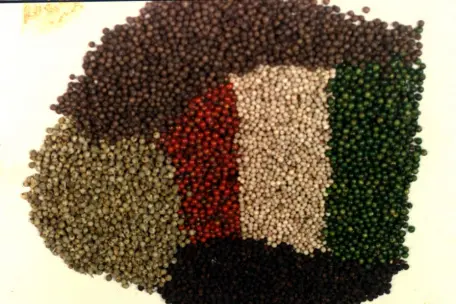
I write these words in Kochi, a city whose very history is intertwined with the global spice trade. For over two millennia, this coastline has connected India’s agricultural hinterland with distant markets. Classical records speak of Roman demand for pepper; medieval maritime networks linked Kerala to West Asia and East Africa; and later European trading powers established enduring commercial relationships here. Kochi, in many ways, symbolises continuity and change. It was once a nodal point in the ancient spice routes; today it is a modern export hub connected by air, sea and digital networks. The story of spices in Kerala is therefore not anecdotal romance—it is a documented chapter in the evolution of global commerce.
Today, India remains the world’s largest producer, consumer and exporter of spices. We cultivate more than seventy varieties across diverse agro-climatic zones, and our annual production exceeds ten million tonnes. Our exports have crossed the four-billion-dollar mark in recent years, reaching more than 180 countries. These figures reflect both scale and diversity. Yet behind these statistics stand millions of small and marginal farmers whose livelihoods depend upon stable markets, predictable policies and resilient supply chains.
Also Read
The Western Ghats, recognised internationally as a biodiversity hotspot, continue to underpin this strength. The ecological conditions of altitude, rainfall and soil composition in districts such as Idukki, Wayanad and parts of the Nilgiris create microclimates particularly suited to high-value spices. Pepper productivity, cardamom quality, and turmeric yields are closely linked to these environmental variables. At the same time, research institutions and agricultural universities have played a vital role in improving planting material, pest management practices and post-harvest processing techniques. Scientific intervention has raised productivity, yet much potential remains untapped.
Global demand patterns are also changing. Spices are no longer traded solely as flavouring agents. They are increasingly incorporated into processed foods, nutraceutical products, essential oils and extracts. Turmeric, for example, has witnessed a sharp rise in demand owing to global interest in curcumin’s therapeutic properties. Vanilla has experienced cyclical price surges linked to international supply disruptions. Even traditional ingredients are now part of global fusion cuisines, demonstrating how interconnected consumer markets have become.
However, the international marketplace is exacting. Importing countries enforce stringent sanitary and phytosanitary standards. Maximum residue limits for pesticides are rigorously monitored. Traceability requirements demand that consignments be tracked back to their source. Any lapse in quality can result in rejection, reputational damage and financial loss. Compliance is therefore not optional; it is fundamental to sustaining export growth.
We are also entering a period of significant realignment in global trade. New bilateral and multilateral trade agreements are being negotiated across regions. Tariff reductions, non-tariff barriers, digital trade facilitation measures and sustainability-linked clauses are reshaping commercial frameworks. These evolving trade arrangements offer opportunities for market expansion, but they also impose complex regulatory obligations. It is essential that we engage with these developments carefully and strategically, ensuring that our exporters are well prepared to operate within changing regimes.
In such a context, reliance on the export of raw commodities alone is insufficient. Value addition must become central to our strategy. Processing, grading, branding, extraction and the development of ready-to-use formulations enable us to capture a larger share of the value chain. The difference between exporting raw pepper and exporting a high-quality, branded, traceable, residue-compliant product can be substantial in economic terms. Similarly, oleoresins, essential oils and scientifically standardised extracts represent avenues for higher margins and diversified revenue streams.
For value addition to succeed, market intelligence is critical. Exporters must possess a clear understanding of consumer trends, regulatory expectations and demand cycles in each destination market. Preferences vary across regions—organic certification in one, clean-label requirements in another, sustainability credentials in yet another. Accurate knowledge of these expectations must inform procurement strategies and quality benchmarks.
Equally important is the transmission of this knowledge back to the producers. Farmers must be aware of the specific standards required in different export markets. They must understand residue norms, harvesting protocols, drying techniques and storage practices that influence acceptance abroad. When market signals are communicated effectively to cultivators, production decisions become more aligned with demand. This coordination across the value chain—from farmer to exporter—reduces inefficiencies, enhances quality consistency and strengthens competitiveness.
Climate change introduces an additional layer of uncertainty. Data from recent years indicate increasing variability in monsoon patterns and temperature ranges. Such fluctuations affect flowering cycles, disease incidence and yield stability. Adaptive strategies—improved irrigation management, shade regulation, soil conservation and climate-resilient cultivars—must be supported through research and extension services. Resilience will determine whether production can keep pace with expanding global demand.
Sustainability is no longer a peripheral concern; it has become integral to market access. Buyers increasingly seek assurances regarding environmentally responsible cultivation and fair labour practices. Kerala’s traditional agroforestry systems, in which spices are grown under multi-layered canopy structures, provide an ecological advantage. Preserving and strengthening such systems can position Indian spices favourably in markets that value sustainability credentials.
Technology must also play a larger role. Digital traceability platforms, blockchain-enabled supply chains, laboratory testing infrastructure and data-driven logistics can enhance transparency and efficiency. Investments in quality testing laboratories and accredited certification bodies are necessary to maintain credibility in highly regulated markets.
The Indian spice industry stands at an inflection point. We possess scale, diversity and historical reputation, but face intense competition, strict regulatory regimes and climatic uncertainty. Yet with strategic engagement in emerging trade frameworks, systematic value addition, informed market analysis and close coordination across the supply chain, India can consolidate and expand our global presence.
Our objective must be clear: to move from being suppliers of raw produce to recognised leaders in quality, compliance and innovation. If we align research with market demand, trade policy with production realities, and exporter insight with farmer practice, we will not only sustain growth but elevate the entire sector.
The Indian spice industry needs practical collaboration, evidence-based decision-making and renewed commitment to excellence. The spices that once drew the world to our shores continue to command global attention. It is now our responsibility to ensure that their journey into the future is guided by knowledge, coordination and foresight. The precious products of the past can yet offer our exporters a fertile future.
Published: 01 May 2026, 10:01 am IST
ABOUT THE AUTHOR
Related Topics
Disclaimer: Kindly avoid objectionable, derogatory, unlawful and lewd comments, while responding to reports. Such comments are punishable under cyber laws. Please keep away from personal attacks. The opinions expressed here are the personal opinions of readers and not that of Mathrubhumi.