
A searing and tender memoir of survival, ‘The Lucky Ones’ traces one Muslim family’s brush with death during the 2002 Gujarat riots and their enduring faith in love and pluralism.
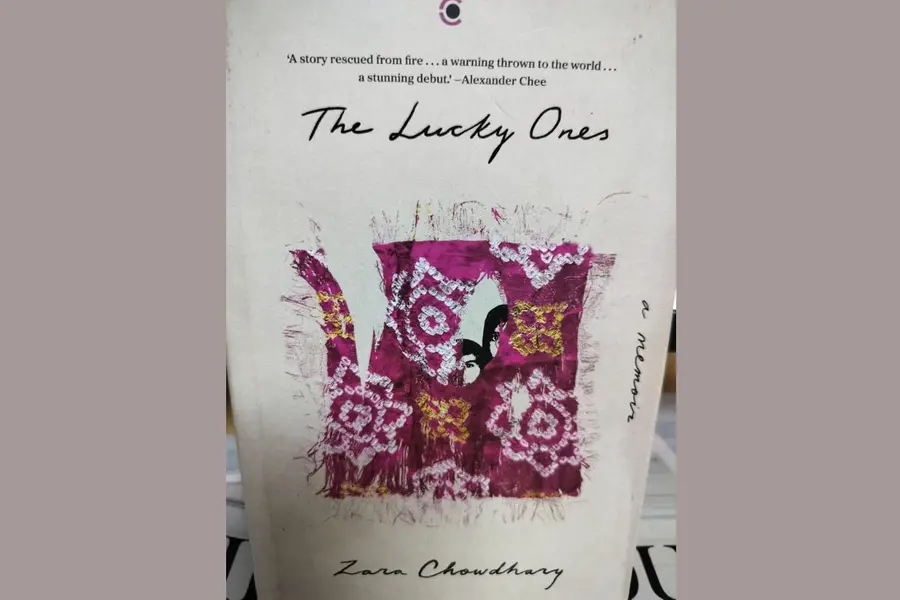
Zara Chaudhary describes herself, her close relatives and a few friends as the lucky ones. Zara's book 'The Lucky Ones' was released in 2024. But it was only in early January 2026 that the book came to my notice. Last January The Hindu newspaper gave the opinions of a few well-known people in India about books that touched their mind and heart. One book that many, including Shashi Tharoor, highlighted was Arundhati Roy's 'Mother Mary Comes to Me', the story of a mother written by her daughter. There has never been a book that has captivated my heart so much in recent times. You can read it from beginning to end in one sitting. Mother Mary Comes to Me is not just the story of a mother. It is also the story of her daughter, the story of Arundhati's brother Christopher and uncle Isaac, the story of her father Roy and Pradip Krishen, and the story of many other people. Kottayam, Meenachilar and Delhi, in different forms and expressions, unfold the astonishing and bewildering stories of human lives before us. What an experience, what a language, one cannot help but say. This memoir will tell you how Arundhati became Arundhati. I also read the book 'THE ELSEWHEREANS', written by Jeeth Thayil about his father TJS George and his mother Ammu. Jeeth Thayyil shares many insights about TJS. The journey the son takes to find his father's girlfriend in Vietnam is unforgettable. It is an extra terrestrial experience when the son comes face to face with his father's love. But, as the writing progresses , Jeeth loses his rhythm somewhere in the middle. If it had been trimmed down a bit with better editing, 'THE ELSEWHEREANS' would have truly been a magnum opus.
The book that touched Umar Khalid
Umar Khalid, who has been imprisoned in Tihar Jail by the Modi government for five and a half years, wrote in The Hindu about the best books he had read last year. The most important book Umar mentioned was 'The Lucky Ones' : '' Reading it brought back many memories of my own childhood of witnessing the first televised riot of India; how I started feeling the weight of our identity. It was as if the entire world was looking at you, talking about you, obsessing about you, caricaturing you. But at the same time if you were to be killed tomorrow, your personhood, you as an individual, will be forgotten. The book moved me to tears.'' I had no doubt that the book that moved Umar could never be a run of the mill . Zarah's book is also a memoir. Like Arundhati and Jeet Thayyil, Zarah Chaudhary also writes about her life. But Zarah's writing is different from those of the two. Because it is a book of life as well as a book of death. While Arundhati and Jeet write their memoirs from the brink of life, Sarah writes from the brink of death. After reading Mother Mary Comes to Me, we will know how memoirs become masterpieces of literature. We will also ask when there will be another such work. But Zarah's book erases these surprises, telling us how strange and profound every life is. Every generation and every nation has its own Arundhatis. In a language heated by the embers of experience, they create new horizons of writing. Zarah and her family are the ones who escaped death only by sheer luck. Like so many other Muslims in the 2002 Gujarat riots, Zara and her family could have fallen into the hands of the merchants of death at any time.
Jasmine C - 8
The ‘Lucky Ones’ begins with the anxiety and worry of a 16-year-old girl waiting for her mother at 7 pm on February 27, 2002 in Ahmedabad. Zara's mother has gone out and has not returned. TV channels are flashing the news that a train caught fire in Godhra and that around fifty people had died. Chief Minister Modi's announcement that the train was carrying Kar Sevaks returning from Ayodhya and that a terrorist attack had taken place is also being scrolled on the TV screen. Zara's father Zaheer is walking around the house in a frenzy. Zaheer's mother, Sara's grandmother, is praying. A riot could break out at any time. Their mother is missing... Where has she gone? Everyone in the house is tense. Zara's house is on the eighth floor of a flat complex named Jasmine. From the balcony of the house, you can see the street for a long distance. Vehicles whiz by on the road. Then the elevator comes to a stop on the eighth floor. The elevator door opens and Zara's mother steps in, with bags in both hands. Vegetables, eggs and meat. Zara's mother, Ruksana, says that she has come with supplies for at least a week, fearing that there may be a curfew. Then comes the riots. Riots rage on the streets of Gujarat. The wind of death blows from Narodya Patiya and Gulberg Society. News of the brutal murder of former Congress MP Ehsan Jeffrey and his companions shook the entire household. Zara and her family are devastated to hear the tragedy that befell Bilkis Banu and her family. The rioters can reach Zara's house at any time. But there are more Muslims in Sara's area. If Hindus are more on the other side of the river, Muslims are in the majority on this side of the bridge.
Many many lives
Reports are coming in that the police are shooting at those who are being attacked, not at the rioters. The army arrives in Ahmedabad the next day, but the state government does not cooperate, so it takes days for the army to take to the streets and enforce law and order. In the meantime, the rioters reach the area where Sara's house is located. But the ordinary Muslims there were already prepared. The rioters coming from outside are unable to break this resistance. Inside the house, Zara, her sister, and Sara's father's sister's daughter hide under the bed in fear. Zara is sure that they will tear her apart just as they tore Bilkis Banu apart. How can they escape? Will their father be able to protect them? If the rioters enter the apartment complex, will they be able to escape by any means? The Lucky Ones is not about single life. Zara writes with great tenderness and intensity about the different worlds that a husband and wife live in a house, and the existential crises that children face in between.
Zarah goes to write the SSLC exam after it was put off for weeks, and one can only read with bated breath. On the way, the 16-year-old girl is haunted by the fear that she will be attacked in the exam hall. The fear that the invigilator will look at her hall ticket and call her name out creeps like a millipede inside her. Zarah's heart is pounding with the thought if it was foolish to disobey her relatives' advice not to write the exam this year. Someone shouts at her that life is more important than exams. Yet Zara writes the exam, holding her life in her hands.
Memory of an exam
Zara recognizes one of the students who has come to take the exam. It is Zara's friend Saba. 'Are you okay?' Saba asks. Zara nods with tears of joy at seeing her friend alive, and the two hug. Zara and her friends have been instructed never to call Muslim names in public. Zara and Saba are terrified that someone who knows them will call their names out loud and come closer. Suddenly, someone calls out 'Saba' - it's another girl from their school. Zara looks at Saba. Saba's face is pale like a paper. 'Bloody idiot,' Sara's father Zaheer mutters. Luckily, the bell rings, signaling that it is time for the exam. Saba and Zara runs towards the hall. Then Zaheer tells his daughter; 'Keep your head down and keep writing.' Zarah writes that she has often thought about what to do when death approaches. Rioters in the streets shout: 'Kill those dogs, stab them.' Zarah continues; 'When you see death come for you with such vitality, something strange happens. Your body and mind go numb in preparation, as if bracing so that when the pain hits, you won't really feel it. I can sense my limbs losing feeling, my brain starting to consider rape as just a thing that can happen to my body, death is just a change in state, next a memory, a smell, eau de cologne and incense on a passing morning breeze. I have not told the girls that I have been practising every night since the violence began- lying in bed, teaching myself to allow my mind to float out upward and look away from my body, believing that if I can detach well enough, I may not feel anything. I may not even remember it.''
Father's Day
Zara describes her and her mother's inner conflicts with her father with the precision of a surgeon. After completing her MBA from the US, Zaheer, who returned to Gujarat and took up a job as a manager in the Gujarat Electricity Board, faces discrimination and harassment. The difficulties faced by a Muslim official in a state that has become a testing ground for Hindutva drive him to be a drunkard. Honest and never taking a single penny in bribes, Zaheer is frequently transferred. Zaheer's father is from Punjab. He ran away from his home in Punjab and came to Bombay during the partition. He later rose to become an officer in the Income Tax Department. His mother and siblings migrated to Punjab, which is now in Pakistan, at the same time. Zaheer's mother is Gujarati. His wife Ruksana's father is of Tamil origin and her mother is from Konkan. It is no exaggeration to say that Zara has the essence of Indian pluralism in her veins. Ruksana's father was an officer in the army. Ruksana studied in many states as her father was transferred to different places . When the marriage proposal came from Gujarat, Ruksana's father was no longer alive. Ruksana's mother took the initiative for this marriage, thinking that it would open up a wider world to her daughter. But as the wife of a man who himself got alienated in Ahmedabad, Ruksana was thrown into conflicts beyond her control. Discrimination in the office forces Zaheer to take VRS. As a result, he becomes increasingly addicted to alcohol. Zaheer dies of cancer at the age of 53, four years after the Gujarat riots. In May 2002, before the results of the 10th class exams are out, Zara, her sister Misbah and mother Ruksana leave for Chennai by train. Ruksana's mother is there. Ruksana's brothers are in America. Zara describes Ruksana shouting her Muslim names loudly to the ticket inspector when she learns that the train has left the Gujarat border and entered Maharashtra. It is a decisive moment. The moment when an Indian Muslim family tells the world that they have not yet lost their identity.
Mother is a nation
Zara writes about how the Tamils are the guardians and representatives of India's pluralism. Zara also shows how South India is different from North India. After moving to Chennai, Zara came to C8 Jasmine in Ahmedabad only twice. The first time was to see her father Zaheer, who was dying. The second time was after she had finished her studies and got a job in America. Zaheer used to tell his daughter that Gujarat was their home , that they were born here and that they would die there. Zaheer said this while tearing up the papers to immigrate to America. Zarah's book is ultimately a book of love. A book of survival and hope. Not hatred, but tenderness and empathy stand out in the pages of this book. There are not many writings that touch us so deeply about the crises faced by Muslims not only in Gujarat but also in North India as a whole. Zarah refers to Anne Frank's diaries. Anne was 15 years old when the Nazis threw her to her death. Zarah was 16 when she escaped from the brink of death. Zarah has dedicated the book to her mother and the holy Sufi. Zara says that mothers are our first nation. A mother is the land our feet take root in. Zara remembers that the struggles that her mother fought inside and outside the home were extraordinary. A life dedicated to her two daughters, for their advancement. 'The Lucky Ones' churns us. The venom and the nectar come out. It cleanses and liberates us. Aristotle's reference to catharsis in Poetics comes to mind. When we finish reading Sara's memoir , we are left with no bitterness but a desire to live on this earth. Thank you, Zara, for writing Gujarat and India so tenderly.
Published: 26 Feb 2026, 02:54 pm IST
Related Topics
Disclaimer: Kindly avoid objectionable, derogatory, unlawful and lewd comments, while responding to reports. Such comments are punishable under cyber laws. Please keep away from personal attacks. The opinions expressed here are the personal opinions of readers and not that of Mathrubhumi.
