

The central misconception underlying the drive toward "One Nation, One Language" is a fundamental misunderstanding of the nation-state itself
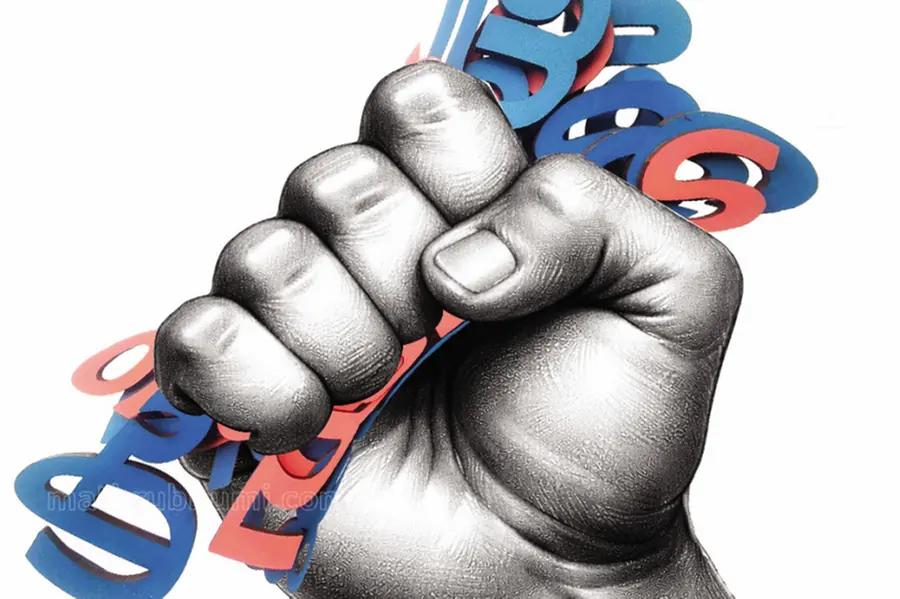
To speak of the linguistic question in India today is to risk immediate mischaracterization. Let me state my position without ambiguity: I have nothing against Hindi. It is a magnificent language, rich in literary inheritance, vast in its expressiveness, and spoken by millions of our fellow citizens. I have argued for decades that more of us in the South ought to learn it, both to appreciate its depth and to converse seamlessly with our North Indian countrymen, especially since they are coming to our state in large numbers, both as workers and as tourists.
My objection is not to Hindi; my objection is to imposition. The distance between those two concepts is not a minor semantic distinction—it is the entire argument.
Also Read
When the Republic confronted the linguistic anxieties of the 1960s, it forged an elegant settlement: the Three-Language Formula. The logic of that compromise was simple, balanced, and deeply federalist. Non-Hindi-speaking states would teach the regional mother tongue, English, and Hindi. Hindi-speaking states, in reciprocal goodwill, would teach Hindi, English, and one modern Indian language from outside the Hindi belt—preferably a Southern tongue.
Had that solemn compact been honoured, we would today have a generation in Lucknow, Bhopal, and Patna comfortably reading Malayalam, Tamil, or Bengali. Instead, the burden of national integration was left to be carried on a single shoulder. Most of us in the South (with the exception of Tamil Nadu) faithfully learned Hindi, while virtually no one in the North was asked to learn ours.
A bargain kept by only one party ceases to be a settlement; it becomes a levy or a tax. To resurrect administrative pressure now, while ignoring decades of unfulfilled obligations on the other side, is to compound a historical breach of trust.
The stakes in this debate are not merely sentimental or cultural; they are profoundly material. When central recruitment examinations, judicial proceedings in higher courts, technical education, and everyday administrative communication tilt systematically toward Hindi, a young job applicant from Thiruvananthapuram, Coimbatore, or Guwahati is placed at an immediate, structural disadvantage.
Through no fault of their own, but simply by an accident of birth, non-Hindi-speaking youth are required to master a non-native language to compete for central government employment or national institutions, while native Hindi speakers write in the language of their mothers’ laps or the nursery. This is nothing less than a permanent tax on opportunity imposed upon a vast section of our citizenry. It strikes at the very heart of equal citizenship guaranteed by Article 14 of our Constitution.
For a state like Keralam, this inequity carries a bitter resonance. Keralam boasts near-universal literacy, high social development indicators, and makes a substantial net contribution to the national exchequer. Yet, under successive Finance Commission awards, it faces a steadily declining share of central tax transfers relative to what its citizens generate. To combine this fiscal centralization with cultural centralization—asking a state to pay more to the Union while ensuring its citizens are heard less—is politically unsustainable and morally indefensible.
If “Equal Citizenship” is the key principle, a citizen from Kerala or Assam should never be forced to navigate a higher barrier to enter public service than a citizen from Uttar Pradesh or Madhya Pradesh.
It is necessary to restate what the Constitution actually says, rather than what administrative circulars often imply. Article 343 designates Hindi in the Devanagari script (along with English) as the Official Language, the Rajbhasha, of the Union for administrative convenience. The Constitution deliberately does not designate a "National Language" (Rashtrabhasha), a concept alien to our founding document.
The Official Languages Act of 1963, enacted under Prime Minister Jawaharlal Nehru and reaffirmed in 1968, explicitly provided for the continued use of English for official purposes alongside Hindi. This was not a concession to colonialism; it was a statutory guarantee to non-Hindi-speaking states that their access to the Union government would never be compromised.
Executive circulars, administrative directives, or enthusiasm for monolingual signage cannot rewrite statutory law, nor can they override constitutional guarantees.
We cannot resolve this debate through outrage alone; we require a constructive, concrete roadmap anchored in federal principles. First, we must enforce genuine reciprocity. The government should audit the implementation of the Three-Language Formula across Hindi-speaking states. If non-Hindi languages are not being taught in northern classrooms, the policy should be restructured rather than selectively weaponized. Teaching Sanskrit as the third Indian language is a cop-out that can be remedied by requiring the third language to be the official language of an Indian state.
Second, we need to democratize Central Examinations. The government should conduct every central recruitment examination, including those for the armed forces, public sector enterprises, and national banking, in all 22 languages listed in the Eighth Schedule of the Constitution. And we should also protect the Link Language concept by retaining English as an indispensable associate language. Ironically, in a land of intense linguistic pride, English serves as the great neutral leveller, enabling a Keralite and a Nagaland native to converse without either feeling linguistic subjugation.
Education sits on the Concurrent List. No directive regarding language instruction or medium of examination should ever be issued without formal consultation with the States through the Inter-State Council.
The central misconception underlying the drive toward "One Nation, One Language" is a fundamental misunderstanding of the nation-state itself. The insistence that a country requires a single language to be truly united is not an Indian idea; it is a nineteenth-century European notion, born out of Romantic nationalism and exported globally during the era of nation-building. Europe believed that to have a nation, one had to forge one religion, one history, and one language, a belief that repeatedly led that continent to catastrophic conflict. We don’t need to borrow that divisive idea that would threaten the harmony of our pluralist society.
India’s grand originality was to demonstrate the precise opposite: that a civilization could assemble itself into a lasting democratic republic through consent, across dozens of scripts, hundreds of languages, and thousands of dialects. Our national unity does not depend on suppressing our diversity; it relies entirely on accommodating it.
Unity has never meant uniformity in this country. The moment we forget that essential truth, we shall not have become more united. We shall merely have become less Indian.
Published: 01 Aug 2026, 09:21 am IST
ABOUT THE AUTHOR
Related Topics
Disclaimer: Kindly avoid objectionable, derogatory, unlawful and lewd comments, while responding to reports. Such comments are punishable under cyber laws. Please keep away from personal attacks. The opinions expressed here are the personal opinions of readers and not that of Mathrubhumi.