
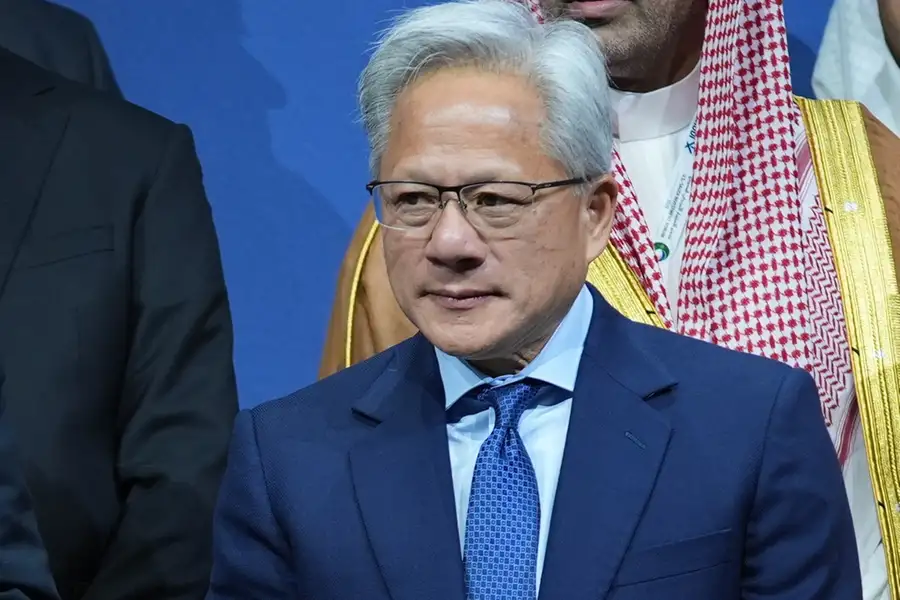
Following the resignation of co-founder Jensen Huang, chip giant Nvidia and the global technology sector are navigating an unprecedented period of transition. While the exit of artificial intelligence's most prominent public figure initially rattled stock markets, attention in Washington and Wall Street has quickly turned to what lies ahead for the four-trillion-dollar company. Here is an explainer on the emerging post-resignation scenarios, ongoing national security probes, and market dynamics shaping Nvidia's future.
Leadership transition and search for a permanent chief
Chief Financial Officer Colette Kress has stepped in as interim chief executive officer while retaining her finance role. Kress, who has served at Nvidia for over 13 years following prior leadership roles at Cisco, Microsoft, and Texas Instruments, pledged to build upon the foundation laid over the past 33 years.
To guide corporate governance during this critical period, Harvey C. Jones has been appointed as Nvidia's first-ever chairman. Meanwhile, the board is actively evaluating both internal and external candidates for a permanent replacement.
The leadership vacuum has also sparked political commentary in Washington. US President Donald Trump publicly suggested Apple Executive Chairman Tim Cook as a successor, posting on social media that a "Legend replaces a Legend!". However, this commentary drew swift backlash from House Democratic leader Hakeem Jeffries, who stated that the administration was inappropriately interfering in corporate affairs rather than focusing on working-class citizens.
Congressional scrutiny and national security probes
Beyond executive management, former chief executive Huang faces impending testimony before US congressional committees. Republican lawmakers confirmed that negotiations are underway for a closed-door briefing—recorded under oath and transcribed—potentially before Thanksgiving. House Foreign Affairs Committee Chairman Brian Mast indicated that committees are prepared to issue a subpoena if necessary.
Lawmakers are seeking to determine whether sensitive technology or privileged company information was compromised through Huang's reported association with a businesswoman suspected of links to Chinese intelligence. House Select Committee on the Chinese Communist Party Chairman John Moolenaar highlighted the necessity of the probe, stating:
"I think it's important that we understand Chinese intelligence, how they worked in this situation, and what information and what privileged information they had access to, as well as what advocacy they had for certain policy positions."
The congressional inquiry is also expected to extend to parallel leadership entities within Nvidia and scrutinise Singapore-based partner Megaspeed International regarding compliance with US semiconductor export controls.
Financial markets and rival chipmakers adapt
On Wall Street, initial market shock moderated as investors recalibrated the competitive landscape. After dropping 14 per cent at the opening bell, Nvidia shares recovered to close 4.3 per cent lower.
Rival chip designers Broadcom and Advanced Micro Devices (AMD) gained over 5 per cent, indicating investor expectations that AI chip demand could spread across competing firms. Explaining this shift, Briefing.com analyst Patrick O'Hare noted:
"Something that's going on here that's kind of helping to mitigate the losses is that investors are recalibrating who benefits if Nvidia suffers."
Reflecting on the corporate turning point, Dan Ives of Yorkville Ives & Co. observed:
"The old Jensen, the black leather jacket, the Godfather of AI, the rock star viewed as the face of the AI boom, is over and in the past; his value to the company pre and post this week is dramatically different, and the board did what we said it needed to do, which is rip off the band-aid and take Nvidia into its next chapter without him after this dark moment for Jensen and Nvidia."
What lies ahead for the global AI boom
The executive exit comes at a crucial juncture for global tech infrastructure and broader financial stability. Cloud provider CoreWeave, in which Nvidia holds a 13 per cent stake, saw its shares drop nearly 7 per cent following the announcement.
However, FHN Financial analyst Chris Low suggested that a moderated buildout speed might ease wider economic pressures:
"A slowdown in AI development would be a positive thing from an inflation and interest rate perspective. The buildout is a primary driver of demand-side inflation pressures, after all, and the loss of Jensen Huang might not mean the end of AI development, but it could slow its progress."
Summarising the ultimate industry test ahead, Forrester research director Stephanie Balaouras remarked:
"If Nvidia stabilizes quickly under new leadership, the AI infrastructure boom will have demonstrated resilience. If its stock, financing relationships, or ecosystem commitments remain under sustained pressure, that would add evidence to the fragile side of the AI bubble ledger."
Published: 13 Nov 2026, 06:25 am IST


Disclaimer: Kindly avoid objectionable, derogatory, unlawful and lewd comments, while responding to reports. Such comments are punishable under cyber laws. Please keep away from personal attacks. The opinions expressed here are the personal opinions of readers and not that of Mathrubhumi.
