
Mahindra Vision.S SUV concept debuts with futuristic cabin, spacious design and hints at Mahindra’s next car
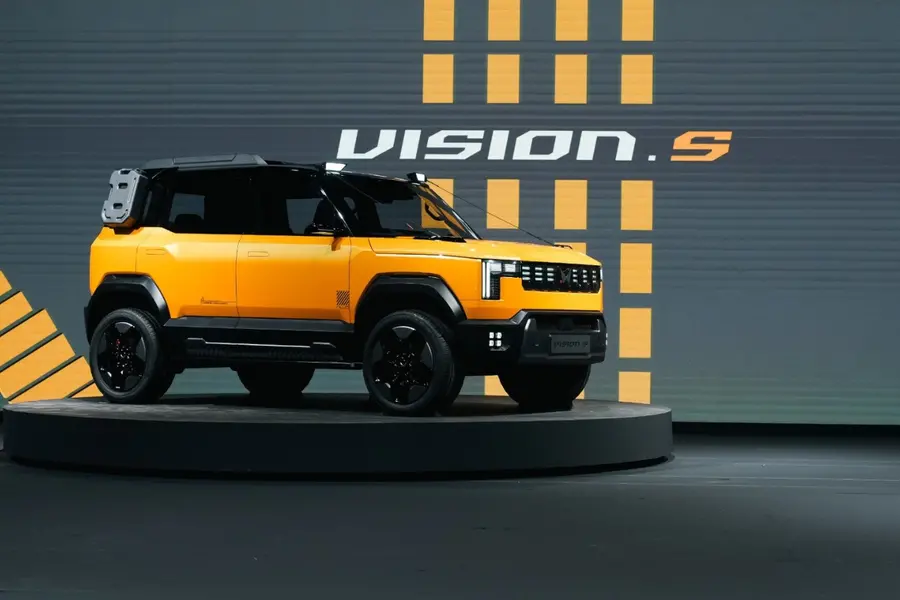
Mahindra & Mahindra showcased four new concept SUVs during its Independence Day celebrations, with the Mahindra Vision.S concept drawing particular attention. Expected to inspire the next-generation Bolero, this SUV stands out with an all-new exterior design language and a cabin that departs from Mahindra’s usual cars. The company has now released digital renders of the interior, giving a closer look at what to expect.
Inside, the dashboard features twin digital displays, each likely measuring around 12 inches. These screens are not connected but are divided by a vertical air-conditioning vent. Mahindra is tipped to introduce a new operating system with updated graphics to power the displays, which may also include dedicated controls. A three-spoke round steering wheel with haptic touch controls for essential functions further enhances the modern feel.
Interestingly, Mahindra has chosen to break away from the industry-wide trend of merging all vehicle functions into the infotainment system. Instead, the Vision.S retains physical buttons on the centre console, including a dedicated panel for climate control and other core functions. The neatly integrated layout is designed to aid muscle memory, ensuring convenience and ease of use.
The Vision.S concept is built on Mahindra’s NU.IQ architecture, engineered for flexibility. The platform can support models ranging from 3,990 mm to 4,320 mm in length, making it suitable for both compact sub-4 metre SUVs and larger vehicles. Despite its size, Mahindra claims it offers the roomiest cabin in its class across both categories.
The platform is designed to accommodate multiple powertrain options, including front-wheel-drive and all-wheel-drive layouts. It also supports both left-hand-drive and right-hand-drive markets, making it globally adaptable. With a 2,665 mm wheelbase and optimised overhangs – 745–850 mm at the front and 550–805 mm at the rear – the architecture allows for versatile body styles while balancing performance and practicality.
Published: 17 Aug 2025, 12:32 pm IST
Related Topics
Disclaimer: Kindly avoid objectionable, derogatory, unlawful and lewd comments, while responding to reports. Such comments are punishable under cyber laws. Please keep away from personal attacks. The opinions expressed here are the personal opinions of readers and not that of Mathrubhumi.
