
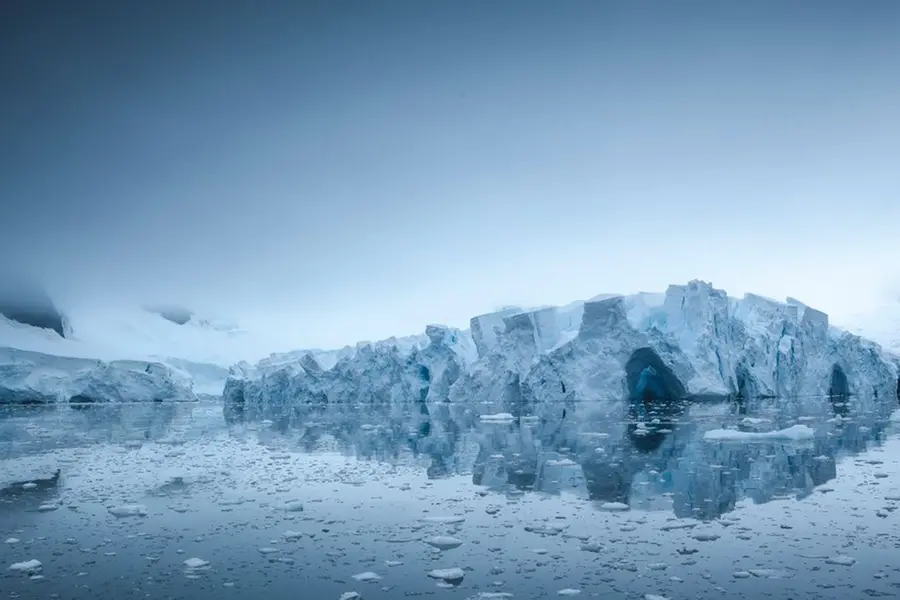
The melting of glaciers, a direct effect of global warming, is accelerating and bringing serious consequences for people and the environment. From threatening freshwater supplies to increasing natural disasters, the shrinking of glaciers is reshaping the world.
According to the United Nations' World Meteorological Organization (WMO) and UNESCO, melting glaciers can lead to disasters such as floods, landslides, and avalanches. The lakes formed by melting ice risk overflowing, endangering towns and villages downstream. Additionally, retreating glaciers expose unstable rock and sediment, increasing the likelihood of collapses.
Legal and economic implications
As the risks increase, legal action is being taken against major carbon emitters. In Germany, Peruvian farmer Saul Luciano Lliuya is suing the energy giant RWE for "climate justice," arguing that the company should contribute to protecting his hometown, Huaraz, from the dangers posed by an expanding glacier lake.
Beyond legal cases, economic consequences are significant. Melting glaciers initially cause a rise in river and lake levels, but this effect is temporary. Over time, these water sources will decline, affecting agriculture, energy production, and drinking water supplies.
Freshwater supply under threat
"We think that the majority of catchments around the globe are going to reach this peak water within the century, and about 30 percent or more have already passed," said Michael Zemp, director of the World Glacier Monitoring Service.
Glacier disappearance will impact freshwater supplies, especially in Central Asia and the central Andes. During hot and dry months, glaciers often provide the only water resource for many regions. According to UNESCO, mountains contribute up to 60 percent of the world's annual freshwater flow, and over two billion people depend on mountain water for drinking, sanitation, and livelihoods.
Glacier shrinking: A matter of survival
"Preservation of glaciers is not just an environmental, economic, and societal necessity: it's a matter of survival," said Celeste Saulo, head of the WMO. The organisation reported that in 2024, all 19 of the world's glacier regions recorded a net loss of mass for the third consecutive year.
There are more than 275,000 glaciers worldwide, covering around 700,000 square kilometres. However, climate change is causing rapid shrinkage. Since 1975, glaciers have lost over 9,000 billion tonnes of ice, according to WGMS data.
Impact on agriculture and hydroelectricity
Glacier retreat affects multiple economic sectors, including farming, forestry, tourism, and energy. "In the Andean countries, 85 percent of hydropower is generated from mountain areas," UNESCO noted.
The effects of glacier loss are especially severe for high mountain communities. The Aymara minority, for example, has been forced to leave Andean villages as pastures degrade. Globally, glacier retreat will impact two-thirds of the world's irrigated agriculture.
Effects on energy and industry
Melting glaciers also impact energy production. In France, rising river temperatures during heatwaves and low flow rates during droughts have slowed nuclear power production. In recent years, low water levels in Europe’s River Rhine have threatened waterborne transport.
"It happens sometimes now, but in the future, it might happen more and more often as hot and dry periods will increase, and the problems will be accelerated by the lack in glacial melt," said Swiss glaciologist Matthias Huss.
Sea level rise and coastal flooding
Glaciers are a major contributor to rising sea levels.
"After seawater expansion caused by rising temperatures, glaciers are the second biggest contributor to rising sea levels, but they are expected to become the main driver over the next decades," said Zemp.
Global sea levels have risen by 10 centimetres since 1993, according to NASA satellite observations.
"Each additional millimetre of sea level rise exposes an additional 200,000 to 300,000 people to annual flooding. So small number, big impact," Zemp explained.
Coastal cities and industries will feel the effects. In 2011, major flooding in Bangkok disrupted the supply of hard drives for computer manufacturers worldwide, leading to increased computer prices and challenges in car manufacturing.
"And you see in a globalised, interconnected economy, these changes are impacting everyone," said Stefan Uhlenbrook, WMO’s water and cryosphere director.
(Agency inputs)
Published: 21 Mar 2025, 10:34 am IST
Disclaimer: Kindly avoid objectionable, derogatory, unlawful and lewd comments, while responding to reports. Such comments are punishable under cyber laws. Please keep away from personal attacks. The opinions expressed here are the personal opinions of readers and not that of Mathrubhumi.
