
A rare total solar eclipse on August 12, 2026, will briefly turn day into darkness in parts of the world, creating one of the most dramatic sky events of the decade.
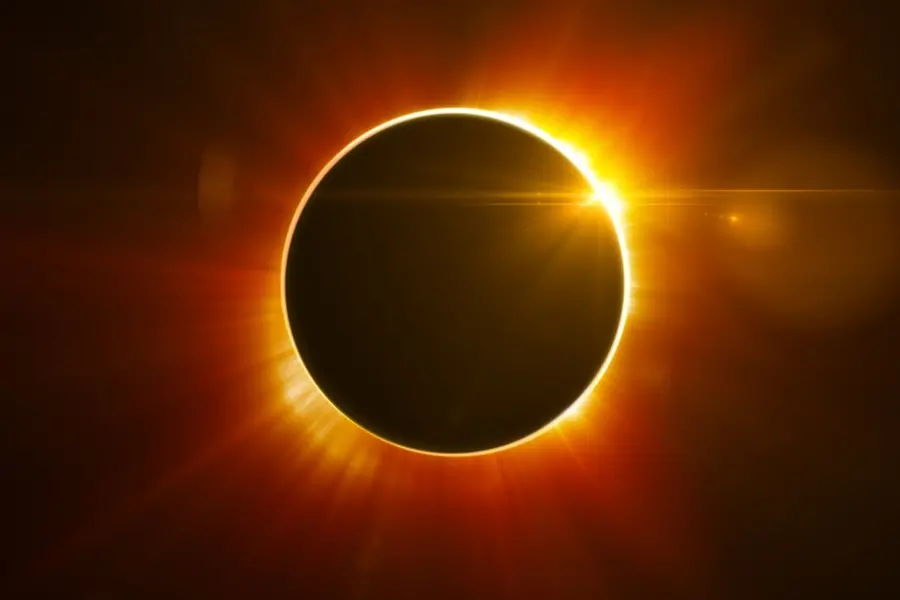
A rare and spectacular celestial event is set to light up and darken the skies in August 2026, as a total solar eclipse will briefly turn day into near-night conditions in parts of the world.
The event, known as the total solar eclipse of 2026, will take place on August 12, 2026 (Wednesday), making it the second solar eclipse of the year. Scientists say this eclipse will be especially striking because, for a few moments, the Sun will be completely hidden behind the Moon, creating an eerie and unforgettable atmosphere.
Will the day turn into darkness? How?
During a total solar eclipse, the Moon moves directly between the Earth and the Sun, blocking sunlight completely for a short period. At the peak of the 2026 eclipse, daylight will suddenly fade into darkness, almost like dusk or night arriving in the middle of the day.
In areas where the eclipse is visible, the sky may turn unusually dim, temperatures can drop slightly, and stars may even become visible in the middle of the daytime sky. The Sun’s outer atmosphere, known as the corona, will glow faintly around the Moon, creating one of the most dramatic sights in nature.
Where will solar eclipse be visible
The total solar eclipse of August 12, 2026, will not be visible everywhere. According to astronomical details, it will be seen in select regions including parts of Russia, the Arctic, Greenland, Iceland, and the Atlantic Ocean region.
Unfortunately, the eclipse will not be visible in India, as it will occur during nighttime hours in the country. Because of this, traditional religious eclipse-related practices such as “Sutak” will not apply.
What makes this eclipse special
Astronomers describe total solar eclipses as one of the most stunning natural events, as they temporarily transform daylight into darkness. Unlike partial or annular eclipses, a total eclipse completely covers the Sun, making it the most visually dramatic form of solar eclipse.
Beyond science, many people also see eclipses as moments of symbolic change, reflection, and cosmic energy shifts, adding to the fascination surrounding the event.
Another rare eclipse ahead
Experts also point to an even more extraordinary event coming soon after. The August 2, 2027 solar eclipse is expected to be one of the longest total solar eclipses of the century, making it another major astronomical highlight to watch out for.
Published: 12 Apr 2026, 02:57 pm IST
Related Topics
Disclaimer: Kindly avoid objectionable, derogatory, unlawful and lewd comments, while responding to reports. Such comments are punishable under cyber laws. Please keep away from personal attacks. The opinions expressed here are the personal opinions of readers and not that of Mathrubhumi.
