
Groundbreaking study uses Mira variable stars to calculate Hubble constant with 3.7% precision, offering new insights into the universe`s expansion.
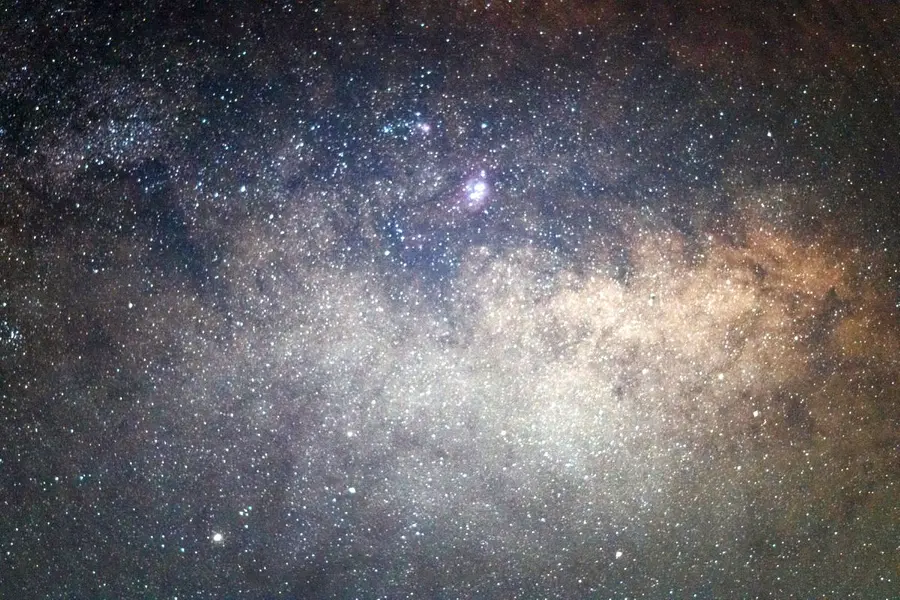
In a major step toward resolving one of the biggest mysteries in modern cosmology, a groundbreaking study led by Professor Anupam Bhardwaj of the Inter-University Centre for Astronomy and Astrophysics (IUCAA) has used a new type of star to precisely measure the universe's expansion rate, also known as the Hubble constant.
The research, published in the Astrophysical Journal, used Mira variable stars -- a type of pulsating giant star -- to create a new "cosmic distance ladder." This method provides an independent calibration of the supernovae used to measure cosmic distances, offering a valuable alternative to the traditional use of Cepheid variables.
A New Cosmic Measuring Stick
For the study, researchers monitored 40 oxygen-rich Mira variable stars in 18 stellar clusters within our galaxy. With precise distance data from the European Space Agency's Gaia mission, the team was able to determine the absolute luminosities of these stars.
"We used Miras in our galaxy as anchors for the first time to determine the most precise cosmic expansion rate based on these cool stars," said Prof Bhardwaj, the study's lead author. "This work highlights that metal-abundance affects Mira luminosity three times less than Cepheids, making Miras a promising alternative tool for Hubble constant determination."
The new measurement calculated the Hubble constant with a remarkable 3.7% precision. This new value is consistent with the one measured using Cepheid variables, lending powerful support to the idea that the Hubble tension -- the disagreement between measurements of the universe's expansion rate -- is not due to errors in measurement but may point to "new physics."
Nobel Laureate Adam Riess, a co-author on the study, believes the findings provide a "powerful resolution to the ongoing debate," suggesting that the discrepancy is "unlikely due to the measurement errors, and points to a more fundamental cause."
Mira's Future in Unraveling the Cosmos
The study's success in calibrating Miras to match the precision of Cepheids opens a new path for cosmological research.
While the current number of galaxies with known Miras is limited, the upcoming Rubin Observatory is expected to discover a vast number of them, providing astronomers with a new tool to map the age and size of the universe with greater accuracy.
Dr Marina Rejkuba, another co-author and staff astronomer at the European Southern Observatory, said she expects the study to have a "long-term impact as it ensures our understanding of the potential of Mira variable stars as a new well calibrated anchor for the Hubble constant determination."
Published: 01 Sept 2025, 12:17 pm IST
Related Topics
Disclaimer: Kindly avoid objectionable, derogatory, unlawful and lewd comments, while responding to reports. Such comments are punishable under cyber laws. Please keep away from personal attacks. The opinions expressed here are the personal opinions of readers and not that of Mathrubhumi.
