
The AI scanned millions of images from a semen sample, identifying rare sperm cells that were missed by traditional methods
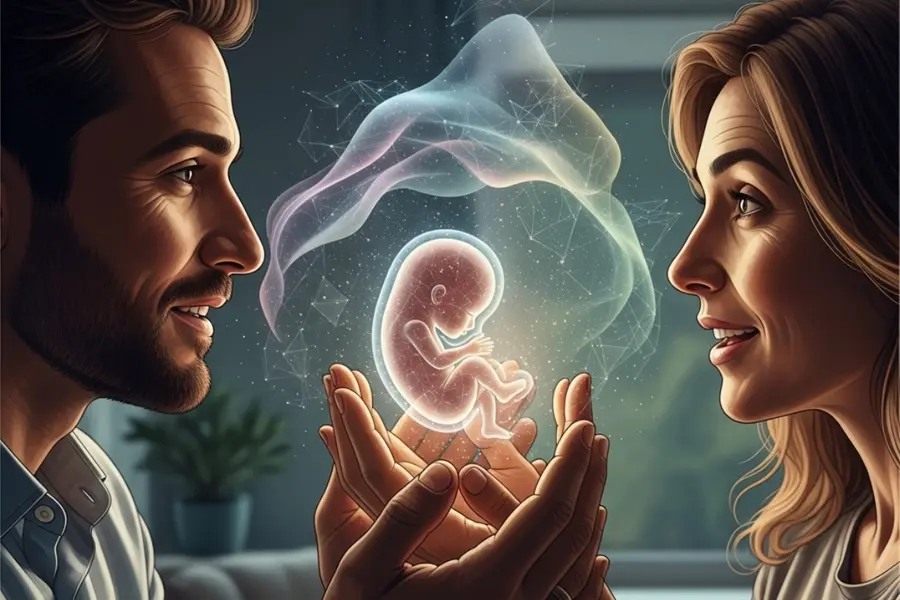
A breakthrough use of artificial intelligence has enabled an infertile couple to conceive after nearly two decades of unsuccessful attempts. Researchers have described how an AI algorithm identified two viable sperm cells from millions of images, making conception possible after 19 years. The details of this remarkable case were published in The Lancet journal.
A nineteen-year struggle ends in hope
The couple, a 39-year-old man and a 37-year-old woman in the United States, had previously undergone several in vitro fertilisation (IVF) cycles. These included repeated manual searches for sperm and two surgical procedures to extract them. Despite these efforts, the results had always been disappointing.
“A semen sample can appear totally normal, but when you look under the microscope you discover just a sea of cellular debris, with no sperm visible,” explained senior author Zev Williams, director of the Columbia University Fertility Center.
Williams added, “Many couples with male-factor infertility are told they have little chance of having a biological child.”
Understanding male-factor infertility
Men diagnosed with azoospermia, a condition in which ejaculate contains little or no sperm, often have to undergo surgical procedures to extract sperm directly from the testes. However, such procedures are not always successful and can sometimes cause complications such as vascular problems, inflammation, or a temporary drop in testosterone levels, the researchers noted.
Introducing the STAR method
To address these challenges, the research team developed a new approach known as Sperm Tracking and Recovery (STAR). The method uses artificial intelligence to enable “high-speed, real-time identification and isolation of rare sperm in semen samples previously classified as azoospermic.”
According to the team, high-powered imaging technology scans the semen sample, capturing over eight million images in less than an hour. The AI system then identifies sperm cells, and a specially designed chip with tiny, hair-like channels isolates the portion of the sample that contains them. A robot later extracts the sperm cell, which can then be used to create an embryo or preserved for future use.
The AI breakthrough in action
The researchers described their process in detail: “A 3.5-millilitre ejaculated semen sample was gently washed, suspended in 800-microlitre semen analysis buffer, and processed using the STAR system. Manual slide-based examination revealed no sperm.”
“In contrast, the STAR system analysed 2.5 million images in approximately 2 hours and detected seven sperm cells: two motile and five non-motile,” they said.
The two motile sperm cells were injected into mature oocytes, which then developed into embryos. The embryos were transferred on the third day, and 13 days later, the woman had her first-ever positive pregnancy test. This progressed to a confirmed clinical pregnancy.
At eight weeks of gestation, the patient moved to obstetric care, where an ultrasound showed normal foetal development and a heartbeat of 172 beats per minute, the team reported.
The promise of AI in fertility treatment
Although this case involved only one couple, the findings demonstrate that the STAR method could help overcome long-standing challenges in treating men with azoospermia. The researchers emphasised that larger clinical trials are already underway to test the system’s effectiveness in a wider patient population.
PTI Inputs
Published: 03 Nov 2025, 03:03 pm IST
Related Topics
Disclaimer: Kindly avoid objectionable, derogatory, unlawful and lewd comments, while responding to reports. Such comments are punishable under cyber laws. Please keep away from personal attacks. The opinions expressed here are the personal opinions of readers and not that of Mathrubhumi.
