
Unlike conventional industrial robots that simply execute pre-programmed tasks, physical AI focuses on autonomous machines capable of understanding their surroundings, making decisions and safely interacting with people
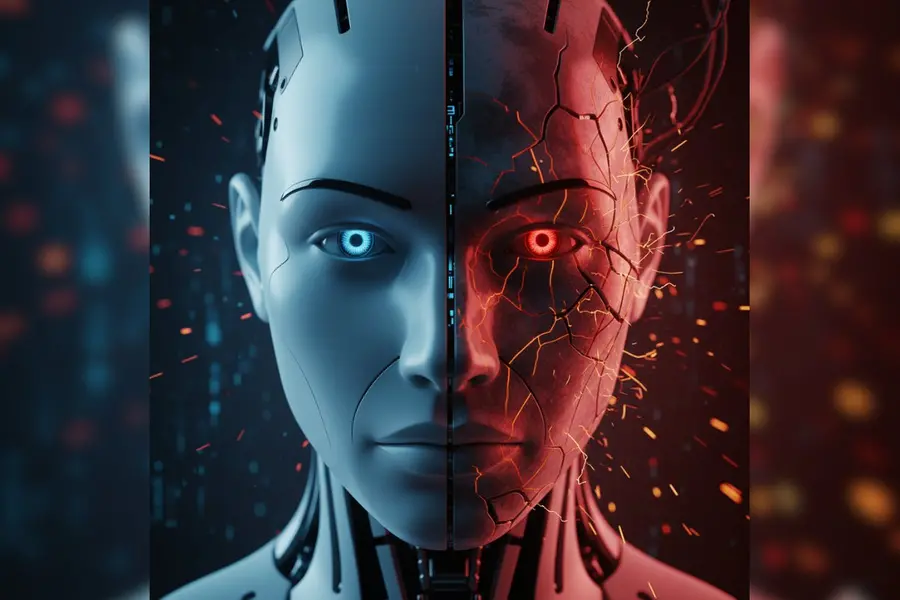
Tokyo: Japanese technology giant Fujitsu has joined hands with Nvidia and some of the country's biggest robotics manufacturers to accelerate the development of "physical AI" — a new generation of intelligent robots designed to think, adapt and work safely alongside humans.
The initiative, unveiled in Tokyo on Thursday, brings together Nvidia CEO Jensen Huang, Fujitsu CEO Takahito Tokita, and the heads of leading industrial robotics companies Fanuc Corp., Yaskawa Electric Corp. and Kawasaki Heavy Industries.
The collaboration builds on an AI partnership announced by Nvidia and Fujitsu last year and aims to combine Japan's manufacturing expertise with Nvidia's artificial intelligence technology.
Unlike conventional industrial robots that simply execute pre-programmed tasks, physical AI focuses on autonomous machines capable of understanding their surroundings, making decisions and safely interacting with people in factories, hospitals and even homes.
The companies said the technology could help tackle Japan's worsening labour shortage as the country's rapidly ageing population increases demand for automation and elderly care.
Highlighting Japan's strengths in precision engineering, Huang said the country is uniquely positioned to lead the next wave of robotics.
"Japan's excellence is a philosophy, a way of life. 'Made in Japan' means the highest quality, the highest precision. Japan sets the standard for the state-of-the-art in modern manufacturing," he said.
Huang also praised Japan's manufacturing culture, pointing to "kaizen," the philosophy of "continuous improvement," as a key advantage in developing advanced robots capable of operating safely around humans.
The companies did not provide a timeline for when physical AI robots would become part of everyday life but said the first phase of the collaboration is expected to begin later this year.
Executives also said no decision has been taken on forming a joint venture, although they did not rule out such a move in the future.
Japan has openly acknowledged that it trails countries such as the United States and China in artificial intelligence and is seeking to close the gap through increased investment.
Prime Minister Sanae Takaichi's government recently announced plans to mobilise more than 370 trillion yen (about $2.3 trillion) in public and private investment by 2040 across key technology sectors, including physical AI, semiconductors and data centres.
Nvidia has steadily expanded its footprint in Japan through partnerships with major companies and institutions, including Toyota Motor Corp., Sega, leading banks and the national research institute Riken, as it pushes to make AI a central part of the country's technological future.
Published: 16 Jul 2026, 01:51 pm IST
Related Topics
Disclaimer: Kindly avoid objectionable, derogatory, unlawful and lewd comments, while responding to reports. Such comments are punishable under cyber laws. Please keep away from personal attacks. The opinions expressed here are the personal opinions of readers and not that of Mathrubhumi.
