
ISRO has selected MM-4 in the Moon’s South Polar Mons Mouton region as the landing site for its Chandrayaan-4 mission
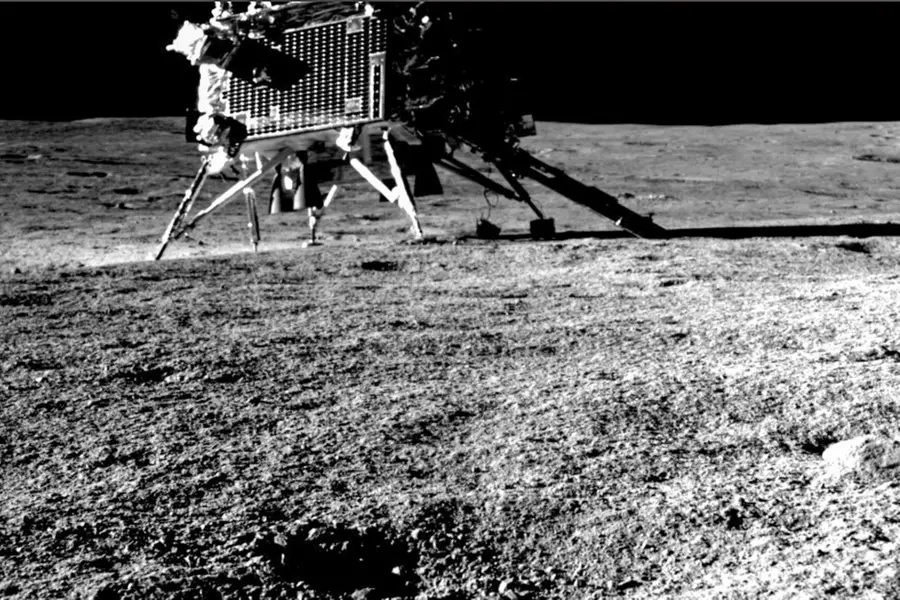
The Indian Space Research Organisation (ISRO) has selected a site in the Moon’s South Polar region for its upcoming Chandrayaan-4 mission, which is at least two years away. The mission has received approval from the union government and is planned as India’s most complex lunar endeavour yet, designed as a lunar sample-return mission.
ISRO Chairman V Narayanan previously stated that Chandrayaan-4 is targeting a launch in 2028. Officials have focused on ensuring the mission’s success by carefully selecting a suitable landing site with minimal hazards.
Also Read

The ISRO team examined four locations within the Mons Mouton (MM) region of the Moon, identified as MM-1, MM-3, MM-4, and MM-5. Using high-resolution Orbiter High Resolution Camera (OHRC) multi-view image datasets, the terrain characteristics of each site were fully analysed.
After evaluation, MM-4 was chosen for the landing. The site covers a one-kilometre by one-kilometre area with the lowest hazard percentage, a mean slope of 5 degrees, mean height of 5,334 metres, and the highest number of hazard-free grids measuring 24 metres by 24 metres. These factors make MM-4 suitable for a safe soft landing.
The Chandrayaan-4 spacecraft will consist of multiple modules: a Propulsion Module (PM), Descender Module (DM), Ascender Module (AM), Transfer Module (TM), and Re-entry Module (RM). The combined stack of DM and AM will perform a soft landing at the designated MM-4 site, with navigation, guidance, and control systems ensuring a safe descent.
ISRO officials emphasised that selecting a landing site meeting all constraints is crucial for the success of the mission. The proper choice of MM-4 is expected to minimise risks during descent and facilitate the complex operations of the Chandrayaan-4 mission.
(With PTI inputs)
Published: 09 Feb 2026, 09:29 pm IST
Related Topics
Disclaimer: Kindly avoid objectionable, derogatory, unlawful and lewd comments, while responding to reports. Such comments are punishable under cyber laws. Please keep away from personal attacks. The opinions expressed here are the personal opinions of readers and not that of Mathrubhumi.