
Nagaland University researchers have created a flexible supercapacitor prototype for wearables, IoT devices, and electric vehicles.
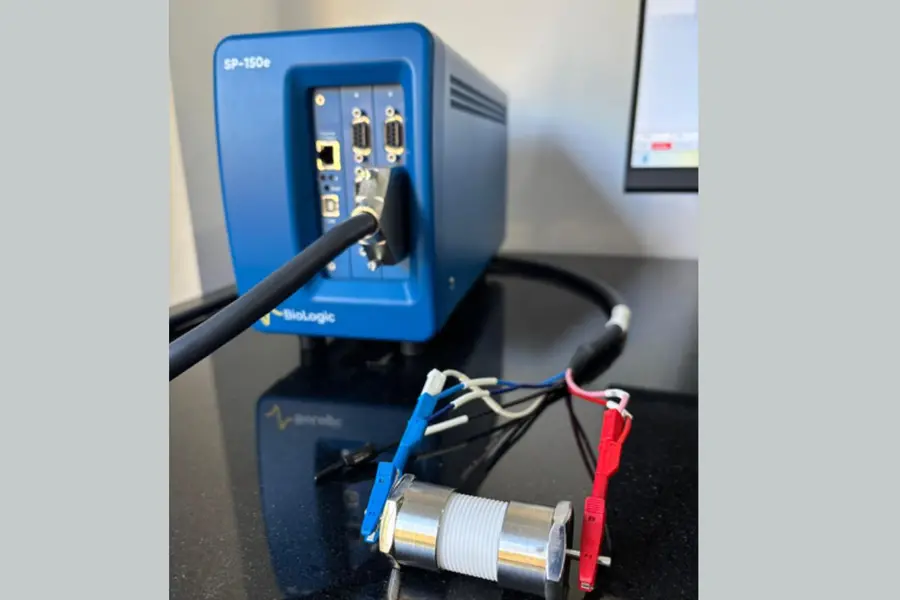
Nagaland: Researchers at Nagaland University have created a flexible supercapacitor device capable of powering next-generation wearable electronics, electric vehicles (EVs), and renewable energy systems, a breakthrough that could transform energy storage technologies in India.
The research, supported by the Indian Institute of Science (IISc) Bangalore and funded by the Anusandhan National Research Foundation (ANRF), aims to reduce India’s dependence on imported batteries while promoting clean energy and storage technologies under the Atmanirbhar Bharat initiative, said the researchers.
Moving beyond lab-scale material development, the team built a working prototype, demonstrating the device’s practical viability. Immediate applications include health-monitoring devices, IoT gadgets, and robotics, while the technology also holds potential for electric vehicles, according to a paper published in the peer-reviewed journal RSC Advances.
Flexible supercapacitors like these could enhance regenerative braking systems, provide quick acceleration boosts, and extend battery lifespans.
“The device combines flexibility, high energy storage, and durability, which are critical for future portable and wearable technologies. The study is the first to compare tungsten, vanadium, and cobalt doping in molybdenum diselenide for energy storage. Among them, cobalt proved most effective,” said Dr Vijeth H, Assistant Professor, Department of Physics, Nagaland University. “The research strengthens India's path toward sustainable and self-reliant energy solutions,” he added.
The device, developed at the Advanced Materials for Device Applications (AMDA) Research Laboratory on the Lumami campus, uses cobalt-doped molybdenum diselenide, a cutting-edge two-dimensional (2D) material. It delivers an impressive energy density of 34.54 Wh kg⁻¹ and remains stable over 10,000 charge-discharge cycles, maintaining performance even after repeated bending and twisting.
With the rapid growth of wearables, electric mobility, and renewable energy, reliable and efficient storage devices are in high demand. By combining flexibility, durability, and high energy density, the research marks a significant step forward.
“The next steps involve optimising the electrode-electrolyte interface, improving safety with solid-state gel electrolytes, and scaling up the process to pilot-level production. Industry collaborations are also being explored to bring the technology closer to commercialisation,” said Pewe-u Marhu, Research Scholar, Department of Physics, Nagaland University.
IANS
Published: 06 Oct 2025, 02:37 pm IST
Disclaimer: Kindly avoid objectionable, derogatory, unlawful and lewd comments, while responding to reports. Such comments are punishable under cyber laws. Please keep away from personal attacks. The opinions expressed here are the personal opinions of readers and not that of Mathrubhumi.
