
India’s first indigenous hydrogen-powered train is undergoing trials in Haryana, promising zero direct emissions, hydrogen fuel-cell technology, and a major step towards sustainable rail transport under Indian Railways’ green mobility mission.
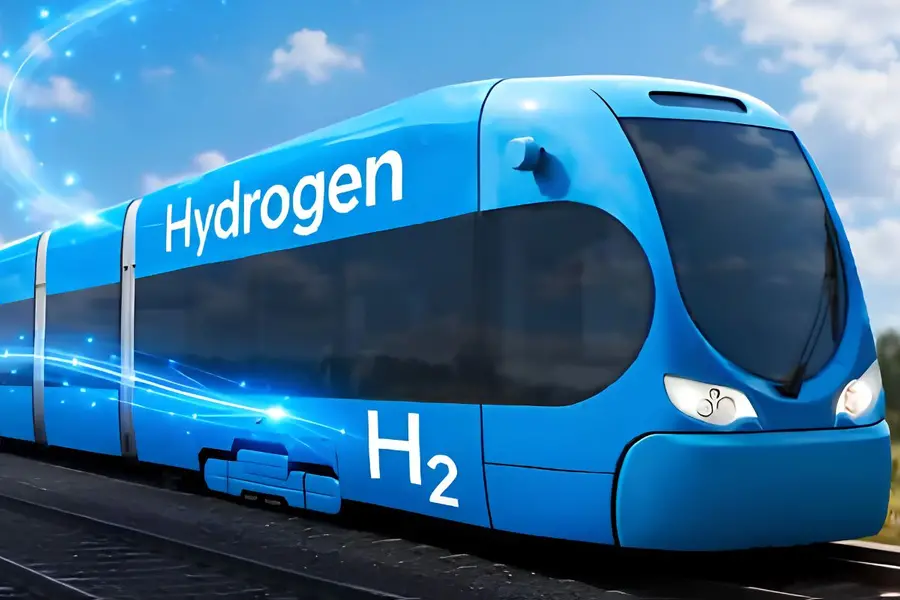
India is moving closer to putting its first indigenously developed hydrogen-powered train on the tracks, a project that could reshape the future of rail transport in the country. Unlike conventional diesel trains, the upcoming service will run on hydrogen fuel-cell technology, producing electricity onboard and emitting only water vapour and heat.
The development has attracted fresh attention after the official social media page of the Indian Embassy in the UAE shared a video showcasing the country's upcoming hydrogen rail initiative, highlighting it as a major step in India's clean transportation journey.
The train is currently undergoing testing on the Jind–Sonipat section in Haryana and is expected to become a key pilot project under Indian Railways' push towards greener and more sustainable mobility solutions.
Why India's hydrogen train is attracting attention
The biggest difference between India's hydrogen train and conventional rail services lies in how it generates power.
Most trains either draw electricity from overhead lines or rely on diesel engines. The new hydrogen-powered train does neither. Instead, it carries hydrogen onboard and generates electricity through fuel cells while in operation.
This means the train can run without diesel fuel and without producing carbon-emitting exhaust gases. The only by-products of the energy-generation process are water vapour and heat, making it one of the cleanest rail technologies currently being explored globally.
The project also marks a major milestone for India's ambitions under the Atmanirbhar Bharat initiative, with major components designed and manufactured domestically.
How the hydrogen fuel-cell train works
At the heart of the train is a hydrogen fuel-cell system that converts chemical energy into electrical energy.
Hydrogen stored in onboard tanks reacts with oxygen drawn from the atmosphere inside fuel cells. This reaction produces electricity that powers the train's traction motors.
Unlike traditional combustion engines, no fuel is burned during the process.
The train is also equipped with battery systems that store excess power generated during operation. These batteries help provide additional energy during acceleration and capture power through regenerative braking, improving overall efficiency.
The combination of hydrogen fuel cells and battery storage is expected to deliver smoother performance while reducing dependence on fossil fuels.
Key features of India's first hydrogen train
Indian Railways has equipped the pilot train with several notable features:
- Hydrogen fuel-cell propulsion system with a capacity of 1,200 kW per power car
- Total installed power of around 2,400 kW
- Ten-coach formation comprising two power cars and eight passenger coaches
- Operational speed of up to 75 kmph
- Trial speed capability of up to 120 kmph
- Estimated range of nearly 250 kilometres on a single hydrogen refill
- Zero direct carbon emissions during operation
The train has been developed by converting a Diesel Electric Multiple Unit (DEMU) into a hydrogen-powered system, allowing Indian Railways to test the technology without building an entirely new train platform.
Safety measures in place
Because hydrogen is a highly combustible fuel, Indian Railways has incorporated multiple safety systems into the project.
The train and associated infrastructure are equipped with hydrogen leak detectors, flame detection systems and continuous monitoring mechanisms. Railway personnel involved in the pilot phase have also received specialised training to handle hydrogen-based operations.
Storage and dispensing systems have received the required approvals from regulatory authorities, including licences cleared by the Petroleum and Explosives Safety Organisation (PESO).
Challenges that remain
Despite the promise of hydrogen-powered rail transport, experts note that several hurdles must still be overcome before large-scale deployment becomes practical.
The cost of producing green hydrogen remains high, while storage, transportation and refuelling infrastructure require substantial investment. Long-term performance under varying weather conditions and operational environments will also need to be assessed during the trial phase.
Even so, the pilot represents one of India's most ambitious experiments in sustainable rail mobility and could provide valuable lessons for the future of clean transportation.
Published: 01 Jul 2026, 03:41 pm IST
Related Topics
Disclaimer: Kindly avoid objectionable, derogatory, unlawful and lewd comments, while responding to reports. Such comments are punishable under cyber laws. Please keep away from personal attacks. The opinions expressed here are the personal opinions of readers and not that of Mathrubhumi.
