
Legal experts call the verdicts “momentous” and warn they could open the floodgates for thousands of pending lawsuits
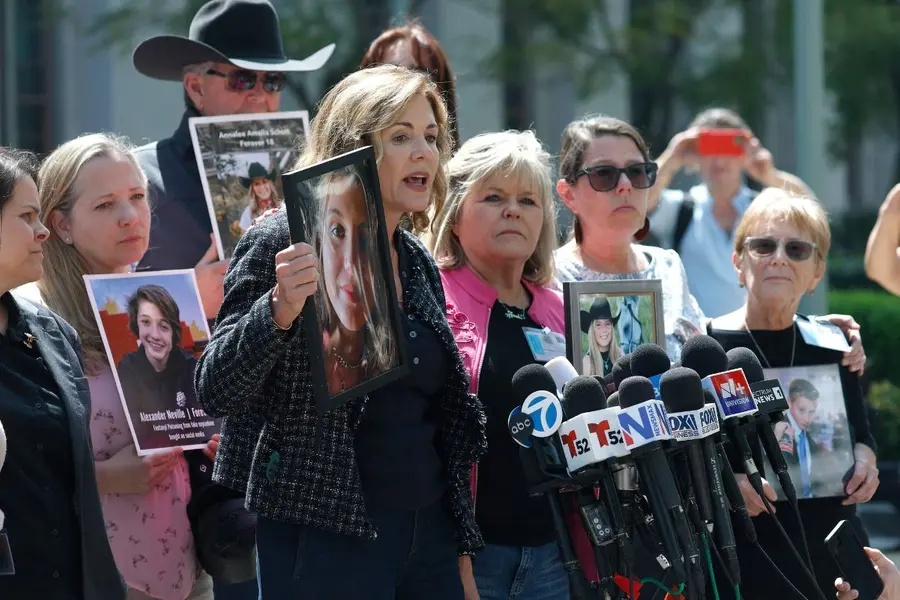
Tech giants Meta and Google’s YouTube are facing a monumental legal "reckoning" after two US jury verdicts found the platforms intentionally hooked young users while disregarding their safety. In New Mexico and California, juries imposed combined financial penalties of $381 million, marking a seismic shift in how the public views social media responsibility. For parents like Brian Montgomery, whose 16-year-old son, Walker, took his own life after a sextortion scam on Instagram, the decision is a turning point. “We’re talking about the most financially sound business that the planet has ever known. This will set an expectation,” Montgomery stated.
A legacy of grief and addictive design
The cases brought forward harrowing accounts of children lost to the "dark side" of the internet. Walker Montgomery was a happy athlete until a Nigerian scammer posing as a girl targeted him; he was dead within hours. “We didn’t get to see him the next morning,” his father recalled, noting that the industry has “proven that they can’t regulate themselves”. While the verdicts offer a sense of justice, for the Montgomerys the change is bittersweet: “Walker’s not coming back”. In Massachusetts, Deb Schmill shared similar pain after her 18-year-old daughter, Becca, died of fentanyl poisoning following trauma from online sexual assault and revenge porn. “She was a wonderful child, but she was just tortured,” Schmill said. She lamented the delay in legal action: “That’s the painful part of all of this. If this could have been done five years ago, 10 years ago. Things would be so different”.
The California case specifically focused on the "addictive by design" nature of these platforms. A 20-year-old woman, Kaley (KGM), was awarded $6 million after proving features like "infinite" feeds, autoplay, and constant notifications were “substantial factors” in exacerbating her childhood mental health struggles. Even parents not directly hit by tragedy are withdrawing; Charles Halley, an Alameda father, keeps his son offline to avoid “the divisiveness, the beauty standard, consumerism, just everything that’s wrong with society kind of packaged up and marketed to kids”. Explaining his decision, he added: “That’s why I’m keeping my kid off social media”.
Corporate negligence and jury retribution
The legal blows were swift and severe. In Santa Fe, a jury imposed a $375 million fine on Meta—owner of Facebook, Instagram, and WhatsApp—for violating consumer protection laws by prioritising profits over safety. Jurors applied the maximum $5,000 penalty per violation across thousands of accounts. Simultaneously, a Los Angeles jury found Meta and YouTube negligent, ruling they knew their platforms were dangerous for minors yet failed to warn them. One juror noted that testimony from Meta CEO Mark Zuckerberg “did not sit well” with the panel, which aimed to send a message. “We wanted them to feel it,” she said.
The jury assigned Meta 70% of the responsibility for the harm caused to Kaley, with YouTube bearing 30%. Both companies have vowed to appeal, with Meta claiming teen mental health is “profoundly complex and cannot be linked to a single app”. Google spokesperson Jose Castañeda defended YouTube as a “responsibly built streaming platform, not a social media site”. Despite these defences, the New Mexico Attorney General, Raúl Torrez, plans to seek further damages to force age enforcement and the removal of predators by potentially lifting encryption.
The global impact of bellwether verdicts
Legal experts view these rulings as “a momentous development” and a “bellwether test” that could influence thousands of pending lawsuits. Professor Sarah Kreps of Cornell University warned that for social media platforms, “as this case goes, so might these others,” adding that this verdict “opens the floodgates for so many more”. However, Peter Ormerod of Villanova University cautioned that this is only “one step in a much longer saga” and “not an unequivocal victory” as companies appeal.
While Section 230 of the 1996 Communications Decency Act continues to shield firms from liability regarding user-posted content, these cases successfully targeted the design of the algorithms themselves. Change remains slow in the US compared to the UK or Australia, and the Kids Online Safety Act is still stalled in the House. Yet, for families, the stakes remain existential. As Deb Schmill warned: “We know, the parents know better than anyone that when we are unable to hold the social media companies accountable, children die. And it’s just absurd that this is happening in our country”.
Published: 26 Mar 2026, 07:52 am IST
Disclaimer: Kindly avoid objectionable, derogatory, unlawful and lewd comments, while responding to reports. Such comments are punishable under cyber laws. Please keep away from personal attacks. The opinions expressed here are the personal opinions of readers and not that of Mathrubhumi.
