
With the iPhone Air, Apple is clearly chasing design minimalism — offering the slimmest, lightest iPhone ever while still packing in powerful hardware, AI features, and a bright new display
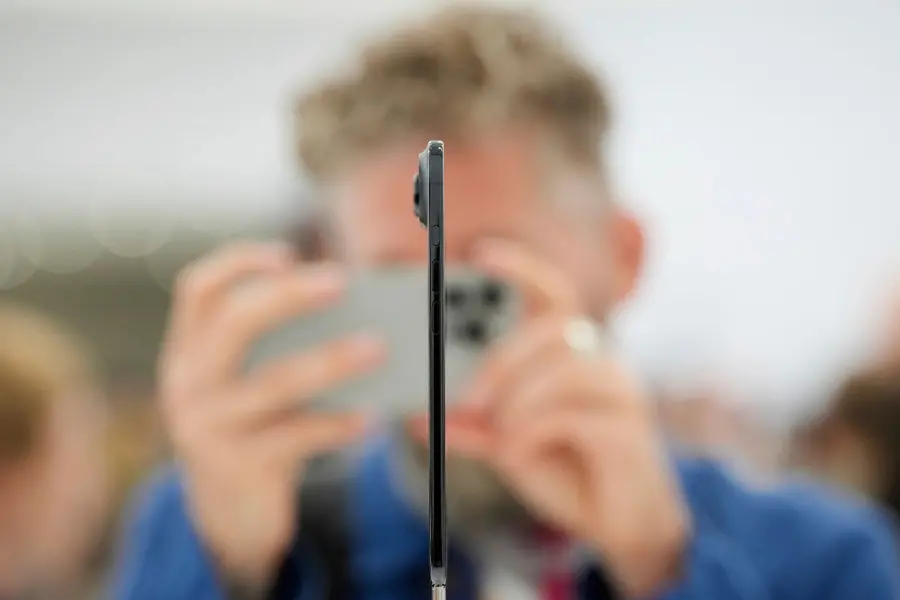
New Delhi: At its launch event on September 9, Apple introduced the all-new iPhone Air, which the company says is its thinnest smartphone ever. With its ultra-slim design, the iPhone Air is poised to take on Samsung’s Galaxy S25 Edge, which launched earlier this year with similar ambitions.
Both devices aim to push the boundaries of slim smartphone design, while still delivering high-end features and flagship-level performance.
Design and build: Thinner and lighter
Apple has focused heavily on the Air’s dimensions — coming in at just 5.5 to 5.6 mm thick, making it slimmer than the Galaxy S25 Edge’s 5.8 mm profile. The iPhone Air also weighs only 145 grams, compared to Samsung’s 163 grams, making it not just thinner but also lighter.
Apple has used a titanium frame and Ceramic Shield 2 glass on both front and back for added durability. Samsung, on the other hand, uses a similar titanium structure combined with Gorilla Glass Ceramic 2.
Display: Brightness vs. resolution
Both phones offer OLED displays with 120Hz refresh rates, making animations and scrolling smoother.
iPhone Air: 6.6-inch OLED, 2740 x 1260 resolution, with 3,000 nits peak brightness — the brightest screen ever on an iPhone.
Galaxy S25 Edge: 6.7-inch AMOLED 2X, 3120 x 1440 resolution, slightly sharper but not as bright.
Apple has also redesigned its front-facing camera cutout, using a new “metalens” tech for a smaller pill-and-hole shape.
Cameras: Simplicity vs. specs
Apple keeps things minimal with a single 48MP rear camera, built into what it calls a “plateau” bump. On the front, there’s an 18MP camera that includes AI-powered Center Stage features to keep users centered during video calls.
Samsung offers more on paper: a 200MP main camera and a 12MP ultra-wide on the back, though it skips a telephoto lens. The front camera is a 12MP shooter.
Performance: A19 Pro vs. Snapdragon Elite
The iPhone Air is powered by Apple’s latest A19 Pro chip, paired with 12GB RAM and Apple’s new C1 modem. Samsung counters with the Snapdragon 8 Elite chipset and the same amount of RAM.
While both processors are top-tier, Apple’s chips are widely considered faster in day-to-day use and performance benchmarks.
Battery life
The iPhone Air's sleek profile comes with a 2,800mAh battery, which may be a concern for heavy users. Samsung has managed to include a larger 3,900mAh battery in its similarly thin S25 Edge — offering more stamina on paper.
Price: Premium devices, premium pricing
iPhone Air: Starts at ₹1,19,900
Samsung Galaxy S25 Edge: Starts at ₹1,09,999
Both are priced firmly in the flagship category, with Samsung coming in slightly cheaper.
With the iPhone Air, Apple is clearly chasing design minimalism — offering the slimmest, lightest iPhone ever while still packing in powerful hardware, AI features, and a bright new display. Samsung’s Galaxy S25 Edge counters with more aggressive specs in some areas, especially the camera and battery, while keeping its own design just as sleek.
Published: 10 Sept 2025, 11:23 am IST
Related Topics
Disclaimer: Kindly avoid objectionable, derogatory, unlawful and lewd comments, while responding to reports. Such comments are punishable under cyber laws. Please keep away from personal attacks. The opinions expressed here are the personal opinions of readers and not that of Mathrubhumi.
