
Cybersecurity experts warn that the viral AI caricature craze may expose users to impersonation, scams, and deepfake risks if personal images and details are overshared.
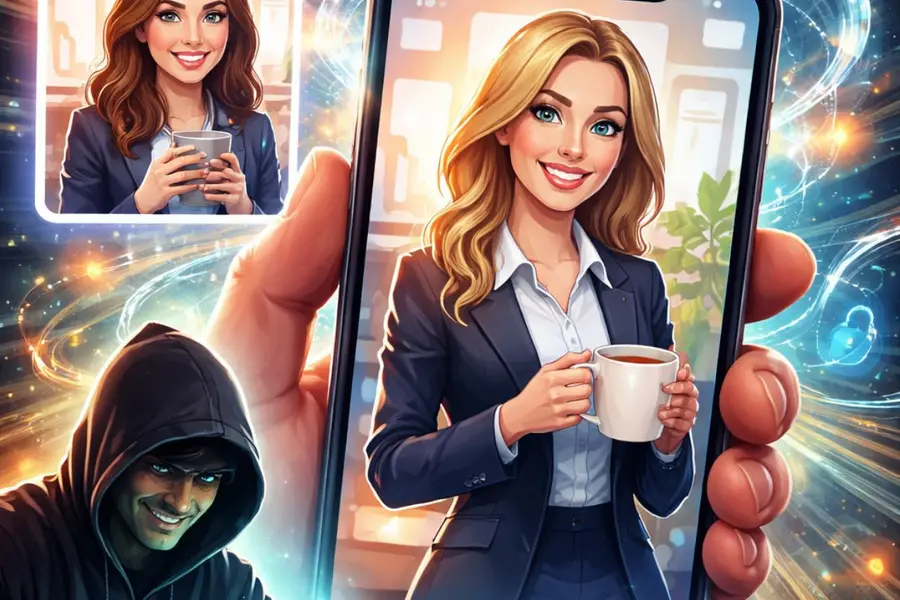
A colourful new social media fad built around AI-generated caricatures is drawing attention, and concern. The trend encourages users to upload their photos to chatbots and request stylised portraits reflecting their profession, personality, or “what the AI knows about them.”
While many see it as harmless fun, cybersecurity specialists say the practice may carry risks that participants often underestimate.
Also Read

At the heart of the challenge is a simple prompt: users share a selfie, sometimes alongside workplace details such as company logos, uniforms, or job descriptions, and ask an AI tool to transform the image into an illustrated avatar.
The results are frequently eye-catching and widely shared across platforms. But experts warn that the combination of personal imagery and contextual information can inadvertently create opportunities for misuse.
Security analysts argue that even a single high-resolution photo can become valuable in the wrong hands. Modern fraud schemes increasingly rely on visual authenticity, from fake profiles to AI-driven deepfakes.
A clearly lit, front-facing image can help scammers construct convincing impersonations, potentially enabling identity-based deception, phishing attempts, or fabricated social accounts.
Some experts caution that the framing of such trends should itself prompt reflection. Viral challenges that invite users to package their likeness with biographical cues may unintentionally normalise oversharing.
What feels like creative self-expression could also function as a ready-made dataset for bad actors seeking realistic faces, behavioural signals, or occupational hints.
Questions also arise about what happens once an image is uploaded. AI systems analyse photos to interpret attributes such as expressions, objects, and backgrounds.
Depending on the platform’s policies, user-submitted content may be retained for varying durations and used to improve models.
While companies emphasise that this does not mean every image becomes publicly accessible, privacy advocates note that data handling practices are often complex and not always fully understood by end users.
Cybersecurity professionals stress that the primary threat is not the caricature itself, but the digital footprint created along the way. Images revealing office badges, location markers, travel clues, or employer identifiers can expose individuals to targeted scams.
Criminals increasingly exploit such fragments to design personalised attacks that appear credible and context-aware.
For users still eager to participate, specialists recommend a cautious approach. Limiting identifiable details is key: avoid including logos, ID cards, uniforms, or distinctive backgrounds. Cropping images tightly and using neutral settings can reduce unintended disclosures.
Experts also advise against embedding sensitive personal information, such as full job titles, workplace names, or city locations, directly into prompts.
Reviewing privacy controls is another suggested safeguard. Many AI platforms offer settings that allow users to manage how their data is used, including options related to model improvement or training preferences.
Understanding and adjusting these configurations can provide greater clarity over content usage. Ultimately, experts say awareness is the strongest defence. As AI-powered creativity becomes mainstream, balancing novelty with digital caution will be essential.
What begins as a light-hearted trend can, without careful consideration, intersect with evolving tactics in online fraud and impersonation.
Published: 15 Feb 2026, 09:31 pm IST
Related Topics
Disclaimer: Kindly avoid objectionable, derogatory, unlawful and lewd comments, while responding to reports. Such comments are punishable under cyber laws. Please keep away from personal attacks. The opinions expressed here are the personal opinions of readers and not that of Mathrubhumi.