
Here is a clear, step‑by‑step breakdown of what VAR is, when it can be used, what is changing at the World Cup, and what fans should know.
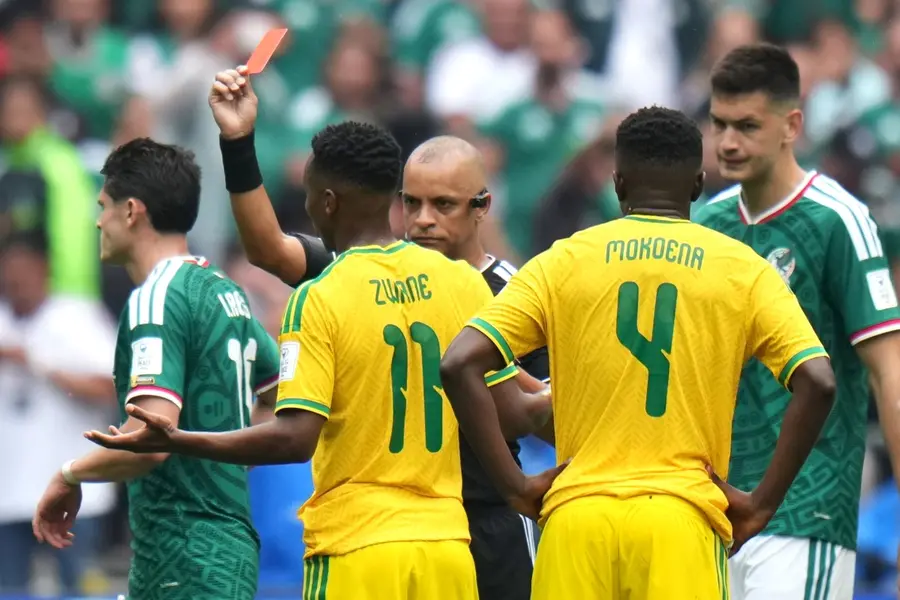
VAR is one of the most talked‑about, celebrated and vilified parts of modern soccer. It can fix a blundering mistake and save a team from a worst‑day nightmare. It can also leave fans staring at a referee with no idea what is happening, while two minutes pass on the clock and a debate starts over whether a player’s shoulder, knee or toe was offside.
For fans watching the 2026 FIFA World Cup, VAR can be especially confusing because it does not work like replay review in most American sports. Coaches do not throw a challenge flag. Players cannot demand a review. And the referee on the field still has the final say.
Here is a clear, step‑by‑step breakdown of what VAR is, when it can be used, what is changing at the World Cup and what fans should know before the next controversial call.
What does VAR stand for in soccer?
VAR stands for Video Assistant Referee. That is both the name of the system and the title of the match official who helps the referee review major decisions using video replay.
The VAR is not on the field. The video assistant referee watches the match from a video operation room (VOOR), alongside other video match officials and replay operators. They have access to:
* All broadcast camera angles
* Multiple replay speeds and zoom levels
* Direct communication with the on‑field referee crew via radio
The goal is not to re‑referee every small call. VAR is there to help with major, match‑changing decisions that could significantly affect the outcome of a game.
How does VAR work?
VAR checks major incidents in the background while the match is going on. The referee does not need to ask for every check. The VAR is already watching.
The process generally follows these steps:
* VAR watches the play in real time and flags any potential clear and obvious error or serious missed incident.
* The VAR can then recommend that the referee review it.
* The referee can accept the information from the VAR and change the decision immediately, or go to the monitor on the sideline for an on‑field review (OFR) and watch the replay themselves.
* The referee makes the final decision. The VAR can recommend a review, but it does not overrule the referee by itself. That is why you will often see the referee make the TV‑screen signal with their hands before going to the monitor or announcing a decision. That gesture is the universal sign that VAR is involved.
What can VAR review in soccer?
VAR is only used for certain major decisions. It is not used for every foul, throw‑in, short‑pass error or card.
The main review categories, as defined by FIFA and the International Football Association Board (IFAB), are:
* Goal or no goal
* Was an attacking player offside before the goal?
* Did the ball go out of play before the goal?
* Was there a handball, foul or other infringement in the build‑up?
* Did the goalkeeper commit an offense on a penalty kick?
* Penalty or no penalty
* Did the foul happen inside or outside the penalty area?
* Was there enough contact for a penalty?
* Was there a handball or dive in the build‑up?
* Direct red‑card incidents
* Serious foul play
* Violent conduct
* Denying an obvious goal‑scoring opportunity (DOGSO)
* Offences that should have been a direct red card but were not
* Mistaken identity is exactly what it sounds like. If the referee gives a yellow or red card to the wrong player, VAR can help correct it.
* If the referee gives a yellow or red card to the wrong player, VAR can help correct it so the correct player is punished.
Also read: FIFA and FIFPRO join forces in massive shake-up for player welfare and transfer rules
What is changing with VAR for the 2026 World Cup?
For the 2026 World Cup, FIFA says the latest VAR protocol adjustments will apply. The biggest change for fans is that VAR can now help with a clearly incorrect second yellow card if that second yellow leads to a red card.
That does not mean every yellow card is reviewed. A regular first yellow card is still not a normal VAR situation. But if a player gets a second yellow and is sent off, VAR can step in if the second yellow was clearly wrong.
The updated protocol also allows VAR to help with:
* Certain mistaken identity cases
* Clearly incorrect corner‑kick decisions, as long as the corner review can be completed immediately without delaying the restart
* VAR is not supposed to turn every corner kick into a long courtroom drama. It is only for clear cases that can be corrected quickly.
At the 2026 World Cup, FIFA also plans to use an advanced version of semi‑automated offside technology (SAOT) and the connected ball technology. These tools support faster, more accurate offside and ball‑in‑play decisions, reducing the time needed for manual frame‑by‑frame checks.
What does “clear and obvious” mean in VAR?
“Clear and obvious” is the phrase that explains most VAR frustration. VAR is not supposed to change a decision just because the video room might have called it differently. The original call on the field matters.
For a decision to be overturned, the replay must show that the referee made a clear and obvious error. If the call is subjective and the video does not clearly prove the referee was wrong, the original decision usually stands.
That is why two similar‑looking plays can lead to different outcomes. VAR is not always asking, “What is the perfect call?” It is asking, “Was the original call clearly wrong?” That distinction is massive.
In practice, factual decisions (offside, ball out of play, foul inside/outside the box) are more likely to be changed if the evidence is clear.
Subjective decisions (whether there was enough contact for a penalty, whether a tackle was reckless or serious foul play, whether a player made their body unnaturally bigger in a handball) are less likely to be changed unless the error is obvious.
From Guadalajara to MetLife: Why is FIFA under fire over World Cup 2026 ticket prices
What is an on‑field review (OFR)?
An on‑field review is when the referee goes to the pitchside monitor to watch the replay themselves.
This usually happens on subjective decisions, such as:
* Was there enough contact for a penalty?
* Was a tackle serious foul play?
* Was there a handball offense?
* Was a challenge reckless or worthy of a red card?
For more factual decisions, the referee may not need to go to the monitor. Offside, whether the ball crossed a line or whether a foul happened inside or outside the penalty area can often be handled with information from the VAR.
Either way, the referee still makes the final call.
Why do assistant referees sometimes wait to raise the flag?
One of the most noticeable VAR‑era changes is the delayed offside flag. If there is a close offside decision during a promising attack, the assistant referee may wait before raising the flag. That allows the play to finish so VAR can check it if a goal is scored or a major decision follows.
It can look strange in real time. Fans may see a player who appears offside, but the flag stays down until the attack ends.
The reason is simple: if the assistant referee raises the flag too early and the play is wrongly stopped, VAR cannot bring back the scoring chance. But if play continues and a goal is scored, VAR can check whether the attacking player was offside.
At the 2026 World Cup, FIFA also plans to use an advanced version of semi‑automated offside technology and connected ball technology to support faster, more accurate offside decisions.
Can players or coaches ask for VAR?
No, not in the traditional VAR system used at the World Cup. Players and coaches can complain, gesture or ask the referee to check something, but that does not force a review. The VAR is already checking major incidents automatically.
In fact, players and team officials are not supposed to surround the referee or try to influence the review process. That can lead to disciplinary measures.
This is different from some sports where coaches have a set number of challenges. In World Cup soccer, there is no coach’s challenge for VAR.
Why does VAR take so long?
VAR can take time because the officials may need to check several things at once. On a goal, for example, they may need to check:
* Was the goal scorer offside?
* Was another attacking player interfering with play?
* Was there a foul in the build‑up?
* Did the ball go out of play?
* Was there a handball?
* Did the goalkeeper commit an offense on a penalty?
Some checks are quick and never really get noticed. Others take longer, especially when the decision is tight or subjective. The laws of the game say accuracy is more important than speed in the review process, which is why there is no strict time limit for VAR.
Can VAR still get decisions wrong?
Yes. VAR helps referees correct major mistakes, but it does not remove judgment from the game. Soccer has plenty of subjective calls, especially around fouls, handballs, penalties and red cards.
Different people can watch the same replay and still disagree about:
* Whether there was enough contact for a penalty
* Whether a player made their body unnaturally bigger in a handball
* Whether a challenge was reckless or serious foul play
That is why VAR can reduce errors without eliminating controversy. VAR at the 2026 World Cup is designed to make the game fairer, but not to make it perfect. For fans, understanding what VAR can and cannot do, and what “clear and obvious” really means, is the key to less frustration and more reasoned debate when the next big decision comes under the replay.
Published: 12 Jun 2026, 12:36 pm IST
Related Topics
Disclaimer: Kindly avoid objectionable, derogatory, unlawful and lewd comments, while responding to reports. Such comments are punishable under cyber laws. Please keep away from personal attacks. The opinions expressed here are the personal opinions of readers and not that of Mathrubhumi.
