
Australia and Turkey begin their FIFA World Cup 2026 campaigns with a crucial Group D clash in Vancouver as both sides look to make an early statement in the race for the knockout stages.
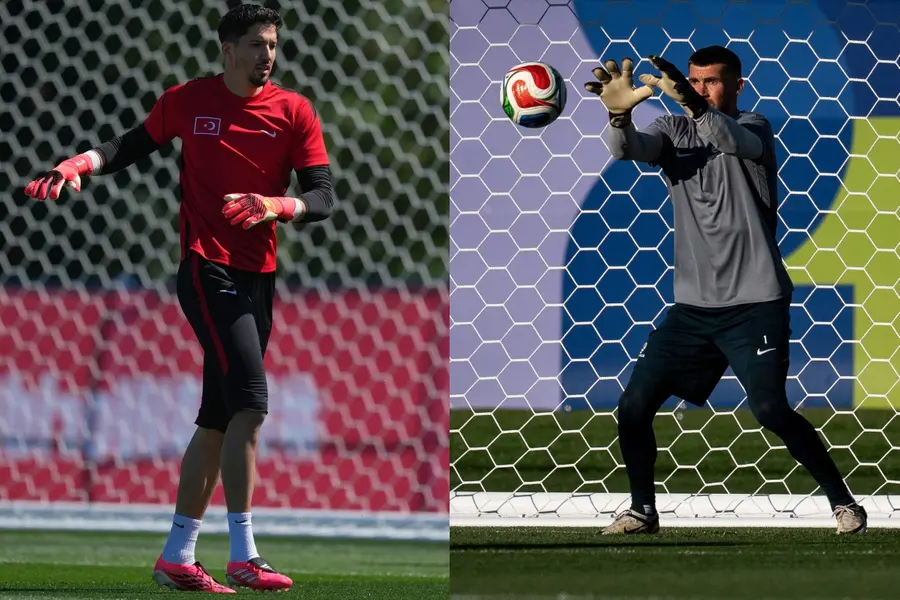
The 2026 FIFA World Cup will roll into Group D on Sunday with a historic clash between Australia (the Socceroos) and Turkey at BC Place in Vancouver, British Columbia, Canada.
Football fans are set to witness Australia's physical, organised style against Turkey's technical quality and midfield control. Turkey return to the World Cup after 24 years away, while Australia are looking to end their poor opening‑match record.
Also Read

Let's look at the match-up closely.
Australia: Strengths, weaknesses and gameplay
* Australia strengths
Australia's identity is built on a compact, well‑structured back line and a disciplined midfield block.
With a target man like Harry Souttar, Australia gain major value fromheaders and set‑pieces in both boxes.
Midfielders such as Jackson Irvine bring leadership and aggression in the second ball and transitional phases.
Players like Kye Roux, Harry Souttar and Fran Karacic provide stability and aerial presence.
* Australia weaknesses
Australia do not possess the same level of technical quality as top European sides, which can make it harder to break down disciplined defences.
While they have Souttar as a target, Australia’s overall creativity in the final third can be limited.
Against technically gifted teams with pacey forwards, Australia can be exposed when their midfield is pushed high.
* Australia gameplay
Australia typically plays a 4‑2‑3‑1 or 4‑3‑3, with a strong midfield block and quick transitions.
They like to sit compactly, absorb pressure, and then surge forward with physicality through Souttar, Irvine and Martin O’Neill.
Turkey: Strengths, weaknesses and gameplay
* Turkey strengths
Turkey's midfield is built around Hakan Çalhanoğlu (Inter Milan) and Arda Güler (Real Madrid), who provide passing range, vision and creativity.
With Arda Güler, Kenan Yıldız and Edemson, Turkey can create chances through quick passing and dribbling.
Turkey's back line is physically solid and tactically disciplined, marshalled by Merih Demiral, Okan Aydin and Umut Nayir.
Players like Merih Demiral and Çağlar Söyüncü provide stability and aerial presence.
* Turkey weaknesses
Turkey can be vulnerable against physical, aerially dominant teams like Australia.
If the creative duo are neutralised, Turkey can sometimes lose rhythm in attack.
Against elite midfielders, Turkey can struggle to sustain possession and create chances.
* Turkey gameplay
Turkey typically plays a 4‑2‑3‑1 or 4‑3‑3, with a strong midfield block and quick transitions.
They like to control possession through Çalhanoğlu and Güler, use quick passing to split lines, and attack with pace through the flanks and central channels.
Squad highlights and key players
Australia key players
- Matta Ryan (Goalkeeper): Exit line and stopping ability.
- Harry Souttar (Centre Back): Aerial presence and defensive stability.
- Jackson Irvine (Midfielder): Energy and ball‑winning in midfield.
- Martin O’Neill (Midfielder): Ball distribution and creativity in midfield.
- Ajdin Hrustic (Forward): Pace, dribbling and goal threat.
- Craig Goodwin (Winger): Speed, dribbling and goal threat.
Turkey key players
- Hakan Çalhanoğlu (Midfielder): Creative engine, passing range and vision.
- Arda Güler (Midfielder / Forward): Pace, dribbling and goal threat.
- Merih Demiral (Centre Back): Defensive anchor and link between defence and attack.
- Kenan Yıldız (Forward): Pace, dribbling and goal threat.
- Edemson (Forward): Speed, dribbling and goal threat.
Match context
This is a Group D opener for both teams, making it a crucial first step in the qualification race for the knockout stages.
For Australia, it’s a chance to end their poor opening‑match record and set the tone for a deep run. For Turkey, it’s a test of whether they can replicate their historic 2002 World Cup performance (third place) after 24 years away.
What to watch out for
- Souttar vs Turkey’s defence: Will Turkey’s centre‑backs be able to contain Souttar’s aerial presence and physicality?
- Çalhanoğlu and Güler’s control: Can Turkey’s midfield duo dominate possession and create chances for Yıldız and Edemson?
- Midfield battle: Will Irvine and O’Neill win the ball back cleanly to allow Souttar and Hrustic to surge forward?
- Tactical discipline: Can both teams stay compact and disciplined, or will the game open up into a chaotic, end‑to‑end contest?
- Set‑piece battle: Can Australia’s aerial threats out‑muscle Turkey’s defence from corners and free‑kicks?
Kick‑off time: 9.00 p.m. PT / 12.00 a.m. ET / 5.00 a.m. BST / 9.30 a.m. IST on Sunday, 14 June 2026 / 2.00 p.m. AEST on Sunday, 14 June 2026.
Venue: BC Place, Vancouver, British Columbia, Canada – the home of MLS’s Vancouver Whitecaps and a World Cup 2026 host for group matches.
Published: 13 Jun 2026, 06:18 pm IST
Disclaimer: Kindly avoid objectionable, derogatory, unlawful and lewd comments, while responding to reports. Such comments are punishable under cyber laws. Please keep away from personal attacks. The opinions expressed here are the personal opinions of readers and not that of Mathrubhumi.