
Qatar and Switzerland open their World Cup 2026 Group B campaign at Levi’s Stadium in Santa Clara in a high-stakes clash between contrasting football styles.
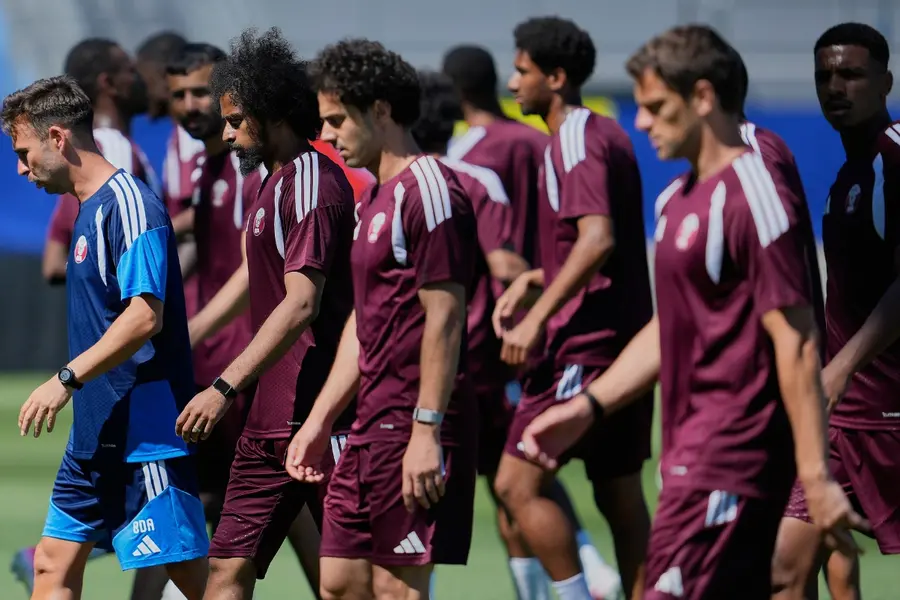
The 2026 FIFA World Cup will roll into Group B on Saturday with a high‑stakes clash between former Asian champions Qatar and European side Switzerland at Levi’s Stadium in Santa Clara, in the San Francisco Bay Area, United States.
Let's look at the match-up closely.
Also Read

Qatar: Strengths, Weaknesses and Gameplay
* Qatar strengths
As 2019 Asian Cup champions and 2022 World Cup hosts, Qatar has built a system around disciplined defending and quick transitions.
Forward Almoez Ali is the focal point in attack, using his pace, physicality and finishing ability to trouble defences.
Whiz‑kid midfielder Akram Afif brings dribbling, vision and the ability to unlock defences with sudden bursts and substitute passes.
Qatar tends to sit compactly and counter quickly, relying on midfielders like Karim Boudiaf and Assim Madibo to hold shape and channel attacks.
* Qatar weaknesses
Many of Qatar's players compete in the domestic league or in Asia, which can make it harder to match the tempo and intensity of European sides.
In tight games against technically superior teams, Qatar's back line can be exposed, especially against quick combinations and high pressing.
While Almoez Ali and Afif are clear threats, Qatar's overall goal‑scoring output in tough tournaments has been inconsistent.
Qatar gameplay
Qatar generally plays a compact, disciplined 4‑2‑3‑1 or 4‑3‑3, with a focus on tight defending and quick vertical passes to Almoez Ali and Akram Afif.
They like to let the opposition come in, then surge forward with direct runs and quick one‑two passes, often using Afif’s dribbling to create space.
ALSO READ | FIFA 2026: Netherlands and Croatia in search of another World Cup fairytale
Switzerland: Strengths, Weaknesses and Gameplay
* Switzerland strengths
Switzerland's squad is packed with players from top European leagues (Arsenal, Tottenham, Bayer Leverkusen, etc.), giving them a high floor of technical quality and tactical discipline.
Midfielder Xherdan Shaqiri is the creative engine, linking defence and attack with his passing range, vision and ability to thread balls between lines.
Defender Manuel Akanji and the back line, including Nico Elvedi, Silvan Widmer and Ricardo Rodríguez, are physically strong and tactically astute.
With forwards like Breel Embolo, Noah Okafor, Dan Ndoye, Ruben Vargas and Christian Fassnacht, Switzerland can press, counter and hit via multiple channels.
* Switzerland weaknesses
Despite strong squads, Switzerland has struggled to turn their talent into consistent knockout‑stage breakthroughs in recent World Cups and Euros.
If the creative duo of Shaqiri and Xhaka are neutralised, Switzerland can sometimes lose rhythm in attack.
Against fast counters, Switzerland can be vulnerable when their midfield is pushed high and the defence is exposed.
Switzerland gameplay
Switzerland typically plays a 4‑2‑3‑1 or 4‑3‑3, with a strong midfield block and quick transitions.
They like to control the ball through midfield, use Shaqiri’s passing to split lines, and then attack with pace through Embolo, Ndoye and Okafor.
Squad Highlights and Key Players
Qatar Key Players:
- Almoez Ali (Forward): Pace, physicality, finishing – the main goal threat.
- Akram Afif (Midfielder): Dribbling, vision, ability to create chances.
- Karim Boudiaf (Midfielder): Defensive anchor and link between defence and attack.
- Assim Madibo (Midfielder): Hold‑shape player in midfield, crucial for defensive stability.
Switzerland Key Players:
- Xherdan Shaqiri (Midfielder): Creative engine, passing range, vision.
- Granit Xhaka (Midfielder): Leader in midfield, ball distribution and defensive screening.
- Breel Embolo (Forward): Pace, power and finishing.
- Noah Okafor (Forward): Speed, dribbling and goal threat.
- Manuel Akanji (Defender): Defensive leader, strong in the air and on the ground.
World Cup match context
This is a Group B opener for both teams, making it a crucial first step in the qualification race for the knockout stages.
For Qatar, it's a chance to prove they can compete with European sides at the highest level. For Switzerland, it’s a test of whether they can translate their squad strength into points early in the tournament.
What to watch out for
Almoez Ali vs Switzerland’s defence: Will Swiss centre‑backs like Akanji and Elvedi be able to contain his pace and physicality?
Akram Afif in midfield: Can he unlock Switzerland’s midfield block and create opportunities for his teammates?
Shaqiri and Xhaka's control: Can Switzerland’s midfield duo dominate possession and create chances for Embolo, Okafor and Ndoye?
Defensive transitions: Who will be faster on the counter -- Qatar's pacey forwards or Switzerland's quick attackers?
Tactical discipline: Can both teams stay compact and disciplined, or will the game open up into a chaotic, end‑to‑end contest?
Kick‑off time: 12.30 am IST on Sunday, 14 June 2026.
Venue: Levi's Stadium, Santa Clara, California, United States – the home of the NFL’s San Francisco 49ers and a World Cup 2026 host for group matches.
Published: 13 Jun 2026, 03:38 pm IST
Related Topics
Disclaimer: Kindly avoid objectionable, derogatory, unlawful and lewd comments, while responding to reports. Such comments are punishable under cyber laws. Please keep away from personal attacks. The opinions expressed here are the personal opinions of readers and not that of Mathrubhumi.