
Former Indian cricketer and Trinamool Congress MP Kirti Azad launched a sharp attack on Pakistan, claiming the boycott is rooted in fear of defeat rather than principle.
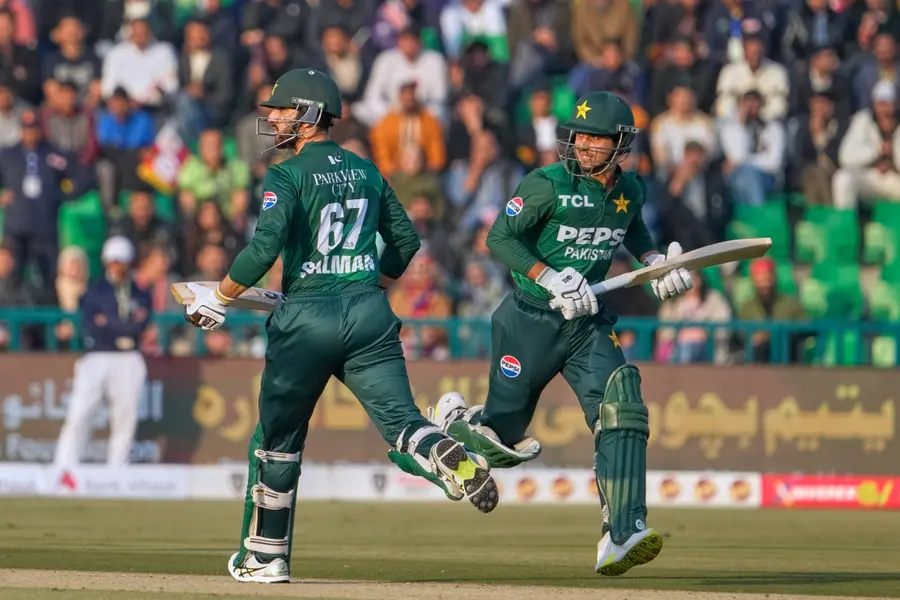
The ICC Men’s T20 World Cup 2026 has been engulfed in controversy following the Pakistan government’s decision to boycott its high-profile group-stage match against India, scheduled for February 15 in Colombo, while allowing the national team to participate in the rest of the tournament. The unprecedented move of selective participation has drawn widespread criticism from former cricketers, political leaders, cricket boards, and the International Cricket Council (ICC), raising serious questions about sporting integrity, political interference, and the commercial future of the event.
Former Indian cricketer and Trinamool Congress MP Kirti Azad launched a sharp attack on Pakistan, claiming the boycott is rooted in fear of defeat rather than principle. According to Azad, Pakistan has refused to play India because it knows it “cannot win” the match. He said the decision reflects a lack of confidence in Pakistan’s cricketing ability and accused the team of avoiding competition on the biggest stage. Azad’s remarks added a strongly worded sporting dimension to the debate, suggesting that Pakistan’s stance is less about politics and more about competitive weakness.
Azad’s comments followed criticism from another former Indian cricketer, Harbhajan Singh, who described Pakistan’s decision as “unnecessary drama” intended to mislead the public. Speaking on his YouTube channel, Harbhajan questioned the logic of participating in the World Cup but refusing to play one particular opponent. He said selective participation contradicts the very idea of international sport and makes a mockery of tournament integrity.
Congress MP and former diplomat Shashi Tharoor also weighed in, calling the boycott “disgraceful” and warning against the increasing politicisation of cricket. Tharoor emphasised that sport should unite nations rather than inflame political tensions and urged all stakeholders to engage in urgent dialogue before the situation escalates further. He also commented on Bangladesh pacer Mustafizur Rahman’s IPL controversy, stating the player should never have been denied his Kolkata Knight Riders contract and criticising Bangladesh’s response as excessive.
Former Indian cricketer and Trinamool Congress MP Kirti Azad launched a sharp attack on Pakistan, claiming the boycott is rooted in fear of defeat rather than principle. According to Azad, Pakistan has refused to play India because it knows it “cannot win” the match. He said the decision reflects a lack of confidence in Pakistan’s cricketing ability and accused the team of avoiding competition on the biggest stage. Azad’s remarks added a strongly worded sporting dimension to the debate, suggesting that Pakistan’s stance is less about politics and more about competitive weakness.
According to Tharoor and several observers, Pakistan’s boycott appears to be a symbolic act of solidarity with Bangladesh, which was replaced by Scotland in the T20 World Cup earlier this year. Bangladesh had requested a venue shift from India to Sri Lanka citing security concerns, a request rejected by the ICC. This decision reportedly angered cricketing and political circles in both Bangladesh and Pakistan, prompting the Pakistan Cricket Board (PCB) to reconsider its participation.
While the Pakistan government later cleared the national team to compete in the tournament starting February 7, it simultaneously directed the team not to take the field against India. The announcement was made through an official government statement posted on social media, offering no explanation for the boycott. This lack of clarity has raised questions about whether the decision was imposed solely by the government or taken in consultation with the PCB. PCB chairman Mohsin Naqvi is expected to address the media to clarify the board’s position.
The ICC reacted firmly, stating that selective participation undermines the principles of fairness, competitiveness, and consistency on which global tournaments are built. In a strongly worded statement, the ICC said it respects the role of governments in national policy but warned that the decision could have serious long-term consequences for cricket in Pakistan and the wider global cricket ecosystem. The world body urged the PCB to consider the broader implications and seek a mutually acceptable resolution.
The ICC also cautioned that the boycott could lead to punitive measures, including heavy fines, potential docking of World Test Championship points, stagnation in ICC rankings, reluctance of top teams to tour Pakistan, and possible restrictions on player participation in the Pakistan Super League.
From a sporting perspective, a boycott does not automatically result in a walkover. Under ICC playing conditions, India must still be present at the venue for the scheduled toss. Indian captain Suryakumar Yadav is expected to attend as per protocol. If Pakistan captain Salman Ali Agha does not appear, the match referee will officially award India a walkover and two points.
Former India captain Sunil Gavaskar suggested the decision may not be final, noting Pakistan’s history of reversing such stances under political, public, or financial pressure.
The Board of Control for Cricket in India (BCCI) has backed the ICC’s position. Vice-president Rajeev Shukla said the Indian board fully agrees with the ICC’s emphasis on sportsmanship and will refrain from further comment until formal discussions take place.
The commercial consequences could be severe. The India–Pakistan fixture is the single biggest revenue driver in any ICC tournament, attracting massive global viewership and premium advertising rates. Broadcasters are expected to lose between Rs 200 crore and Rs 250 crore if the match does not take place, with a 10-second advertisement slot during such games reportedly costing up to Rs 40 lakh.
Pakistan are scheduled to play the Netherlands on February 7, the USA on February 10, and Namibia on February 18 in Colombo. However, uncertainty remains over potential knockout-stage clashes between India and Pakistan, an issue neither the PCB nor the Pakistani government has addressed.
With political motivations, sporting rivalry, and enormous financial stakes colliding, Pakistan’s boycott has become one of the most serious challenges facing international cricket, putting pressure on parties involved. (With inputs from Agencies)
Published: 02 Feb 2026, 02:43 pm IST
Related Topics
Disclaimer: Kindly avoid objectionable, derogatory, unlawful and lewd comments, while responding to reports. Such comments are punishable under cyber laws. Please keep away from personal attacks. The opinions expressed here are the personal opinions of readers and not that of Mathrubhumi.
