
Anaya Bangar has been cleared by Cricket Australia to play community cricket and pursue a pathway towards elite women’s cricket
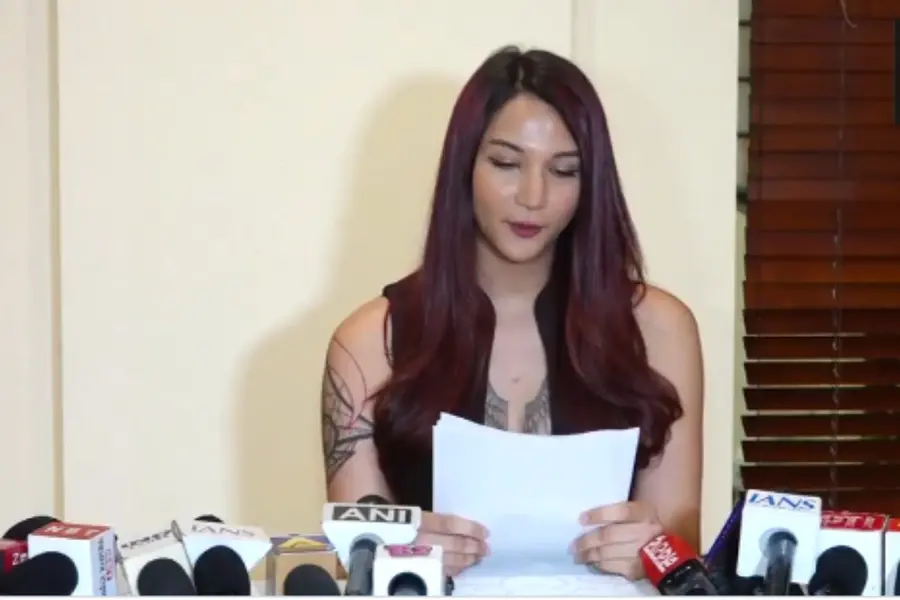
Anaya Bangar’s return to competitive cricket is beginning to take shape, with March 2027 emerging as a key date in her bid to pursue elite women’s cricket in Australia. The former Mumbai age-group cricketer has been cleared by Cricket Australia to play women’s community cricket and has been given a pathway to pursue elite women’s cricket in the country from March 2027, subject to the governing body’s eligibility rules.
For Bangar, the decision offers a chance to return to the sport after stepping away from competitive cricket during her transition. The 25-year-old, who is the daughter of former India cricketer and ex-India batting coach Sanjay Bangar, has her sights on the elite game in Australia, with a possible route towards the Women’s Big Bash League (WBBL).
She has, however, been careful to distinguish between being eligible to pursue elite cricket and actually being selected for it.
“I am preparing to return to women’s cricket in Australia with the aim of pursuing elite cricket from March 2027,” the 25-year-old said. “This has not been an automatic or an informal process. Cricket Australia has a framework designed to balance fairness, competitive integrity, and inclusion in women’s sport, and my case has been considered through that framework.”
Cricket Australia clearance is a pathway, not a team spot
Bangar’s immediate task is to get back into the rhythm of competitive cricket. She is looking to join a club in Australia and begin by playing community cricket, with Premier Cricket falling under that category.
The clearance from Cricket Australia does not hand her a place in an elite women’s side or guarantee a WBBL contract. Instead, it allows her to work towards that level while meeting the conditions laid down by the governing body.
“Cricket Australia has given me a pathway, which does not mean that I have been given a place in a team. I still have to train, compete, perform and earn that opportunity,” she said.
That distinction is also important because eligibility is only one part of the process. Bangar will still have to regain her fitness, return to competitive form and convince selectors that she deserves a place in an elite squad.
Her own position is clear.
“I don’t expect my history or my identity to earn me a place on a cricket team. I want my cricket to earn me a place on a cricket team,” she said.
March 2027 is the next major eligibility checkpoint in Bangar’s case.
Under Cricket Australia’s Transgender and Gender Diverse Players in Elite Cricket Policy, elite participation is subject to specific requirements, including a condition relating to serum testosterone levels. The requirement cited in reports on Bangar’s case is that serum testosterone must remain below 10 nmol/L for at least 12 months.
Bangar’s eligibility for elite women’s cricket will therefore be assessed from March 2027. This will include a blood test to establish whether she continues to meet the applicable testosterone requirement.
“My understanding from Cricket Australia's clearance is that my eligibility for elite women's cricket from March 2027 remains subject to the applicable policy requirements, including a blood test assessment at the same time. If that March 2027 test confirms that I continue to meet the required testosterone criteria, I will be eligible to pursue selection for elite women’s cricket, including the Women’s Big Bash League pathway,” Bangar said.
If she satisfies the requirements, Bangar will be able to seek selection in elite women’s cricket. That, again, would not automatically put her in a WBBL squad.
From Mumbai age-group cricket to an Australian comeback
Bangar is not new to cricket. She previously played age-group cricket in Mumbai and was part of the same cricketing environment as players who have since gone on to represent India, including Sarfaraz Khan, Musheer Khan and Yashasvi Jaiswal. Reports have also noted her association with Mumbai age-group cricket and club cricket, including Islam Gymkhana. She has also played for Hinckley Cricket Club in Leicestershire.
Her connection with the game goes back to childhood, and she has spoken in the past about how difficult it was to imagine a future without cricket after her transition.
In August 2026, after Cricket Australia’s decision, she described the possibility of returning to the sport as deeply emotional. In an earlier conversation with Bombay Times, Bangar said there was a time when she believed she had lost cricket for good.
“I am now eligible to play in the Women’s Big Bash League (WBBL) in Australia from March 2027 onwards. For me, this is incredibly emotional because there was a point when I genuinely believed I had lost cricket forever,” Bangar said. “Cricket has been such a fundamental part of my identity since childhood, and having to step away from the sport after my transition was one of the hardest things I experienced. So this isn’t simply about being included in a women’s league. It represents the possibility of returning to the sport I deeply love.”
Bangar underwent gender-affirming surgery in March 2026 and has since been working towards getting back to cricket. Her return comes after a period in which she had to put her playing career on hold.
Bangar first sought answers from the BCCI
Australia was not her first option.
Before approaching Cricket Australia, Bangar said she had written to the Board of Control for Cricket in India (BCCI) seeking clarity on whether transgender athletes could compete in women’s cricket in India. According to Bangar, she received no response to the letter she submitted last year.
She then approached Cricket Australia in June this year.
Reports on the case said Cricket Australia considered material submitted by Bangar, including her medical records, blood tests, documents relating to her surgeries and a research report from Manchester Metropolitan University’s Institute of Sport.
The decision came at a time when transgender participation in elite cricket remains governed differently at international and domestic levels.
The International Cricket Council (ICC) changed its international eligibility regulations in November 2023. Under those rules, male-to-female participants who have gone through male puberty are not eligible to play international women’s cricket, irrespective of whether they have undergone surgery or gender reassignment treatment. The ICC also stated that eligibility at domestic level is a matter for individual member boards.
That distinction is particularly relevant to Bangar’s case because Cricket Australia’s decision concerns the Australian domestic pathway, rather than international cricket.
Published: 27 Aug 2026, 12:10 pm IST
ABOUT THE AUTHOR

Related Topics
Disclaimer: Kindly avoid objectionable, derogatory, unlawful and lewd comments, while responding to reports. Such comments are punishable under cyber laws. Please keep away from personal attacks. The opinions expressed here are the personal opinions of readers and not that of Mathrubhumi.