
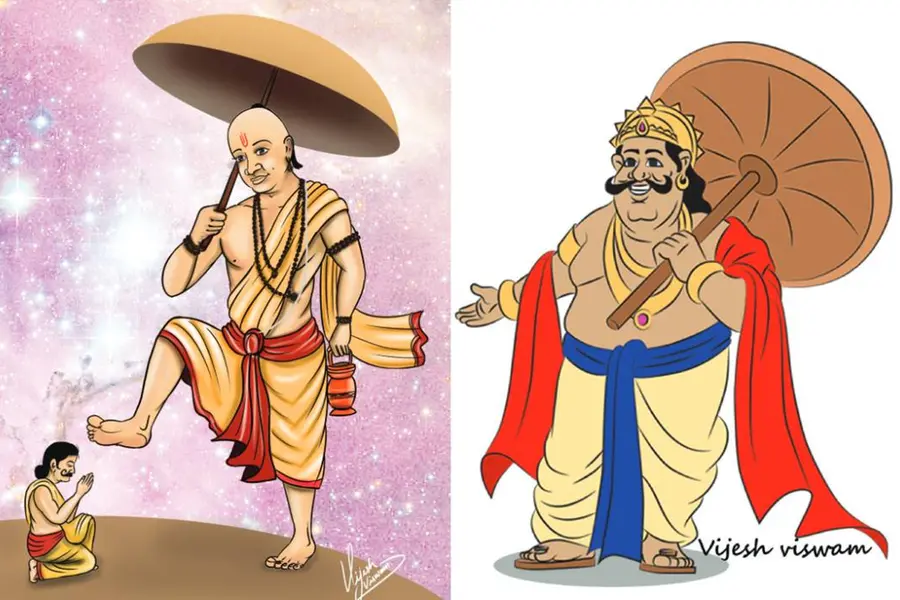
Malayalis across the world celebrate Onam with the intention of fostering harmony and social unity among the people, similar to other cultural festivities. There are several legends associated with this festival. Of them, the most popular one revolves around Mahabali, a benevolent asura king who ruled Kerala years back.
The Gods, who were envious of the goodwill and admiration received by Mahabali, devised a plan to remove him from power. They pleaded before Lord Vishnu to aid them. Seeing the Gods’ concern, Vishnu descended in the form of Vamana, a dwarf, and sought a wish from Mahabali.
Vamana asked for three steps of land and the king granted the wish. Soon after, the boy began to grow in size, and covered the entire universe with the first two steps. Realising that Vamana was not an ordinary person, Mahabali bowed before him and offered his own head for the next step.
Thus, taking advantage of Mahabali’s kindness, Vamana deceived him into relinquishing his kingdom and banished Mahabali to pathal or the underworld. However, as a gesture of compassion, Mahabali was allowed to visit his realm and subjects once a year. This annual visit of Mahabali is celebrated as Onam, the festival of prosperity.
In countless households, Onam is symbolised through a variety of ideas such as wearing traditional Kerala attires, preparing floral carpets or Pookkalam, Thrikkakara Appan and Onasadhya among others.
The fact that Onam is also observed in Tirupati suggests that the festival was widespread in the southern region prior to becoming closely associated with Kerala after 10th century AD.
Onam falls in the month of Chingam, as per the Malayalam calendar (usually late August or early September). Over the past several centuries, it has evolved into a grand celebration with enthusiastic participation from all segments of society.
Notably, the festival commemorates a glorious historical period marked by prosperity and tranquillity. This particular aspect holds deep relevance for people today, especially as they aspire for the realisation of a similarly prosperous and harmonious state.
Throughout the season, there is an air of joy and festivity, particularly among the younger generation. Preparations typically begin on Atham Day with the arrangement of flowers in intricate patterns known as Athappookalam. The peak of the festival is reached on Thiruvonam Day, when people prepare the sumptuous Onasadhya.
The feast is truly lavish, even in modest households. Rice is the primary staple accompanied by a variety of curries, vegetable dishes, and a range of desserts. After the feasting, spirited sports and games ensue, engaging everyone. On a whole, it is a festival of pure joy, brotherhood and sanctity.
Published: 19 Aug 2023, 03:33 pm IST
Related Topics
Disclaimer: Kindly avoid objectionable, derogatory, unlawful and lewd comments, while responding to reports. Such comments are punishable under cyber laws. Please keep away from personal attacks. The opinions expressed here are the personal opinions of readers and not that of Mathrubhumi.
