
Actor Abhimanyu Singh reflects on Gulaal’s lasting legacy, the difficulty of returning to characters after long gaps, and his approach to intense roles in ‘Inspector Avinash Season 2’.
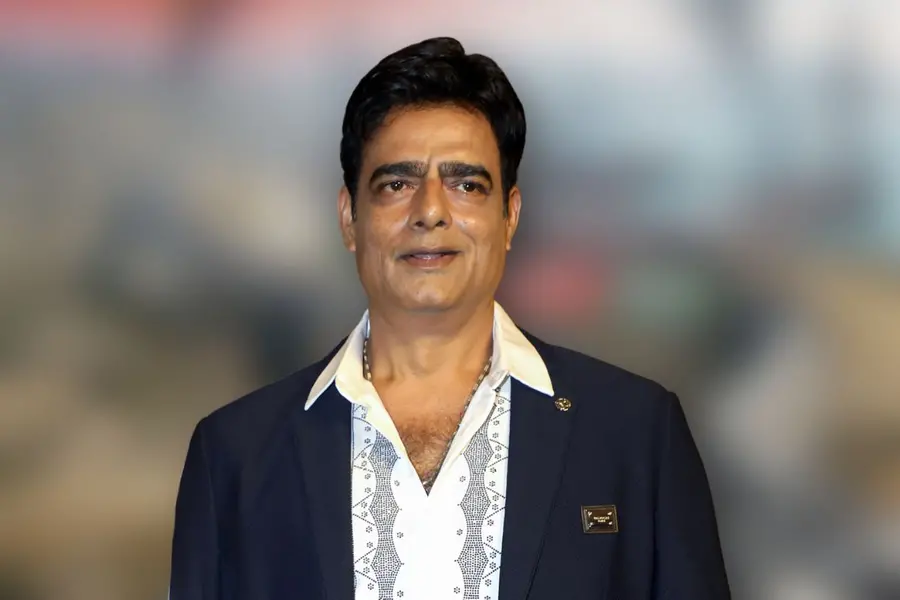
Known for his intense screen presence and memorable performances in films such as ‘Gulaal’, ‘Rakta Charitra’, ‘Mom’ and many others, actor Abhimanyu Singh has carved a niche for himself by portraying complex and often intimidating characters with remarkable depth.
He was recently seen reprising his role in the second season of ‘Inspector Avinash’, a JioHotstar crime thriller led by actor Randeep Hooda and created and directed by Neeraj Pathak.
In a candid conversation with Mathrubhumi English, Abhimanyu spoke about returning to the world of ‘Inspector Avinash’, the challenges of slipping back into a character after a long gap, the craft behind creating powerful screen personas, his enduring connection with ‘Gulaal’, and why he continues to approach every role as a student of acting. Read the interview:
With the second season of ‘Inspector Avinash’, what aspects did you find more exciting compared to the first season?
See, when we started shooting ‘Inspector Avinash’, it was supposed to be just one single season. We kept shooting for about 100 days, maybe even more than that. Then I came to know that they were making it into two parts. So the entire thing was shot in one go.
You can treat it like a feature film. If you do that, then Season 1 was like the first half of the film, and this season is everything after the interval. Of course, the content keeps you engaged. Things keep happening one after the other, and the story moves fast.
How difficult is it for actors to return to the same character after a gap between seasons?
It is very, very difficult. Though it was shot in one go, there was still a gap of about six months, maybe even eight or nine months, if I'm not mistaken.
When I came back to the set and got into costume, I remembered my dialogues, but not the body language. I had just played a completely different character down South and had come directly from there. I just couldn't get it right.
I was feeling very frustrated. Then the director came to me and said, "Why are you worrying? It's not an easy job." That's when I realised that it really isn't easy. I relaxed, took my own sweet time for an hour or two, and then I got it right.
So yes, as you said, it is not easy at all.
Watch trailer:
There's a perception that after spending many years in the industry, actors can switch between roles very easily. You've played so many characters over the years. Is every role still a challenge?
No, it's always very difficult. It's like shooting an arrow in the dark and hoping it hits the right target.
Of course, when you read the script, you have the material, the content, and the director's vision. You have to process all of that through your own understanding and then translate it into a performance. You have to immerse yourself in it and then give it a shot.
It's not simple. And even if it appears simple, simple is not easy.
At the end of the day, you have to make it look effortless. That's the thing about acting, you can't look like you're trying too hard because it doesn't look good on screen. Whatever you do has to come with a certain ease, and that ease takes years to develop.
One beautiful aspect of many characters you play is that they are intimidating without relying on physicality. There's a silence that conveys their power. How do you build that kind of presence?
That's a valid question. It's all about experience. It's about how much you've worked on your body language, your voice, and the various aspects of your acting skills. It's not easy. Your brain is constantly involved.
The kind of performance you're talking about takes years to develop. As an actor, you have to keep surprising yourself. Until you do that, you can't surprise the audience.
Sometimes you're fully prepared, but once you get into the zone, you don't know where it will take you. Sometimes you go so deep within yourself that everything becomes disturbed emotionally. You can cry at the drop of a hat because there's so much happening inside.
I remember, early in my career, I was working with Ashutosh Kaushik on an episode based on a true story. I was playing a police cadet, and the director sent me for a few days of training with actual recruits in Andheri East. I trained with them, handled rifles, ate with them in the mess, and observed their body language.
Later, in the climax, my character discovers that his wife is cheating on him with his best friend. He ends up killing her. During the scene, an assistant director was holding a rope while I acted out the strangulation.
The director kept telling me, "You loved her so much, but she cheated on you. Now you're killing her."
I put all my force into the scene. Then suddenly, when I looked at her, something happened to my face. Every inch of it started trembling on its own. If someone asked me to recreate it today, I wouldn't be able to.
I didn't know how it happened or why it happened. Later, I realised that if you go deep enough within yourself as an actor, you reach vulnerable places that you didn't even know existed.
Actors often worry about being typecast. Have you ever experienced that? How have you managed to make these intense characters your signature rather than a limitation?
That's because I take my scripts and characters very seriously. My preparation is backed by eight years of hardcore theatre training under Makarand Deshpande, and later by years of training myself.
When I was doing television, many actors were understandably focused on working 30 days a month and settling their lives. There was nothing wrong with that. But my hunger was different. I wanted to understand the art. I wanted to know more about acting itself.
I used television to run my kitchen, but the rest of my time went into theatre. I wasn't married then, so whatever little I earned from serials helped me survive, and I devoted the rest of my energy to learning.
I was serving the art.
Over time, I began understanding things about acting that only come from going very deep into the craft. The way you approach a character, the passion you bring to it, and the amount of time you invest, those things make all the difference.
‘Gulaal’ remains one of the most celebrated films even today. What do you think makes the film resonate across generations?
I think the film had a very strong soul. When I read the script, I felt it immediately. Anurag Kashyap was at his best at that time, and everybody involved was hungry. More than 90 percent of the actors came from theatre backgrounds.
Nobody was worried about whether they were being paid on time, whether the food was good, or where they were staying. Everybody was focused on one thing, the betterment of the project. When something is made with that much passion, it stays with people.
The songs were an added advantage. Those songs had already become popular through theatre productions, and audiences loved them.
Everything came together. Everyone made that film with a selfless motive, and that's why it became a cult. There is a very strong emotional core to it and a world that may not exist anymore, but feels real enough for people to connect with. That's why people continue revisiting it.
When you were making ‘Gulaal’, did you ever imagine it would become a cult film?
No, you never really know that while making a film. But we knew we were doing something with complete honesty and passion. Looking back, I think that's what audiences connected with.
If you were to meet Rananjay Singh "Ransa" today, what would you tell him?
I would simply say, "Bang on, buddy. What you did was right."
Everybody knows Abhimanyu Singh, the actor–fearless, intense, and raw on screen. But who is Abhimanyu Singh, the person when the cameras are off?
It's more or less the same person. I'm calm, and I keep to myself. I don't party much, and I don't socialise too much.
You can say I'm an introvert. I live in my own little world. I have my wife, my children, and a few close friends. It's a small world. I don't have too many ambitions. I like to keep things simple.
Over the years, I've seen people change in this industry. But so far, I've made sure that I haven't changed myself. Since the day I came to Mumbai, I've tried to remain the same person I always was.
Published: 19 Jun 2026, 02:47 pm IST
Related Topics
Disclaimer: Kindly avoid objectionable, derogatory, unlawful and lewd comments, while responding to reports. Such comments are punishable under cyber laws. Please keep away from personal attacks. The opinions expressed here are the personal opinions of readers and not that of Mathrubhumi.
