
Heart Aerospace's record-breaking X1 demonstrator completes its first flight as the aviation industry moves towards cleaner regional air travel.
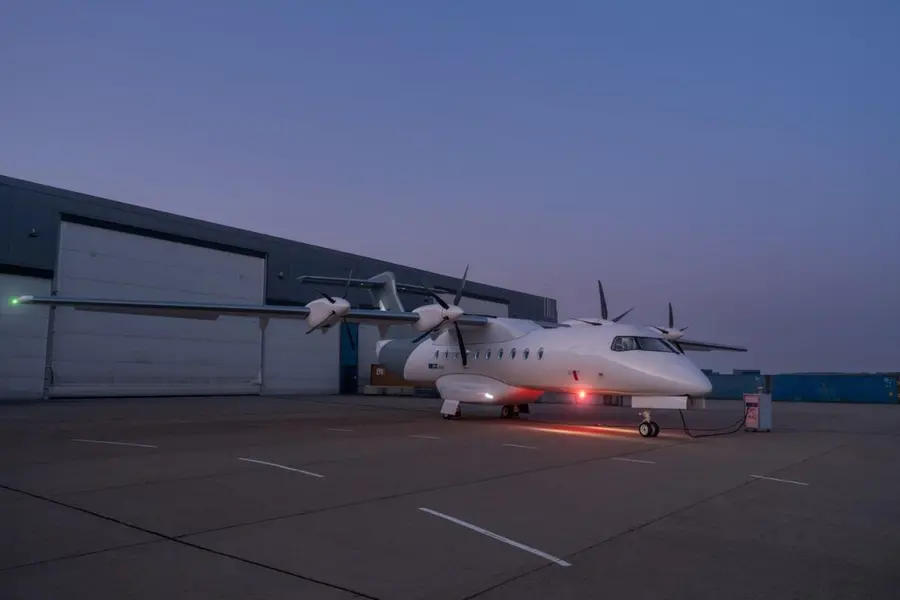
The world's largest all-electric airplane has successfully completed its maiden flight, marking an important step in aviation's journey towards cleaner and more sustainable air travel. Swedish aviation company Heart Aerospace flew its X1 demonstrator airplane for the first time from Plattsburgh, New York, in a 27-minute test flight approved by the US Federal Aviation Administration (FAA).
While electric aircraft have existed for decades, most have been small experimental planes carrying one or two people. The X1 is different. Weighing around 11,340 kilograms, it is the largest fully electric aircraft ever flown and is roughly the size of the regional turboprop aircraft that connect smaller cities around the world.
The achievement represents more than just another successful test flight. It offers a glimpse into a future where short-distance flights could become quieter, cleaner and potentially cheaper.
Size does matter…
Electric aviation has long faced one major challenge, size. Building a small electric aircraft is relatively straightforward. Building one large enough to carry commercial passengers is much more difficult because batteries store far less energy than aviation fuel.
Unlike fuel tanks, which become lighter as fuel is used during a flight, batteries remain the same weight from take-off to landing. That makes long-distance electric flying far more challenging.
The X1's successful flight is significant because it proves that a much larger aircraft can safely take off, climb, manoeuvre and land using electric power alone. During its first flight, the aircraft completed a full flight profile that included taxiing, take-off, climbing, turning and landing before returning safely after reaching an altitude of around 1,100 feet.
The flight was conducted under an FAA Special Airworthiness Certificate in the Experimental Category, allowing Heart Aerospace to collect valuable data as it works towards future certification.
Meet the X1 demonstrator
The X1 itself is not intended to become a commercial passenger aircraft. Instead, it serves as a flying laboratory designed to test technologies that will eventually be used in Heart Aerospace's future ES-30 regional aircraft. The X1 has a 106-foot wingspan, placing it in the same general size category as conventional regional turboprop aircraft that currently serve short routes worldwide.
Its take-off weight of around 11.3 tonnes makes it much heavier than previous electric aircraft, although it is still lighter than many existing regional airliners such as the De Havilland Canada Dash 8-Q300. The aircraft's primary mission is to help engineers validate electric propulsion systems, flight controls, battery integration and safety procedures before introducing a commercial version.
The real goal
The X1 is only the beginning. Heart Aerospace ultimately plans to develop the ES-30, a 30-seat hybrid-electric regional aircraft designed for commercial operations. Unlike the X1, the ES-30 will combine electric propulsion with a hybrid power system, helping overcome today's battery limitations while extending the aircraft's operating range.
The company believes the ES-30 could reduce operating costs by around 40% compared with conventional regional aircraft. If those targets are achieved, airlines could potentially operate shorter routes more economically while reducing fuel consumption and emissions. For passengers, that could eventually mean more frequent flights between smaller cities that are currently underserved.
Batteries remain aviation's biggest challenge
Despite the excitement surrounding electric aviation, significant hurdles remain. The biggest obstacle is battery technology. Aircraft require enormous amounts of energy, and today's batteries cannot yet match the energy density of traditional jet fuel.
This limits how far fully electric aircraft can fly while carrying useful passenger loads. That is why many aviation companies are currently focusing on hybrid-electric aircraft for regional routes rather than attempting long-distance all-electric flights.
Engineers believe future improvements in battery technology could gradually expand these capabilities, but widespread all-electric commercial aviation remains several years away.
A quieter and cleaner future
Even with those limitations, electric aircraft offer several important advantages. Electric motors produce much less noise than conventional aircraft engines, making flights quieter for both passengers and communities living near airports.
They also eliminate direct emissions during flight, contributing to aviation's broader efforts to reduce its environmental impact.
Lower operating costs could also make regional aviation more financially sustainable, particularly on shorter routes where conventional aircraft are often expensive to operate.
Heart Aerospace founder and CEO Anders Forslund believes electric commercial aircraft could eventually reshape airline economics by making air travel more affordable and expanding access to airports closer to people's homes.
What this could mean for India
For India, the development is especially interesting because of the country's growing focus on regional connectivity. Through the UDAN scheme, India has been working to connect smaller towns and cities with affordable air services, encouraging airlines to operate shorter regional routes.
Many of these routes are already served by turboprop aircraft, the same category that Heart Aerospace hopes to target with the ES-30. If electric or hybrid-electric regional aircraft become commercially viable in the coming years, they could complement India's regional aviation ambitions by lowering operating costs on shorter routes.
Such aircraft could eventually help improve connectivity between Tier-2 and Tier-3 cities while supporting cleaner aviation growth. India has also been investing heavily in airport infrastructure, with dozens of new airports either under construction or planned across the country. Future regional electric aircraft could become another important piece of that expanding aviation network.
Sustainable aviation
Heart Aerospace is not alone in pursuing cleaner aircraft technology. Airbus, Boeing and several emerging aerospace companies are exploring different approaches, including hybrid-electric propulsion, hydrogen-powered aircraft and sustainable aviation fuels.
Rather than relying on a single solution, the industry is developing multiple technologies aimed at reducing aviation's carbon footprint. Electric aircraft are expected to play an especially important role in shorter regional flights, where battery technology is more practical than on long-haul routes.
The X1's successful flight does not mean electric passenger airliners will replace conventional aircraft overnight. However, it demonstrates that larger electric aircraft are moving from computer simulations into real-world testing.
A glimpse of tomorrow's skies
Commercial aviation has spent decades becoming faster, safer and more efficient.
Now it faces another transformation, becoming cleaner. The X1's maiden flight represents an important milestone because it shows that electric flight is steadily moving beyond small experimental aircraft towards the scale needed for regional commercial aviation.
Significant technical challenges still remain, particularly in battery technology and certification. But every successful test flight brings engineers one step closer to a future where quieter, lower-emission aircraft could connect cities more sustainably.
For countries like India, where regional air travel continues to grow rapidly, that future may eventually reshape how millions of people travel between smaller cities. The X1 may be an experimental aircraft today, but it offers a clear glimpse of what tomorrow's regional aviation could look like.
Published: 14 Aug 2026, 07:04 pm IST
ABOUT THE AUTHOR

Related Topics
Disclaimer: Kindly avoid objectionable, derogatory, unlawful and lewd comments, while responding to reports. Such comments are punishable under cyber laws. Please keep away from personal attacks. The opinions expressed here are the personal opinions of readers and not that of Mathrubhumi.