
The Russian turboprop is designed for shorter regional routes and smaller airports, potentially giving Indian airlines a new option to connect underserved cities and towns.
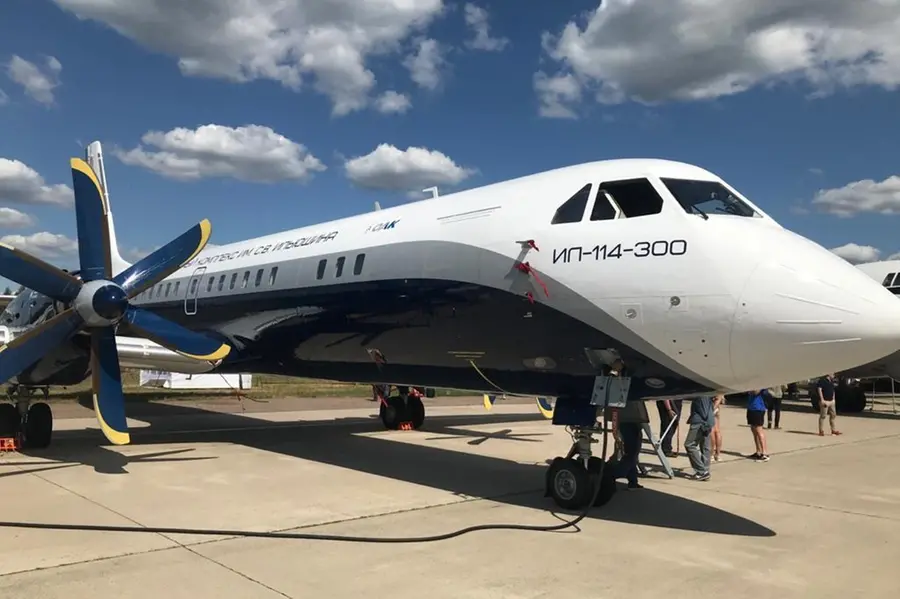
India’s regional aviation market could soon see a new aircraft type, with Russia’s United Aircraft Corporation (UAC) signing agreements with three Indian aviation companies for the potential supply of 105 Il-114-300 regional turboprop aircraft.
The agreements were announced during the Innoprom.India industrial exhibition in New Delhi. The proposed aircraft would be divided among Pinnacle Air, Air Kerala and Sleek Aviation.
Also Read

Pinnacle Air has signed an agreement of intent covering 50 aircraft, while Air Kerala has an agreement of intent for up to 20 aircraft. Sleek Aviation has signed an MoU covering another 35 aircraft.
However, the 105-aircraft figure should be viewed carefully. These are agreements of intent and an MoU, rather than 105 confirmed firm aircraft orders. Final contracts, certification, financing and delivery schedules will determine how many aircraft eventually enter service in India. The development is significant because it shows that Russian aircraft manufacturers are looking to enter India's fast-growing regional aviation market at a time when airlines are searching for aircraft to connect smaller cities and towns.
Why the Il-114-300 matters for regional aviation
The Il-114-300 is a twin-engine turboprop aircraft designed for regional routes. It is intended to carry up to 68 passengers, with the standard configuration listed by UAC at 64 seats.
The aircraft has a maximum take-off weight of around 23.5 tonnes and can carry a payload of up to 6.8 tonnes. Its published cruise speed is around 450 kmph, while its range with a maximum passenger load is about 1,400 km.
These numbers make the aircraft quite different from the larger Airbus and Boeing aircraft that dominate India's main domestic routes.
The Il-114-300 is designed for shorter regional journeys and, importantly, for airports where infrastructure may not be as developed. UAC says the aircraft can operate from relatively small airports, including facilities with shorter runways and limited infrastructure.
This could make it relevant to India's effort to improve air connectivity between smaller cities.
A possible fit for the UDAN?
India's UDAN regional connectivity programme aims to make air travel available to more people by connecting underserved and unserved airports. UAC has specifically positioned the Il-114-300 for this type of operation in India, saying the aircraft could support regional services from smaller airfields under the UDAN programme.
For a passenger living in a smaller Indian city, the importance is simple: an aircraft of this size does not need the same passenger volumes as a large narrow-body jet to operate a regional route. That could allow airlines to consider routes that may not have enough demand for an Airbus A320 or Boeing 737 but could still support a smaller turboprop.
If the proposed aircraft enter service, the bigger question will be whether Indian operators can build sustainable networks around them- not simply how many aircraft are ordered.
Also read | What’s next for Air India? New CEO puts safety first as chairman demands tighter costs
What makes the Il-114-300 different?
The Il-114-300 is a modernised version of the Il-114 family. UAC says it has been developed to replace older regional aircraft such as the Antonov An-24 and aircraft of a similar class.
The aircraft uses two TV7-117ST-01 turboprop engines and features a digital flight and navigation system. UAC lists a maximum passenger capacity of 68 and a maximum payload of 6.8 tonnes. It also has a relatively short take-off and landing requirement. UAC lists a take-off run of about 750 metres and a landing run of about 550 metres under its published specifications.
This is particularly relevant for regional aviation, where airports may not have the long runways and extensive infrastructure available at India's major metropolitan airports.
Training centre
The Sleek Aviation agreement also includes plans for an aviation training centre equipped with a full-flight simulator. This is an important part of the proposal because introducing a new aircraft type into India's commercial aviation market would require more than simply bringing the aircraft into the country.
Airlines would need trained pilots, maintenance engineers, technicians and other aviation professionals. Simulator-based training could therefore become part of the wider ecosystem supporting the aircraft.
Also read | Putin visit ahead: 3 Russian military planes land in Noida before BRICS summit
Passenger expectations
For passengers, the Il-114-300 could offer a practical alternative for short regional journeys, particularly between smaller cities and towns that may not have frequent jet services. With a seating capacity of up to 68 passengers, the turboprop is designed for shorter routes rather than long-distance travel. Its ability to operate from smaller airports could also help passengers avoid travelling to major cities simply to catch a connecting flight. If airlines introduce the aircraft on underserved regional routes, it could make air travel more accessible, reduce travel time and provide more direct connections for passengers living outside India's major aviation hubs.
Equation for India’s aerospace industry?
The larger story goes beyond the aircraft itself.
Russia is also discussing broader civil aviation cooperation with India, including production localisation and after-sales support. UAC has said its India strategy is intended to go beyond aircraft sales and include industrial cooperation, production localisation and technology partnerships. This is where the role of Indian aerospace companies could become important.
India is already discussing cooperation with UAC on the potential localisation of the SJ-100 civil aircraft. HAL has confirmed that it signed an MoU with UAC in October 2025 for production of the SJ-100 in India.
If similar cooperation eventually develops around the Il-114-300, India could potentially gain more than an airline fleet. It could lead to opportunities in component manufacturing, maintenance support, engineering, training and other parts of the civil aerospace supply chain.
But these possibilities should be seen as future opportunities rather than confirmed outcomes at this stage.
India gets another regional aircraft option
India's aviation growth has so far been dominated by large single-aisle aircraft such as the Airbus A320 family and Boeing 737 family. But the country's regional connectivity needs are different. A smaller turboprop can make sense on routes where passenger demand is still developing and where airport infrastructure is limited.
The proposed Il-114-300 agreements therefore represent more than a possible aircraft purchase. They point to a broader debate about how India can connect smaller cities, develop regional aviation infrastructure and build an aerospace ecosystem beyond the country's major airports.
For Russia, the proposed agreements could provide an entry into one of the world's fastest-growing aviation markets. The key question now is whether the agreements announced in New Delhi will progress from intent and MoUs to firm orders, certification and actual aircraft deliveries.
Published: 10 Sept 2026, 02:48 pm IST
ABOUT THE AUTHOR
Disclaimer: Kindly avoid objectionable, derogatory, unlawful and lewd comments, while responding to reports. Such comments are punishable under cyber laws. Please keep away from personal attacks. The opinions expressed here are the personal opinions of readers and not that of Mathrubhumi.