
The Supreme Court has asked the Centre to submit the draft aviation rules under the Bharatiya Vayuyan Adhiniyam, 2024, bringing passenger rights, airfare regulation and aviation reforms into sharp focus.
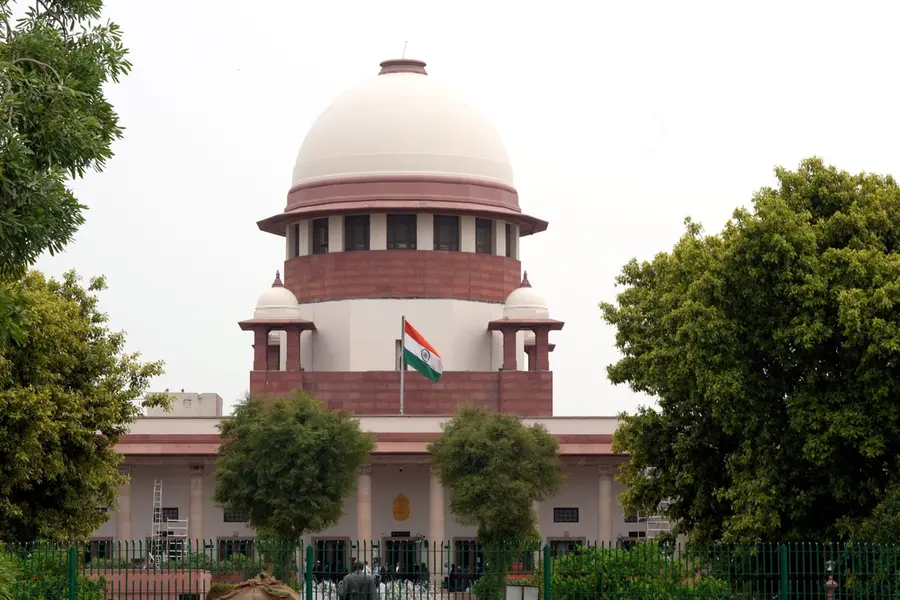
India's aviation sector could be on the verge of a major regulatory overhaul after the Supreme Court directed the Central government to submit the draft rules framed under the Bharatiya Vayuyan Adhiniyam, 2024, within two weeks. While the order is procedural, it signals that the country's new aviation law is entering a crucial phase, with significant implications for airlines, passengers and the future of aviation regulation.
The court's intervention comes amid growing concerns over soaring airfares, rising ancillary charges and the absence of an independent mechanism to oversee airline pricing practices. At a time when domestic air travel is witnessing record passenger growth, the case has brought renewed focus on the need to balance commercial freedom for airlines with stronger consumer protection.
The matter will now come up for hearing on August 3, after the Centre submits the draft rules before the apex court.
Court directs centre to submit draft rules
A Bench comprising Justices Vikram Nath and Sandeep Mehta directed the Union Government to place the draft aviation rules before the court in a sealed cover within two weeks, irrespective of whether they have been tabled before Parliament.
During the hearing, the Centre informed the court that the rules had already been finalised and were currently being translated into Hindi and other official languages before being placed before Parliament during the upcoming Monsoon Session.
The court accepted the government's submission but made it clear that it wanted to examine the draft regulations without waiting for the parliamentary process to conclude.
The order marks another important milestone in the implementation of the Bharatiya Vayuyan Adhiniyam, 2024, which came into force in January 2025 and replaced the nearly 90-year-old Aircraft Act of 1934.
The PIL that sparked the debate
The proceedings arise from a Public Interest Litigation (PIL) filed by social activist S. Laxminarayan, who has urged the Supreme Court to direct the government to establish a stronger and more independent aviation regulator capable of ensuring transparency, passenger protection and fair competition across the civil aviation sector.
The petition argues that passengers today face arbitrary airfare increases, unpredictable pricing algorithms, hidden charges and inadequate grievance redressal mechanisms, with very little regulatory oversight. According to the petitioner, while India's aviation market has expanded rapidly over the past decade, consumer protection has not kept pace with that growth.
Why airfares are under scanner
One of the biggest concerns raised before the court relates to the sharp increase in domestic airfares during festivals, holidays, school vacations and emergency situations.
The petitioner argued that airline ticket prices often increase by 100 to 300 per cent during peak demand periods, placing enormous financial pressure on passengers who have no option but to travel. Senior advocate Ravindra Srivastava, appearing for the petitioner, questioned whether such steep fare increases could genuinely be justified by higher operating costs.
He pointed out that according to information placed before the court, aviation turbine fuel (ATF) accounts for only around 10 per cent of the airfare, suggesting that fuel price fluctuations alone cannot explain the massive increase in ticket prices witnessed during certain periods. The plea contends that airlines currently enjoy complete freedom to determine fares through dynamic pricing systems without any independent authority having the power to review or regulate these pricing models.
Ancillary charges
Apart from airfare pricing, the petition also challenges the growing list of ancillary charges imposed by airlines. It alleges that many private carriers have reduced the free check-in baggage allowance for economy class passengers from 25 kg to 15 kg, effectively converting a service that was once included in the ticket price into an additional revenue source.
The petition also questions airline policies that permit only one piece of checked baggage without offering any compensation or fare reduction for passengers who travel without checked luggage.
Similarly, concerns have been raised regarding paid seat selection, cancellation charges and other optional services that have gradually become important sources of airline revenue. According to the petitioner, the absence of effective regulation has allowed airlines to steadily expand ancillary charges without sufficient transparency or consumer safeguards.
Call for independent aviation regulator
A key demand in the PIL is the creation of a truly independent aviation regulator with powers to oversee airfare pricing, passenger rights and airline service standards. During the hearing, the petitioner's counsel argued that the existing regulatory framework has failed to adequately protect consumers.
He also referred to a recent instance where the Ministry of Civil Aviation kept in abeyance a DGCA directive that required airlines to provide at least 60 per cent of seats without charging seat selection fees and encouraged passengers travelling under the same booking reference (PNR) to be seated together. According to the petitioner, such developments demonstrate the need for a stronger regulatory mechanism capable of operating independently while protecting passenger interests.
Government says “new rules are ready”
The Centre maintained that the new aviation rules have already been prepared and are currently undergoing translation before being placed before Parliament. The government has previously informed the court that the Bharatiya Vayuyan Adhiniyam, 2024 represents a comprehensive modernisation of India's aviation laws and that the accompanying rules will provide the detailed regulatory framework required for its implementation.
Until these rules come into force, however, the older regulatory provisions continue to remain operational.
The petitioner has argued that under the new law, the draft rules should first undergo public consultation before being formally notified.
More than airfare regulation
Although the immediate public attention has focused on airline ticket prices, the implications of the new aviation rules extend much further. The Bharatiya Vayuyan Adhiniyam aims to modernise India's civil aviation governance by creating a more contemporary legal framework capable of supporting one of the world's fastest-growing aviation markets.
The rules are expected to define how various provisions of the new Act will be implemented, including aspects relating to airline operations, regulatory oversight, safety administration, passenger rights and administrative procedures.
For airlines, airports and aviation service providers, these rules will ultimately determine how the new legislation functions in practice.
A growing market
India has emerged as one of the world's fastest-growing aviation markets, with domestic passenger traffic continuing to set new records each year. The country's airlines are rapidly expanding their fleets, airports are being modernised, and regional connectivity continues to improve under government initiatives. However, rapid growth has also brought new challenges.
Dynamic pricing algorithms, rising ancillary revenues, capacity shortages during peak travel seasons and increasing passenger expectations have created a far more complex operating environment than existed even a decade ago.
Industry experts increasingly believe that regulatory frameworks must evolve alongside market growth to ensure that consumer interests remain adequately protected without discouraging investment and competition.
Finding the balance
The Supreme Court's intervention comes at an important time for India's aviation industry. Unlike sectors such as electricity or telecommunications, the airline industry operates in an environment where pricing is largely determined by market demand. Dynamic pricing has become a global industry practice and allows airlines to maximise revenue while managing fluctuating demand.
However, the Indian market presents unique challenges. Limited airport capacity, high passenger demand during festivals, weather disruptions and supply constraints often combine to produce exceptionally high fares, leaving travellers with few affordable alternatives. The challenge before policymakers will therefore be to strike a careful balance.
Overregulating airfares could discourage airlines from expanding networks or investing in additional capacity. At the same time, the absence of meaningful oversight risks eroding passenger confidence if consumers perceive pricing practices as unfair or opaque.
Rather than introducing strict fare caps, experts believe the focus could shift towards greater transparency in pricing algorithms, stronger disclosure norms, improved passenger rights, enhanced grievance redressal mechanisms and clearer regulation of ancillary charges.
If implemented effectively, the new rules under the Bharatiya Vayuyan Adhiniyam, 2024 could become a landmark step in modernising India's aviation governance—creating a regulatory framework that supports industry growth while ensuring that passenger interests remain at its core.
As India's aviation sector prepares for its next phase of expansion, the outcome of this case may well define how the country's skies are regulated for years to come.
Published: 13 Jul 2026, 06:03 pm IST
ABOUT THE AUTHOR

Related Topics
Disclaimer: Kindly avoid objectionable, derogatory, unlawful and lewd comments, while responding to reports. Such comments are punishable under cyber laws. Please keep away from personal attacks. The opinions expressed here are the personal opinions of readers and not that of Mathrubhumi.