
While Iran insists its nuclear program is peaceful, Israel and the US see it as an existential threat
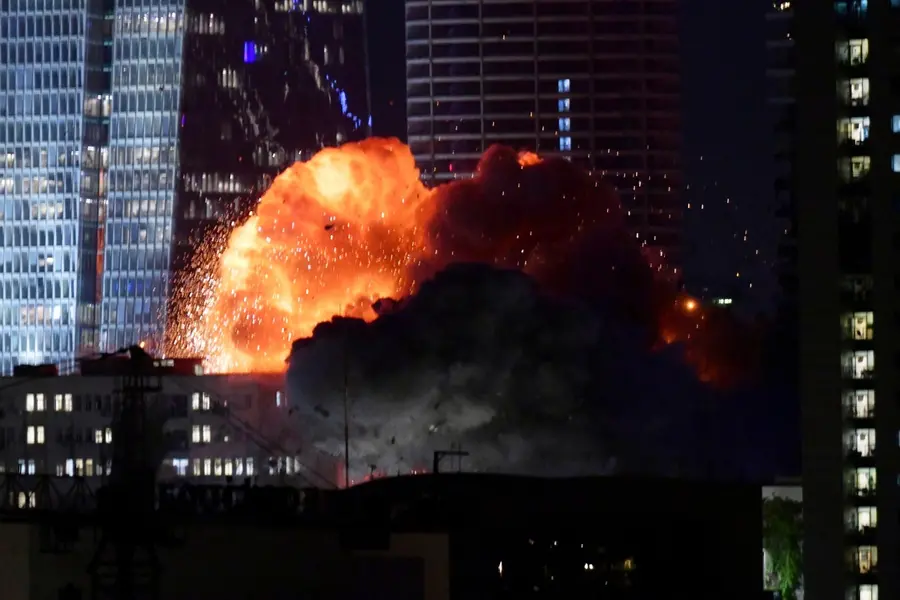
Athens: The already volatile situation in the Middle East has taken a dramatic turn with the United States launching direct military action against Iran, escalating a conflict that began with Israel’s attacks on Iran’s nuclear and military infrastructure.
Here’s a detailed breakdown of how the conflict unfolded, what actions have been taken, and what the global implications might be.
How it started: Israel strikes Iran
The conflict began on 13 June, when Israel launched a sudden and large-scale offensive against Iran. Israeli forces specifically targeted Iranian military and nuclear sites, killing several high-ranking military officials and nuclear scientists.
The attacks were seen as a direct attempt to cripple Iran’s nuclear programme, which Israel perceives as an existential threat.
Iran responded by firing hundreds of missiles and drones at Israel. Despite Israel’s multi-tiered air defence system, some projectiles managed to hit their targets.
The escalating conflict has, so far, killed hundreds in Iran and injured over 1,000 people. In Israel, two dozen deaths have been reported along with hundreds of injuries.
The nuclear controversy
While Iran maintains that its nuclear programme is peaceful, Israel and the United States have long suspected that Tehran could quickly pivot to building an atomic weapon. Although US intelligence agencies currently assess that Iran is not actively developing a nuclear bomb, both President Donald Trump and Israeli leaders argue that Iran’s capabilities make it an imminent threat.
Israel’s actions are rooted in its ongoing efforts to eliminate the Hamas militant group in Gaza, which is backed by Iran. The Gaza conflict has been ongoing since Hamas’ attack on southern Israel on 7 October 2023.
US enters the conflict: 'Operation Midnight Hammer'
In a dramatic escalation, the United States launched “Operation Midnight Hammer” overnight, targeting three of Iran’s key nuclear sites Fordo, Isfahan, and Natanz.
In a televised address from the White House, President Trump described the “massive precision strikes” as a “spectacular military success”, claiming that the sites had been “completely and fully obliterated.”
Trump warned of further military action if Iran retaliates.
At a press briefing, Air Force General Dan Caine, Chairman of the Joint Chiefs of Staff, said while it would take time to fully assess the damage, initial reports indicated heavy damage to all three targeted facilities.
Defence Secretary Pete Hegseth clarified that the mission was not intended to bring about regime change in Iran.
Iran’s Atomic Energy Organization confirmed the attacks but stated that the nuclear programme would continue. There were no immediate signs of radioactive contamination at the affected sites, according to both Iran and the UN’s nuclear watchdog.
The Fordo site, deeply buried under a mountain, was attacked with bunker-buster bombs — munitions only the US possesses, which weigh 13,600 kilograms and are delivered by stealth bombers.
Iran’s response to US strikes
Iran fired another barrage of missiles at Israel overnight and into Sunday, with over 80 people wounded, according to Israeli authorities. Most of the injuries were reported as minor.
Iran’s Foreign Minister Abbas Araghchi condemned the US attack and declared the era of diplomacy over.
“The warmongering, a lawless administration in Washington is solely and fully responsible for the dangerous consequences and far-reaching implications of its act of aggression,” Araghchi said at a news conference in Istanbul.
He added that attacking nuclear facilities crossed a “very big red line.” While Iran has not yet outlined a concrete retaliation plan, analysts warn that Tehran could target US forces in the Middle East, attempt to disrupt global oil supplies, or accelerate efforts to develop a nuclear weapon.
Global reaction: Fears of escalation
The US strikes have triggered widespread international concern. UN Secretary-General António Guterres expressed alarm, calling the strikes a “dangerous escalation.” He urged all involved parties to de-escalate immediately.
“There is a growing risk that this conflict could rapidly get out of control — with catastrophic consequences for civilians, the region and the world,” Guterres warned in a post on X.
European Union foreign policy chief Kaja Kallas echoed these concerns. While she reiterated that Iran must not be allowed to develop nuclear weapons, she called on all sides to return to negotiations and show restraint. Kallas is expected to lead a 27-nation EU foreign ministers' meeting in Brussels on Monday, with the Israel–Iran war at the top of the agenda.
Rising tensions in the Middle East
In the wake of the US involvement, Iranian-backed Houthi rebels in Yemen issued a call to Muslim nations, urging them to unite in a “single front against the Zionist-American arrogance.” The Houthis had earlier threatened to resume attacks on US vessels in the Red Sea if Washington supported Israel militarily.
Iran’s Supreme Leader Ayatollah Ali Khamenei had issued a stern warning days earlier, saying any attack by the US would bring “irreparable damage” upon them.
Meanwhile, the Israeli military stated it is preparing for the possibility of a prolonged war. Iran's foreign minister warned even before the US strikes that any American military involvement would be “very, very dangerous for everyone.”
(Agency inputs)
Published: 22 Jun 2025, 09:39 pm IST
Disclaimer: Kindly avoid objectionable, derogatory, unlawful and lewd comments, while responding to reports. Such comments are punishable under cyber laws. Please keep away from personal attacks. The opinions expressed here are the personal opinions of readers and not that of Mathrubhumi.
