
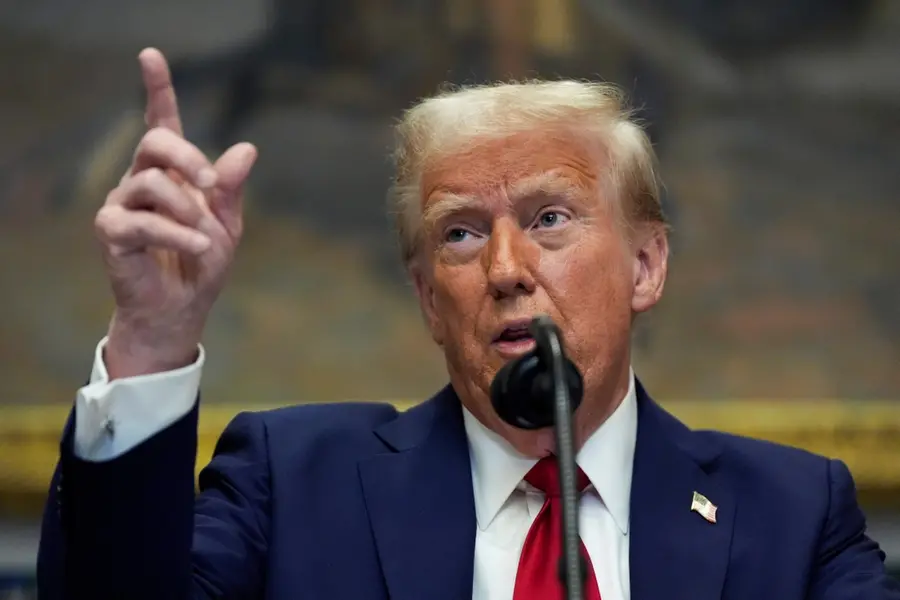
Greenland, a vast Arctic territory under Danish rule, has captured the interest of former US President Donald Trump due to its strategic location and untapped mineral resources. Trump has reiterated his interest in the region, stating, "We have to have it," ahead of Vice President JD Vance’s visit to the US Pituffik Space Base on Greenland’s northwestern coast.
Though Greenland enjoys self-governance, Denmark still controls its law enforcement, foreign affairs, defence, and monetary policy. However, its proximity to the United States places it within what historian Astrid Andersen of the Danish Institute of International Studies calls the US "zone of interest."
During World War II, the United States took control of Greenland while Denmark was occupied by Germany, and in many ways, it has maintained its presence ever since.
A military stronghold
The United States has an active military base in Greenland, originally built during the Cold War as a surveillance post. Today, it remains a crucial part of the US missile defence system, as Greenland sits along the shortest route for missiles between Russia and the United States.
Washington has raised concerns over "the lack of surveillance of the airspace and submarine areas east of Greenland," according to Ulrik Pram Gad, another expert at the Danish Institute of International Studies. Additionally, as climate change leads to melting ice and new shipping routes opening up, Greenland’s strategic importance continues to grow.
The 2019 purchase proposal
This is not the first time Trump has expressed interest in acquiring Greenland. In 2019, during his first term, he floated the idea of purchasing the territory, but Denmark firmly rejected the proposal. Despite this, the US has continued to strengthen ties with Greenland, signing a memorandum on cooperation in mineral exploration in the same year. The European Union followed with a similar agreement in 2023.
Rich in minerals, but untapped potential
Greenland’s land has been well-mapped for its mineral wealth, with 25 of the 34 minerals on the EU’s critical raw materials list found there, including rare earth elements.
"As the demand for minerals is rising, there is a need to go and look for untapped resources," said Ditte Brasso Sorensen, an analyst at Think Tank Europa.
Concerns over reliance on China for rare earth elements further fuel the urgency to explore Greenland’s resources.
"Actors are more and more aware they need to diversify their sources, especially when it comes to the dependence on China on rare earth elements," Sorensen added.
Mining challenges and economic realities
Despite its rich mineral deposits, Greenland’s mining sector is still in its infancy. Currently, there are only two active mines—one for rubies and another for anorthosite, a rock containing titanium. The ruby mine is searching for new investors, highlighting the difficulty of establishing profitable mining operations in such a remote and harsh environment.
The lack of infrastructure is a major hurdle.
"When it comes to extractive industries, Trump is putting Greenland on the mining map in discourse, but it's hard to say how it could evolve as there is a lack of investors," noted Lill Rastad Bjorst, an associate professor at Aalborg University specialising in Greenland.
Hurdles to economic independence
Greenland is eager to reduce its reliance on Denmark, which provides annual subsidies that account for a fifth of its GDP. The economy is currently heavily dependent on fishing, and efforts to develop tourism have been slow. However, the opening of an international airport in Nuuk in November is expected to improve access to the region.
Developing Greenland’s mining industry will require significant investments in both physical and digital infrastructure. The extreme weather conditions, fragile environment, and high costs present substantial challenges.
Public opposition has also shaped Greenland’s resource policies. Concerns over uranium mining led to a legislative ban on the extraction of radioactive materials. Oil exploration has similarly stalled, with Greenland’s government shifting its focus to hydropower instead.
"The government of Greenland has paused their commitment to oil exploration in Greenland and sees a great potential in hydropower," said Rastad Bjorst.
AFP
Published: 28 Mar 2025, 10:48 am IST
Disclaimer: Kindly avoid objectionable, derogatory, unlawful and lewd comments, while responding to reports. Such comments are punishable under cyber laws. Please keep away from personal attacks. The opinions expressed here are the personal opinions of readers and not that of Mathrubhumi.
