
The starkly opposing statements underline the widening confrontation between Washington and Tehran as military exchanges intensify across the region.
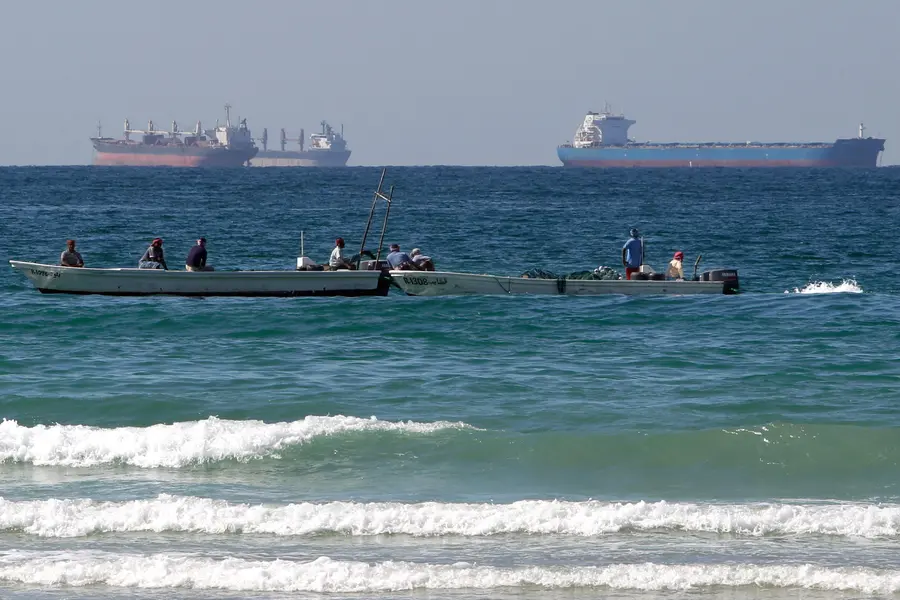
Tehran: A sharp war of words has erupted over control of the Strait of Hormuz, the world’s most critical oil shipping chokepoint, with Iran’s Revolutionary Guards asserting “complete control” of the waterway and rejecting US claims that Iranian naval power has been crippled.
In a statement carried by Fars news agency on Wednesday, Mohammad Akbarzadeh, an official with the Guards Navy, declared: "Currently, the Strait of Hormuz is under the complete control of the Islamic Republic's Navy." He warned that vessels attempting to cross the strategic route could face missile fire or stray drone attacks amid the ongoing conflict.
Also read | Mojtaba, son of Ayatollah Ali Khamenei, elected Iran’s new supreme leader: Report
The Strait of Hormuz, linking the Gulf to the Arabian Sea, handles roughly a fifth of global oil shipments, making any threat to navigation a matter of international concern.
Why is the Strait of Hormuz important?
The Strait of Hormuz is one of the world’s most strategically important waterways because it is the only sea passage linking the Persian Gulf to the open ocean. Major energy producers such as Saudi Arabia, Iraq, Kuwait, Qatar, the UAE and Iran depend on this narrow corridor to export oil and liquefied natural gas. Nearly a quarter of global seaborne oil trade and about one-fifth of LNG supplies pass through the strait annually, making it a critical artery for the global economy. Any disruption, even threats, can trigger sharp spikes in oil prices, fuel costs and financial market volatility worldwide.
Its importance is amplified by geography and geopolitics. At its narrowest, the strait is just about 39 km wide, with tightly defined shipping lanes that are vulnerable to mines, missiles or naval blockades. Iran controls the northern coastline, giving it strategic leverage during regional conflicts, while the United States and its allies prioritise keeping the route open to ensure freedom of navigation.
US claim
The Iranian claim comes just a day after US President Donald Trump said the US Navy was prepared to escort oil tankers through the Gulf to ensure safe passage.
Admiral Brad Cooper, Commander of United States Central Command, went further, dismissing Iranian naval capability altogether.
Also read | Iran hits 11 US base comms nodes: Why Tehran is blinding American military ops
"We are also sinking the Iranian Navy--the entire navy. Thus far, we've destroyed 17 Iranian ships, including the most operational Iranian submarine, that now has a hole in its side. For decades, the Iranian regime has harassed international shipping. Today, there's not a single Iranian ship underway in the Arabian Gulf, Strait of Hormuz, or Gulf of Oman. And we will not stop. We will continue to conduct dynamic targeting operations. We're hunting Iran's last remaining mobile ballistic missile launchers to eliminate what I would characterise as their lingering launch capability," he said.
The starkly opposing statements underline the widening confrontation between Washington and Tehran as military exchanges intensify across the region.
IRGC claims expanding offensive
Meanwhile, the Islamic Revolution Guards Corps (IRGC) announced the execution of the 16th wave of what it calls Operation True Promise 4, targeting US and Israeli assets following earlier strikes on Iran.
In a statement, the IRGC claimed it had struck the "heart and the northern parts of the occupied territories" through missile and drone operations led by its Aerospace Division. It listed targets including the general staff of the Israeli army and its ministry of war in Hakiriya, strategic infrastructure in Bnei Brak, military positions in Beit Hakfa northeast of Tel Aviv, and a military centre in Western Galilee.
The Guards further claimed that intelligence reports indicated over 680 “enemy” casualties by the fourth day of its counter-offensive. It attributed what it described as successful penetration of Israeli defences to "operational weakness, technical gaps, and the reduced computational capability in the multi-layer defence systems of the occupied territories," which it said had resulted in "opening up of air corridors for the penetration, passage, and impact of Iranian projectiles."
"The will of the Armed Forces of the Islamic Republic rests assuredly upon managed continuation of their operations as well as erosion and collapse of the military infrastructures of the Zionist regime. Up until complete destruction of the region's festered and usurping growth (the Zionist regime), we will remain committed to our allegiance until the last moment," the statement said.
The IRGC also announced that its Ground Forces had entered the battlefield, launching three simultaneous operations and deploying 230 attack drones.
Published: 04 Mar 2026, 11:06 am IST
Related Topics
Disclaimer: Kindly avoid objectionable, derogatory, unlawful and lewd comments, while responding to reports. Such comments are punishable under cyber laws. Please keep away from personal attacks. The opinions expressed here are the personal opinions of readers and not that of Mathrubhumi.
