
As the U.S. escorts commercial tankers to protect energy markets, the UN’s nuclear watchdog warns it has lost contact with Iranian nuclear authorities, raising fears of an unmonitored escalation.
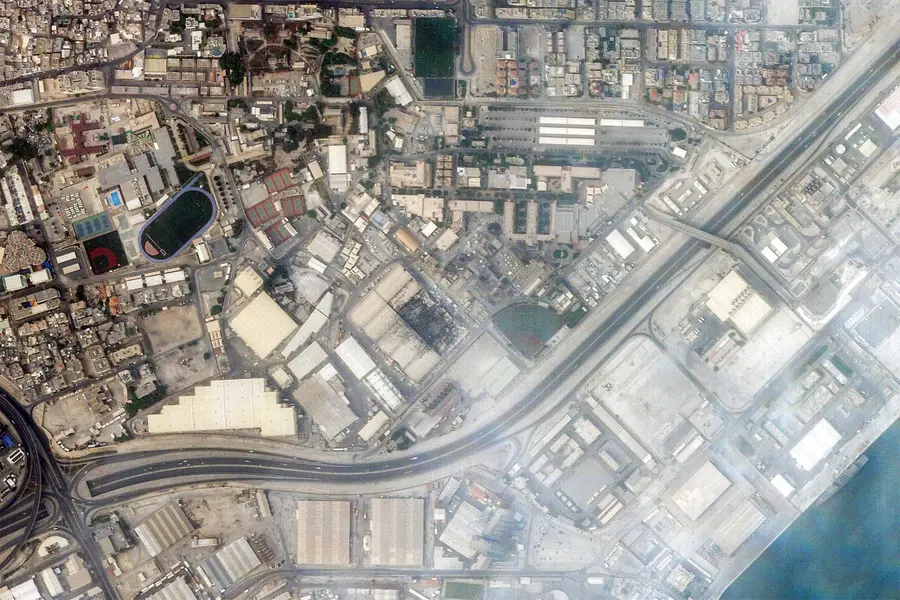
Washington: In a calculated and aggressive response to the joint U.S.-Israeli strikes that decapitated Iran's supreme leadership last week, the Islamic Revolutionary Guard Corps (IRGC) has shifted its strategy from symbolic retaliation to a systematic campaign of "electronic and physical blinding."
Since Saturday, at least 11 U.S. military facilities across the Middle East have seen their communication infrastructure, ranging from satellite uplink terminals to early-warning radar systems, targeted by precision drone swarms and ballistic missiles.
According to The New York Times, this specialised targeting is designed to degrade the United States' ability to coordinate "Operation Epic Fury," the ongoing air campaign aimed at dismantling Iran’s nuclear and missile programs. By severing the digital and radio links between regional bases and Central Command (CENTCOM), Tehran hopes to create a "fog of war" that slows American reaction times and provides cover for further IRGC manoeuvres.
The following 11 locations have been identified by defence officials and regional monitoring groups as primary targets of the Iranian offensive:
KUWAIT
- Camp Arifjan: A major logistics hub that sustained a direct missile strike, resulting in the deaths of at least six U.S. service members.
- Ali Al Salem Air Base: A key installation for U.S. Air Force operations that reported significant damage to communication arrays.
BAHRAIN
- Naval Support Activity (NSA) Bahrain: The headquarters of the U.S. Navy’s 5th Fleet. Strikes targeted the command centre responsible for monitoring the Persian Gulf.
- Isa Air Base: Iranian drones reportedly hit satellite uplink facilities used for regional maritime surveillance.

UNITED ARAB EMIRATES
- Al Dhafra Air Base: This facility, which hosts U.S. fighter jets and surveillance aircraft, was targeted by a swarm of loitering munitions.
- Jebel Ali Port Facilities: Logistics and communication nodes used by visiting U.S. Navy vessels were damaged in the barrage.
SAUDI ARABIA
- U.S. Embassy, Riyadh: Two drones struck the embassy compound on Monday, causing structural fires and destroying secure communication equipment.
- Prince Sultan Air Base: Interceptors were launched to counter several incoming missiles, though debris caused damage to the base's electronic warfare infrastructure.
OMAN
- Port of Duqm: A fuel tanker and a U.S. military logistics pier were struck, disrupting refuelling operations for the U.S. Navy.
- Port of Salalah: Strategic communication relays situated near the port were disabled by precision-guided munitions.
IRAQ
- Al-Asad Airbase: Long a focal point for tensions, the base was hit by a volley of short-range ballistic missiles targeting the tactical operations centre.
Strategic Analysis: Why Comms Infrastructure?
Military analysts suggest that Iran’s focus on communication nodes, rather than just barracks or runways, is a sophisticated "asymmetric" move.
- Disrupting the "Kill Chain": Modern U.S. warfare relies on a lightning-fast "kill chain" where sensor data (from radars in Qatar or UAE) is instantly relayed to shooters (B-2 bombers or F-35s). By hitting the AN/FPS-132 radar in Qatar and the THAAD radar in the UAE, Iran is attempting to punch holes in the U.S. missile defence umbrella.
- Political Leverage: By targeting the U.S. Embassy in Riyadh and facilities in Bahrain, Iran is signalling to Gulf allies that hosting U.S. "command nodes" makes them primary targets, hoping to fracture the regional coalition.
- Operational Sabotage: The destruction of SATCOM terminals at the 5th Fleet headquarters in Bahrain complicates the U.S. Navy's current mission of escorting oil tankers through the Strait of Hormuz, which Iran officially closed on Monday.
Published: 04 Mar 2026, 09:50 am IST
Related Topics
Disclaimer: Kindly avoid objectionable, derogatory, unlawful and lewd comments, while responding to reports. Such comments are punishable under cyber laws. Please keep away from personal attacks. The opinions expressed here are the personal opinions of readers and not that of Mathrubhumi.
