
Iran has appointed Mohammad Baqer Zolqadr as its new security council secretary after Ali Larijani was killed in an Israeli attack
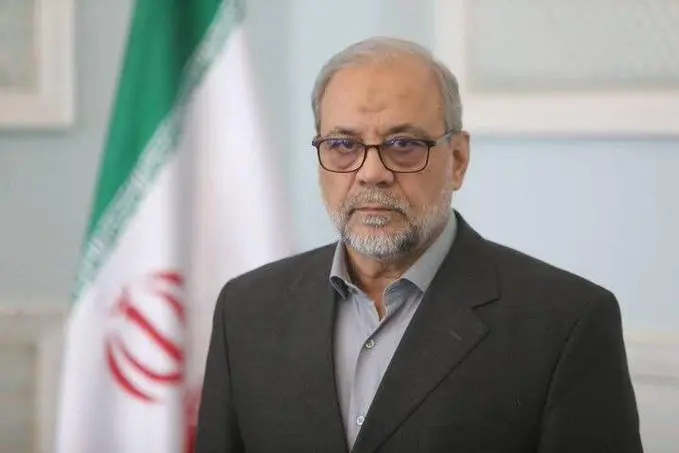
Iran has announced a key leadership change within its security establishment amid ongoing regional tensions. Mohammad Baqer Zolqadr has been appointed as the new Secretary of the Supreme National Security Council, replacing Ali Larijani, who was killed in an Israeli strike last week.
Iranian media reported the development on Tuesday, citing a statement issued by Mehdi Tabatabai, a public relations aide to the Iranian President. The statement said that Zolqadr’s appointment was made with the approval of the leader of the Islamic Revolution, Ayatollah Seyed Mojtaba Khamenei, and formalised through a decree by President Masoud Pezeshkian.
Role of the Supreme National Security Council
The Supreme National Security Council plays a central role in shaping Iran’s security and foreign policy. Although the council is officially headed by President Masoud Pezeshkian, it includes senior figures from the military, intelligence agencies and government, along with representatives of the supreme leader, who holds ultimate authority over key state matters.
Who is Mohammad Baqer Zolqadr
Mohammad Baqer Zolqadr has taken over the position following the death of Ali Larijani. The announcement was also shared on social media by the communications deputy of the Iranian president.
Zolqadr has an extensive background in Iran’s security and political systems. He previously served as a commander in the Revolutionary Guards and has held several senior roles within the country’s defence and administrative framework.
His past positions include serving as deputy for security in the Interior Ministry, holding a deputy role within the armed forces’ general staff, and acting as an adviser to the judiciary chief with a focus on crime prevention.
In addition to his administrative experience, Zolqadr has been active in politics. He once led the election headquarters of the hardline Popular Front of Islamic Revolutionary Forces. Since 2022, he has served as secretary of the Expediency Discernment Council, which is responsible for resolving disputes between parliament and the Guardian Council. The Guardian Council has the authority to oversee elections and reject legislation.
Rising tensions and recent developments
The leadership change comes at a time of heightened conflict in the region. Last week, Israel’s Defence Minister Israel Katz announced that Iran’s Intelligence Minister Esmail Khatib had been eliminated in an overnight strike.
Earlier, Iran confirmed that Mojtaba Khamenei had been appointed as the new Supreme Leader on March 9, following the death of Ayatollah Ali Khamenei in a joint United States and Israeli strike.
However, Mojtaba Khamenei has not made any public appearances since taking on the role. His absence has led to growing uncertainty about his condition and whereabouts during a period of ongoing conflict. It has also raised questions about the current leadership structure and decision-making within the country.
Uncertainty amid ongoing conflict
As tensions continue to unfold, Iran’s latest appointment signals an effort to maintain stability within its security framework. With key leadership changes and ongoing military developments, the situation remains closely watched both within the region and globally.
With agency inputs
Published: 24 Mar 2026, 08:03 pm IST
Related Topics
Disclaimer: Kindly avoid objectionable, derogatory, unlawful and lewd comments, while responding to reports. Such comments are punishable under cyber laws. Please keep away from personal attacks. The opinions expressed here are the personal opinions of readers and not that of Mathrubhumi.
