
Fresh remarks from the Trump administration in January 2026 have reignited global debate over Greenland’s strategic mineral wealth, raising diplomatic alarms in Europe
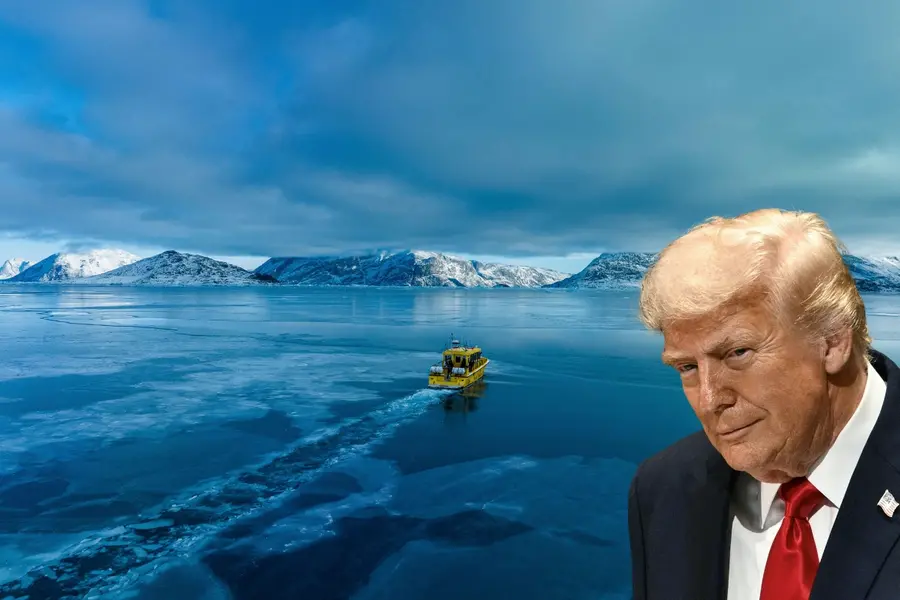
Recent statements from the Trump administration in January 2026 have revived aggressive rhetoric around Greenland, framing the Arctic territory as a national security priority for the United States.
Officials have linked Greenland’s strategic location and mineral wealth to America’s defence supply chains, signalling a harder stance that has unsettled Denmark and raised concerns within the European Union about NATO unity and transatlantic trust.
Also Read

The remarks come amid growing Western anxiety over dependence on China for critical minerals, positioning Greenland as a potential alternative source — but also as a flashpoint in Arctic geopolitics.
What makes Greenland strategically important to the United States?
Greenland occupies a critical position in the Arctic, offering surveillance and missile-defence advantages amid rising activity from Russia and China in the region. The US already maintains a military presence at the Thule Air Base, which plays a key role in early-warning systems.
Beyond security, Greenland’s vast and largely untapped mineral reserves elevate its geopolitical value, particularly as global competition intensifies over materials essential for clean energy, defence manufacturing and advanced technologies.
Which minerals is the US most interested in?
According to geological assessments, Greenland could supply up to 10 per cent of global rare earth demand if fully developed. The minerals most closely watched by Washington include:
Rare earth elements
- Copper
- Nickel
- Graphite
- Iron ore
- Zinc
- Gold
- Diamonds
- Tungsten
- Titanium-vanadium
A 2023 European Union survey found that Greenland hosts deposits of 25 out of the EU’s 34 listed critical raw materials, reinforcing its strategic relevance beyond national borders.
How does this connect to Trump’s 2019 Greenland proposal?
Donald Trump’s renewed rhetoric echoes his first-term proposal in 2019, when he publicly floated the idea of the United States purchasing Greenland from Denmark. He described it as a strategic real estate deal, citing military expansion, national security and access to resources.
The idea was swiftly rejected by Denmark’s Prime Minister Mette Frederiksen, who called it “absurd,” while Greenland’s own government reiterated that the island is not for sale and belongs to its people. The backlash led Trump to cancel a planned visit to Denmark, straining diplomatic ties.
Has the United States pursued Greenland before?
The US interest in Greenland predates Trump. In 1867, the United States acquired Alaska from Russia largely for strategic and resource-driven reasons, setting a historical precedent for Arctic expansion.
Over the decades, Washington has repeatedly explored deeper engagement with Greenland, especially during the Cold War, viewing it as a buffer against rival powers and a critical node in Arctic defence infrastructure.
What do studies reveal about Greenland’s mineral wealth?
Geological surveys suggest Greenland may contain 43 of the 50 minerals considered critical to US economic and national security. Significant deposits of rare earth elements, particularly dysprosium and neodymium, are concentrated in southern Greenland’s Gardar province.
These materials are essential for electric vehicle motors, wind turbines and defence technologies, making them central to the global energy transition.
Why hasn’t large-scale mining taken off yet?
Despite its resource potential, mining in Greenland remains limited due to environmental protections, regulatory challenges and resistance from indigenous communities concerned about ecological damage.
In 2021, Greenland’s government banned uranium mining, halting major projects such as Kuannersuit, where uranium occurs as a by-product of rare earth extraction. Arctic conditions, high costs and climate risks continue to complicate development plans.
Why is Europe concerned about Trump’s renewed stance?
Trump’s language has raised alarms in Europe over sovereignty, alliance stability and trade implications. Denmark has reiterated that Greenland’s future must be decided by Greenlanders, while EU officials fear unilateral US pressure could weaken NATO cohesion and destabilise Arctic governance.
The episode underscores broader tensions between strategic resource competition and international norms.
What are the environmental and political risks involved?
Arctic mining carries significant environmental risks, including ecosystem disruption and long-term climate impacts. Politically, aggressive posturing risks alienating allies while inflaming global competition for critical minerals.
Experts warn that securing mineral independence must be balanced against diplomacy, environmental responsibility and indigenous rights.
What does Greenland represent in today’s global power struggle?
Greenland has emerged as more than an ice-covered territory — it is now a symbol of the 21st-century contest over resources, security and influence. As demand for critical minerals accelerates, the island sits at the intersection of economic ambition, environmental concern and geopolitical rivalry.
Whether Trump’s renewed focus translates into policy or remains rhetorical, Greenland’s strategic value is unlikely to fade from global attention.
Published: 08 Jan 2026, 09:30 pm IST
Related Topics
Disclaimer: Kindly avoid objectionable, derogatory, unlawful and lewd comments, while responding to reports. Such comments are punishable under cyber laws. Please keep away from personal attacks. The opinions expressed here are the personal opinions of readers and not that of Mathrubhumi.