
The US military has acknowledged using PrSMs during its Iran operation but has denied striking Lamerd.
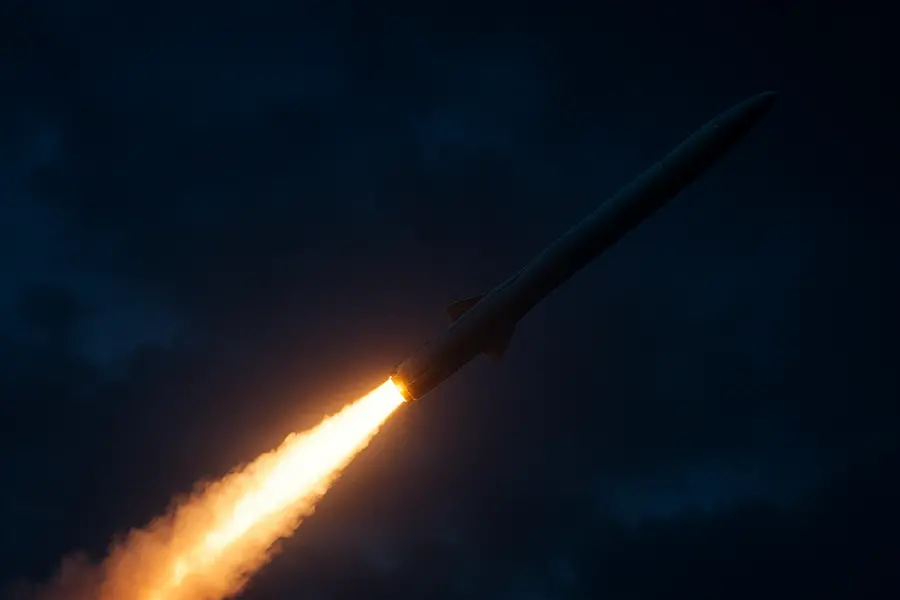
Jerusalem: A new US ballistic missile touted as a highly precise, long-range weapon appears to have caused a wide trail of death and destruction in the Iranian city of Lamerd, raising concerns about the risks of using it near civilian areas, according to an analysis by conflict monitor Airwars and interviews with weapons experts and former defence officials.
The Lockheed Martin Precision Strike Missile (PrSM) is being developed as a next-generation weapon for the US military, which has invested billions of dollars in expanding its arsenal.
Airwars' review of what is believed to be the missile's first combat use, on the opening day of the Iran war, found that three missiles that struck Lamerd on February 28 killed civilians up to 50 metres (164 feet) from their detonation points and caused damage at distances more than three times greater.
The missiles exploded above a sports complex and two residential neighbourhoods, according to Airwars. Iranian officials said at least 21 civilians, including seven children, were killed.
Airwars said it was the first organisation to map the damage from the Lamerd strikes and estimate the weapon's lethal range.
The PrSM is designed to detonate in midair, sending tens of thousands of dense metal pellets outward at high speed. Photos, videos and satellite imagery reviewed by Airwars and verified by The Associated Press show streets, buildings and vehicles heavily marked by impacts in a pattern experts said was consistent with the missile's capabilities.
The US military has acknowledged using PrSMs during its Iran operation but has denied striking Lamerd.
The intended target of the Lamerd strikes remains unclear. An Islamic Revolutionary Guard Corps compound is located nearby, but satellite imagery showed no damage to the facility.
Six weapons experts, including two former military officials, told AP they believed PrSMs were used in Lamerd and said they considered the use of Israeli or Iranian weapons unlikely. All said the missile should not be used against targets close to civilian populations.
"You would be hard-pressed to find a reason to use the PrSM in a densely populated area," said Michael Meier, a former US Army adviser on the laws of war.
How Airwars investigated the Lamerd strikes
London-based nonprofit Airwars has spent more than a decade documenting civilian deaths linked to airstrikes. It has investigated conflicts including those in Syria, Iraq, Gaza and Ukraine.
For its Lamerd investigation, the group used publicly available photographs, videos, satellite imagery, social media posts and news reports. It also used geolocation tools to identify the locations of the strikes and map the resulting damage.
Airwars estimated the blast radius by identifying the approximate detonation points, locations where civilians were reported killed and areas showing damage consistent with blast patterns.
AP independently examined the findings by measuring distances between reported civilian deaths and the points where the missiles appeared to have detonated in midair. The news agency also reviewed satellite imagery, photographs and videos from the affected locations.
Lockheed Martin did not respond to AP's request for comment and has not publicly specified the missile's full impact radius. The company has released an animation showing a simulated PrSM blast.
US confirms PrSM use in Iran but denies Lamerd strike
US Central Command posted an image on X on March 1, the day after the Lamerd attack, that weapons experts said showed a PrSM being launched during the Iran operation.
Three days later, the command described the use of PrSMs in Iran as a "historic first", without identifying the locations where they were fired.
After reports about the Lamerd strikes gained attention, a Central Command spokesperson said US forces had not launched PrSMs or any other weapons into Lamerd on February 28 and maintained that American forces do not target civilians.
The spokesperson suggested that footage from one of the attacks appeared to show an Iranian Hoveyzeh cruise missile.
However, weapons experts who examined security camera footage from Lamerd said the missile visible in the video did not match the Iranian model, which has a rounded engine.
The Israeli military told AP that it did not strike as far south in Iran as Lamerd on the first day of the war. Experts also said Israel is not known to possess missiles that detonate in midair in the manner seen in the Lamerd attack.
When asked about the Airwars and AP findings, US Central Command repeated its denial, saying it was based on an earlier assessment of the incident. Its commander, Admiral Brad Cooper, told Congress in May that the military was investigating only one case in which a US strike killed civilians, an attack on an Iranian school in Minab.
What is the PrSM designed to do?
The PrSM is intended to replace the US Army's Army Tactical Missile System (ATACMS), which has been in service for decades.
The ATACMS has a range of about 300 kilometres, while Lockheed Martin says the PrSM can strike targets more than 499 kilometres away.
The two weapons also differ in how they produce their effects. ATACMS warheads can break into steel fragments or smaller bomblets over a target area, while the PrSM's warhead disperses tens of thousands of tungsten pellets in multiple directions, according to Airwars and weapons specialists.
Tungsten's high density and melting point allow the pellets to maintain their shape after detonation. Defence publications describe them as capable of penetrating soft armour and causing severe injuries.
Lamerd damage extended far beyond impact points
Airwars identified footage showing damage to a school located about 170 metres from the missile that detonated over Shahid Naimi Sports Hall.
Iranian state media reported that seven civilians, mostly children, were killed in that strike. Airwars said its open-source investigation corroborated the reported deaths, including those of three teenage girls who were playing volleyball and a woman who was smoking a hookah outside her home.
Another missile detonated over the Tal-e Khandagh neighbourhood, killing 2-year-old Avina Barzegar while she was in her yard.
Airwars estimated that the pellet that struck Barzegar travelled about 50 metres from the blast point. Investigators geolocated her home using video footage showing its front gate and calculated the distance between the house and the detonation site.
Neither Airwars nor AP found reports indicating that military or security personnel were killed in the attacks or that military infrastructure was struck.
US, UK and Australia plan more PrSM purchases
The Lamerd strikes have not slowed international interest in the weapon.
The Pentagon has since awarded Lockheed Martin a contract worth more than USD 4 billion to quadruple PrSM production. The UK announced in June that it had allocated 130 million pounds (USD 177 million) to acquire the missile, while Australia, which purchased PrSMs in 2025, invested billions of dollars in the programme in April.
Weapons experts acknowledge that the missile offers important new capabilities but say its use near populated areas requires caution.
"Its proper use should be reserved for things like large concentrations of enemy personnel with hard and soft armour," said Wes Bryant, a former Pentagon adviser on precision warfare and civilian harm mitigation.
Trevor Ball, a former US Army explosives expert, also warned about the weapon's effects.
"It will kill people outside their homes who aren't protected by walls," he said.
Published: 31 Aug 2026, 08:40 pm IST
ABOUT THE AUTHOR

Related Topics
Disclaimer: Kindly avoid objectionable, derogatory, unlawful and lewd comments, while responding to reports. Such comments are punishable under cyber laws. Please keep away from personal attacks. The opinions expressed here are the personal opinions of readers and not that of Mathrubhumi.