
According to a UNICEF spokesperson, around one million young people, effectively “all children in the Gaza Strip”, are now in need of mental health and psychosocial support
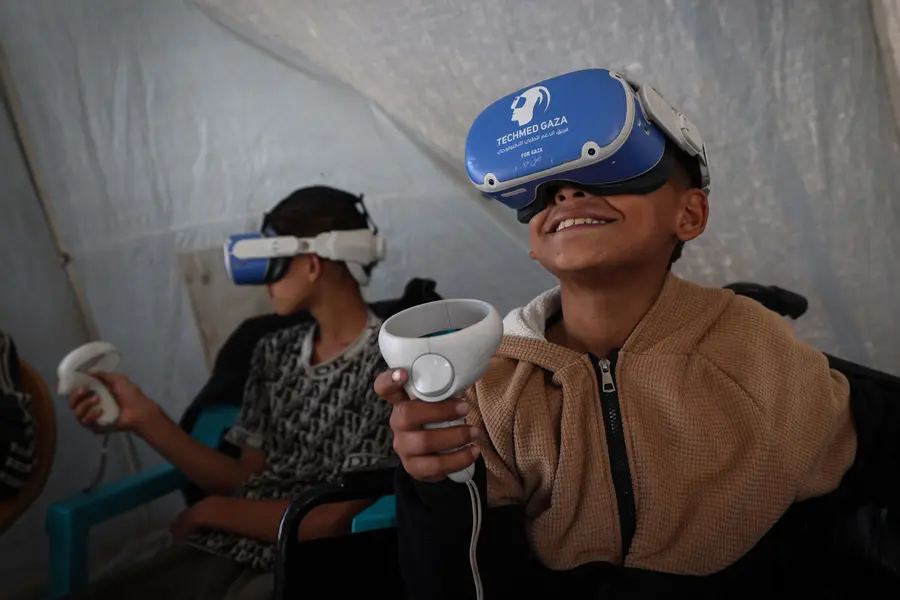
Al-Zawayda (Palestinian Territories): Children traumatised by the war in Gaza are taking part in a pioneering therapy programme that uses virtual reality headsets to transport them to peaceful digital worlds far removed from the devastation around them.
The initiative, run from a simple white tent pitched on sandy ground in Al-Zawayda, central Gaza, was launched on November 30. It aims to boost psychological wellbeing and has been described by its operators as delivering faster progress than traditional therapy.
Also Read

Inside the tent, five boys – one in a wheelchair, the others seated on plastic chairs – explored lush gardens, calm beaches and safe cities through their VR goggles. Some reached out instinctively towards the scenes before them: one clapped his hands mid-air as if swatting a fly, another held his hand up to inspect the virtual landscape. One child called out excitedly, saying a dog was running towards him: “Come! Come!” Another said he could see birds as he looked around.
Therapists fitted the blue TechMed Gaza headset onto 15-year-old Salah Abu Rukab, who suffered a head injury during the conflict. “We feel comfortable in it, we enjoy it, and through it we enter a garden, we enter spaces with animals and similar experiences,” he told AFP. Asked what he could see, he replied, “It’s all trees. Nothing but trees, grass and flowers.”
Mental health supervisor Abdalla Abu Shamale said the headsets offered far more than a brief escape. “Through programmers, we are able to design games with therapeutic, preventive and developmental goals that help prepare the child or enable them to cope and manage their life more effectively,” he told AFP.
“This method has proven its effectiveness over a full year of working with many children, including war-amputee children, injured children and those exposed to extremely traumatic events.”
A fragile ceasefire between Israel and Hamas has held since October 10. The World Health Organization warns that conflict-related injuries take a severe psychological toll, with survivors facing trauma, grief and the pressures of daily survival amid a shortage of psychosocial services.
According to UNICEF spokesperson Jonathan Crickx, around one million young people, effectively “all children in the Gaza Strip”, are now in need of mental health and psychosocial support “after two years of horrendous war”.
The VR programme uses specially designed content tailored for traumatised children, taking into account their physical and emotional condition and helping them rebuild a more positive perception of the world.
Abu Shamale said the response had been overwhelmingly encouraging. The children were “treated and accompanied through VR sessions, and when we integrated them into these techniques, they showed a very, very strong response and extremely positive results.
“The speed of treatment, recovery and reaching stability using VR techniques was faster than in regular sessions. In regular sessions without VR, we usually need about 10 to 12 sessions, while with VR we can achieve results in just five to seven sessions.”
AFP
Published: 02 Dec 2025, 10:09 am IST
Disclaimer: Kindly avoid objectionable, derogatory, unlawful and lewd comments, while responding to reports. Such comments are punishable under cyber laws. Please keep away from personal attacks. The opinions expressed here are the personal opinions of readers and not that of Mathrubhumi.