
The aircraft carrier is under constant surveillance, Iranian officials said, signalling a sharp escalation in tensions amid ongoing US military build-up in the region.
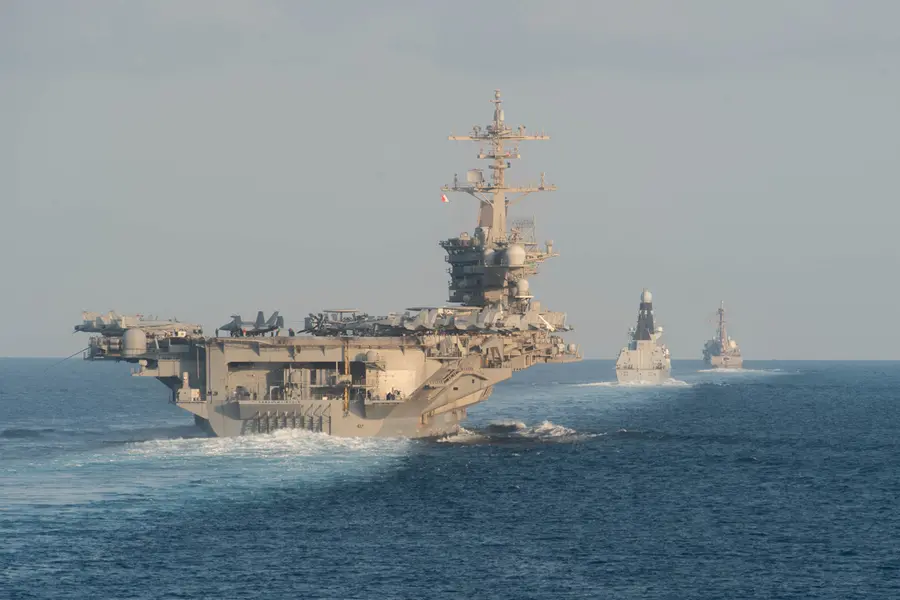
Tehran: The Iranian Navy has issued a direct warning to the United States, stating that its aircraft carrier, the USS Abraham Lincoln, is being closely monitored and faces potential strikes if it approaches Iranian territory.
According to a report by the state broadcaster Press TV, Iranian Navy Commander Rear Admiral Shahram Irani warned that the USS Abraham Lincoln is under constant surveillance and will be targeted by the Army Navy if it enters the range of Iran's missile systems.
USS Abraham Lincoln is deployed as part of Carrier Strike Group Three (CSG-3), with Carrier Air Wing Nine (CVW-9) embarked. The aircraft carrier serves as the flagship of the strike group and hosts the commander of Destroyer Squadron 21.
On February 3, 2026, while operating in the Arabian Sea about 500 miles off Iran’s southern coast, an Iranian Shahed-139 drone approached the carrier. A US F-35 fighter jet intercepted and shot it down.
Also read | Why the US is eyeing Iran’s Kharg Island and how it could backfire globally
Subsequently, on March 1, Iran’s Islamic Revolutionary Guard Corps (IRGC) claimed that four ballistic missiles had hit the USS Abraham Lincoln. The Pentagon, however, rejected the assertion, stating that the missiles “weren’t even close” to their intended target.
On March 5, the Iranian military again alleged that the carrier had been struck, this time by a series of drone attacks.
The naval threat follows a broader dismissal of American influence by senior military officials in Tehran, who have characterised Washington's recent diplomatic overtures as a facade. Press TV reported that Lieutenant Colonel Ebrahim Zolfaqari, spokesperson for the Khatam al-Anbiya Central Headquarters, stated on Wednesday that the "strategic power" previously flaunted by the US has now "turned into a strategic defeat."
These remarks come in the wake of a significant de-escalation by US President Donald Trump, who recently stepped back from a 48-hour ultimatum to launch strikes against Iranian power plants. This shift occurred after the Islamic Republic issued a stern warning that any such aggression would result in the reciprocal targeting of every energy and power installation across the region.
Also read | ‘Negotiating with themselves’: Iran mockingly rejects Trump’s 15-point peace proposal
Addressing the change in the American stance, Zolfaqari remarked that "if the self-proclaimed superpower of the world could have escaped this predicament, it would have done so by now. Do not call your defeat an agreement," he said.
The spokesperson's comments appear to be a direct rebuttal to President Trump's claims on his Truth Social platform, where the US leader suggested that both nations had engaged in "very good and constructive conversations over the past two days regarding a complete and total resolution of our hostilities in [West Asia]."
However, Press TV cited an informed source within Tehran who flatly contradicted the American narrative, clarifying on Monday that no official communication has taken place between the two capitals.
Zolfaqari echoed this sentiment, suggesting that the era of relying on Washington's word has passed. "The era of your promises is over. Today, there are only two fronts in the world: truth and falsehood. And every freedom-seeking pursuer of truth will not be deceived by your media waves," he added.
The spokesperson further mocked perceived internal chaos within the US administration, sarcastically questioning if the "level of your infighting reached the point of negotiating with yourselves?"
This rhetoric highlights the deep-seated scepticism in Tehran regarding current American diplomatic strategy, extending to a grim assessment of Western economic interests in the region. Press TV reported Zolfaqari's assertion that neither previous levels of US investments nor former energy and oil prices would ever return.
The official maintained that regional security is now dictated by Tehran's military capabilities, stating that "stability in the region is ensured by the powerful hand of our armed forces," and further defining the situation as "stability through [our] power."
Zolfaqari made it clear that there would be no return to the previous status quo, insisting that such a possibility is off the table unless "the very thought of taking [military] action against the Iranian nation is completely erased from your vile minds."
As noted by Press TV, the spokesperson reaffirmed Iran's uncompromising position, declaring that "our first and last word from day one has been, is, and will be: someone like us will not come to terms with someone like you--not now, and not ever."
The Trump administration has offered a 15-point ceasefire plan to Iran, according to a person briefed on the contours of the plan but who was not authorised to speak publicly about it.
The ceasefire plan was submitted to Iran by intermediaries from Pakistan, who have offered to host renewed negotiations between Washington and Tehran.
The proposal comes as the U.S. military is preparing to send at least 1,000 more troops from the 82nd Airborne Division to supplement some 50,000 troops already in the region.
The New York Times reported earlier Tuesday that the 15-point plan had been delivered to Iranian officials.
The Pentagon is also in the process of deploying a pair of Marine Expeditionary Units that will add about 5,000 Marines and thousands of sailors to the region.
Israeli officials, who have been advocating for Trump to continue the war against Iran, were taken by surprise by the U.S. administration’s submission of a ceasefire plan, the person said.
But with the U.S. taking steps to send additional soldiers and Marines to the Mideast, the move is being framed as Trump manoeuvring to give himself “max flexibility” on what he will do next, the person added.
Published: 25 Mar 2026, 05:02 pm IST
Related Topics
Disclaimer: Kindly avoid objectionable, derogatory, unlawful and lewd comments, while responding to reports. Such comments are punishable under cyber laws. Please keep away from personal attacks. The opinions expressed here are the personal opinions of readers and not that of Mathrubhumi.
