
The United States has accused Iran of targeting commercial vessels and killing or injuring civilian crew members as Washington reinstated its blockade on Iranian ports, further escalating tensions in the Strait of Hormuz.
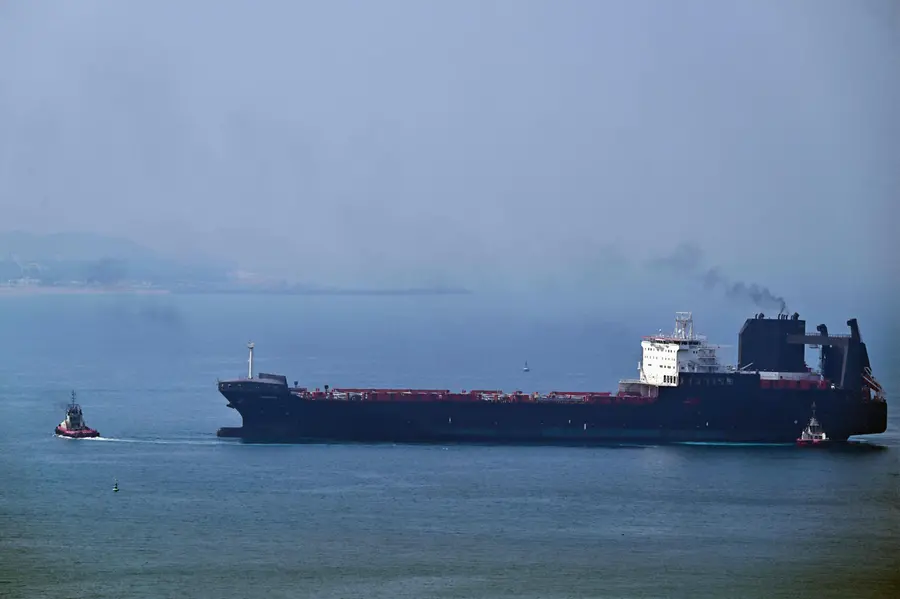
Washington DC: The United States has accused Iran of deliberately attacking commercial vessels in the Strait of Hormuz and targeting neighbouring Gulf countries with missiles and drones, as Washington reinstated its naval blockade on Iranian ports.
The renewed military action comes amid the collapse of a fragile ceasefire and stalled diplomatic talks, raising fears of a wider conflict in West Asia and fresh disruptions to one of the world's most important energy trade routes.
Also Read

US accuses Iran of targeting civilian ships
The latest escalation began after US Central Command (CENTCOM) alleged that Iranian forces had attacked seven commercial vessels over the past week, resulting in civilian casualties.
In an official statement, CENTCOM Commander Admiral Brad Cooper said Iran had intentionally targeted civilian shipping and neighbouring countries.
"Over the past seven days, Iran has intentionally targeted civilians across the region by attacking seven commercial ships, resulting in nearly a dozen civilian crew members killed, missing, or injured. Iranian forces have also launched dozens of missiles and drones toward neighbouring Gulf countries. U.S. forces are holding Iran accountable for unwarranted aggression that continues to endanger innocent lives," Admiral Brad Cooper said.
According to CENTCOM, the attacks were part of a broader campaign that included missile and drone strikes against Gulf nations hosting US military forces. The US military maintains that Iran's actions threaten both regional security and international maritime trade.
US restores blockade on Iranian ports
Hours after carrying out another wave of strikes on Iranian targets, the United States reinstated its naval blockade on vessels travelling to and from Iranian ports.
CENTCOM announced that the blockade resumed at 4 pm Eastern Time, stating that US forces were acting to reduce Iran's capability to threaten commercial shipping in the Strait of Hormuz.
The command also confirmed that more than 20 US naval warships, including aircraft carriers and amphibious assault ships, along with hundreds of military aircraft, are currently deployed across the Middle East to support the operation.
The blockade had originally been imposed in April before being lifted in June after an interim agreement paused hostilities and allowed negotiations over Iran's nuclear programme and regional security.
Hormuz truce begins to unravel
The renewed blockade comes as the temporary agreement between Washington and Tehran appears to be falling apart.
The 60-day arrangement had temporarily eased tensions by ensuring free passage through the Strait of Hormuz while both sides attempted diplomatic negotiations.
However, continued military exchanges, attacks on commercial vessels and repeated missile launches have stalled those talks. Regional mediators are still attempting to revive negotiations, but no breakthrough has been announced.
The Strait of Hormuz carries roughly 20 per cent of the world's oil and natural gas exports, making any disruption a major concern for global energy markets.
Trump drops plan to charge ships
US President Donald Trump confirmed that he had initially planned to impose a 20 per cent transit fee on ships passing through the Strait of Hormuz after the blockade resumed.
However, he later withdrew the proposal after discussions with Gulf allies.
Speaking at the White House, Trump said: "They said we'd love to do it a different way. We'd love to invest in the United States with billions and billions of dollars."
He added: "I don't think anybody should be able to charge a fee for the strait."
Trump also warned that additional military action could follow if negotiations failed. "You better make a deal, or you're not going to have anything left."
According to Trump, further strikes could target Iranian infrastructure, including bridges and power facilities, if diplomatic efforts remain unsuccessful.
Missile alerts across Gulf countries
As the blockade resumed, missile alerts were issued in Bahrain and Kuwait following fresh Iranian attacks targeting countries that host US military bases.
Iranian state media also reported exchanges of fire in the Strait of Hormuz, although no detailed information was released.
Explosions were later reported in several Iranian cities, including Bushehr, Ahvaz and Bandar Abbas, after another round of US military strikes.
Iran has not released an official assessment of casualties or damage caused by the attacks.
Iran rejects US allegations
Iran strongly rejected Washington's accusations, insisting that the United States was responsible for escalating the conflict.
Iran's Ambassador to the United Nations, Amir Saeid Iravani, criticised the ongoing American military operations. "The US is the aggressor, not the victim."
Iran continues to argue that it has the right to regulate maritime traffic through the Strait of Hormuz, a position disputed by the United States and several Western allies.
Indian seafarers among those affected
The latest tensions follow Iranian missile attacks on two UAE-flagged oil tankers, MT Al Bahiyah and MT Mombasa, while they were travelling through Omani territorial waters near the Strait of Hormuz.
The two ships carried 30 Indian crew members among their combined crew of 46.
According to Indian authorities; one Indian seafarer aboard MT Al Bahiyah was killed, another Indian crew member on the same vessel was injured, nine Indian nationals aboard MT Mombasa sustained injuries and two of those injured are reported to be in serious condition.
The UAE Ministry of Defence confirmed that both vessels were struck by Iranian cruise missiles.
India expressed deep concern over the attacks and continues to monitor the safety of Indian nationals working aboard commercial ships operating in the region.
Regional tensions remain high
The renewed US blockade, continuing military strikes and collapse of diplomatic progress have significantly increased tensions across West Asia.
With one of the world's busiest maritime trade routes once again at the centre of the confrontation, governments and energy markets are closely watching whether negotiations can be revived or whether the conflict will escalate further in the coming days.
Published: 15 Jul 2026, 07:42 am IST
Disclaimer: Kindly avoid objectionable, derogatory, unlawful and lewd comments, while responding to reports. Such comments are punishable under cyber laws. Please keep away from personal attacks. The opinions expressed here are the personal opinions of readers and not that of Mathrubhumi.