
The US intensifies its military campaign against Iran with a fresh wave of airstrikes and a strict naval blockade, as President Trump threatens infrastructure destruction if Tehran refuses to negotiate.
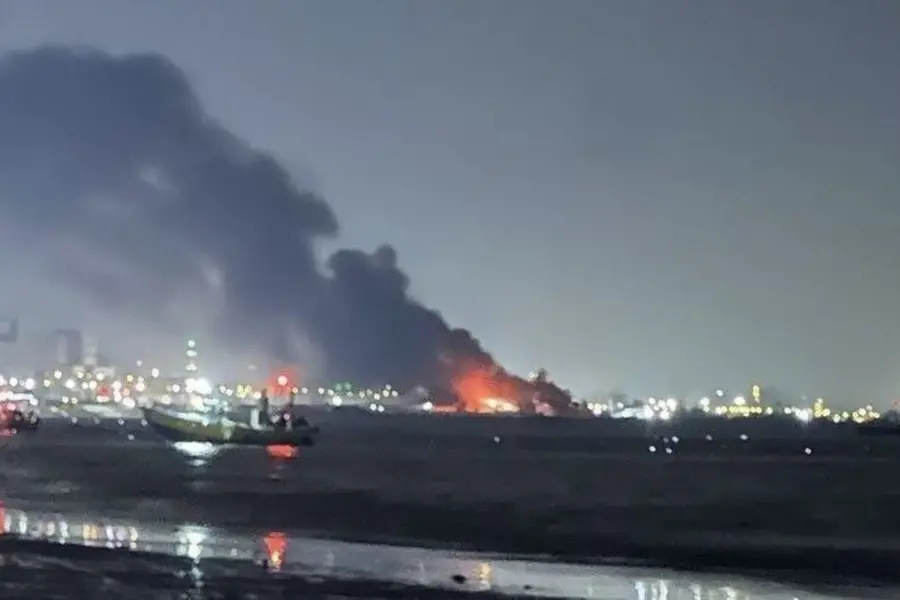
Tehran (Iran): The United States military launched a fourth consecutive day of airstrikes against Iran on Tuesday, simultaneously re-establishing a naval blockade to halt all maritime traffic to and from Iranian ports.
While US President Donald Trump rescinded a previous threat to impose heavy taxes on vessels navigating the Strait of Hormuz, he issued a stark warning. Trump declared that the US would expand its military campaign next week to target Iran’s infrastructure, including bridges and power grids, if Tehran refuses to negotiate.
"Next week it gets really bad for them because next week comes the power plants. Next week comes the bridges," Trump stated during a Fox News broadcast. "We're going to knock out all their power plants. We're going to knock out all their bridges unless they get to the table and negotiate."
CENTCOM targets shipping threats
According to US Central Command (CENTCOM), the recent bombardments sought to diminish Iran's capacity to disrupt commercial maritime transit in the Strait of Hormuz—a vital global corridor for oil and gas where Tehran has repeatedly targeted civilian ships.
Iranian state media documented blasts near the southern port city of Bandar Abbas, the island of Qeshm, and various other sectors. In retaliation, the state-run news agency IRNA reported that Iranian forces executed a drone strike against a military installation in Jordan utilized by American warplanes.
Diplomatic fallout and casualties
The reinstated American naval blockade took effect at 2000 GMT, exactly one hour after the latest aerial strikes commenced. Iranian officials warned that the escalation has effectively derailed ongoing diplomatic efforts. Deputy Foreign Minister Kazem Gharibabadi remarked that the American blockade "has, in a way, dismantled the Islamabad memorandum," referencing a prior agreement intended to pause hostilities for peace negotiations.
CENTCOM Commander Admiral Brad Cooper defended the military action in a statement on Tuesday, highlighting recent Iranian provocations, "Iran has intentionally targeted civilians across the region by attacking seven commercial ships resulting in nearly a dozen civilian crew members killed, missing, or injured. US forces are holding Iran accountable for unwarranted aggression that continues to endanger innocent lives."
Earlier on Tuesday, Iranian authorities reported that US operations hit targets on Qeshm island, four locations in Bushehr (home to the nation’s sole civilian nuclear facility), and a border region adjacent to Iraq and Kuwait. The financial and human toll continues to rise, with an AFP tally indicating at least 28 fatalities in Iran since the US campaign renewed last week.
Multi-front escalation
The maritime conflict intensified as Iran struck two vessels in the Strait of Hormuz, resulting in two fatalities, according to the International Maritime Organization. Additionally, maritime security firm MTI Network reported an explosion on a Norwegian tanker off the coast of Oman, caused by an unidentified device. Kuwait also confirmed that an Iranian missile and drone salvo struck one of its naval ships, injuring four personnel.
Concurrently, Iran's Islamic Revolutionary Guard Corps (IRGC) announced it had launched missile and drone strikes toward Bahrain, targeting a housing complex for US military personnel. Bahraini authorities stated they intercepted multiple "treacherous aerial attacks" and accused Iran of endangering civilians after sirens and explosions echoed through Manama. Jordan also reported intercepting four Iranian missiles.
Shift in US economic strategy
President Trump adjusted his economic approach to the crisis, announcing via Truth Social that he would drop the proposed 20% shipping levy in favor of bilateral arrangements with regional partners.
"I have decided to replace the 20% United States Reimbursement Fee with Trade and Investment Deals that the various Gulf States will be making into the United States," Trump posted.
Israel issues warning
Amid the cross-border strikes, Israeli Prime Minister Benjamin Netanyahu issued a severe warning to Tehran from the southern town of Dimona. Netanyahu cautioned that Israel would retaliate decisively against any aggression.
"Do not count on things remaining quiet if you attack us," Netanyahu warned. "The days are over when someone strikes us and we don't hit back with a decisive blow," he added.
AFP
Published: 15 Jul 2026, 06:25 am IST
Disclaimer: Kindly avoid objectionable, derogatory, unlawful and lewd comments, while responding to reports. Such comments are punishable under cyber laws. Please keep away from personal attacks. The opinions expressed here are the personal opinions of readers and not that of Mathrubhumi.
