
The US military’s new beard ban has sparked criticism from Sikh, Muslim, and Jewish communities, raising concerns over religious freedom and the dignity of minority service members
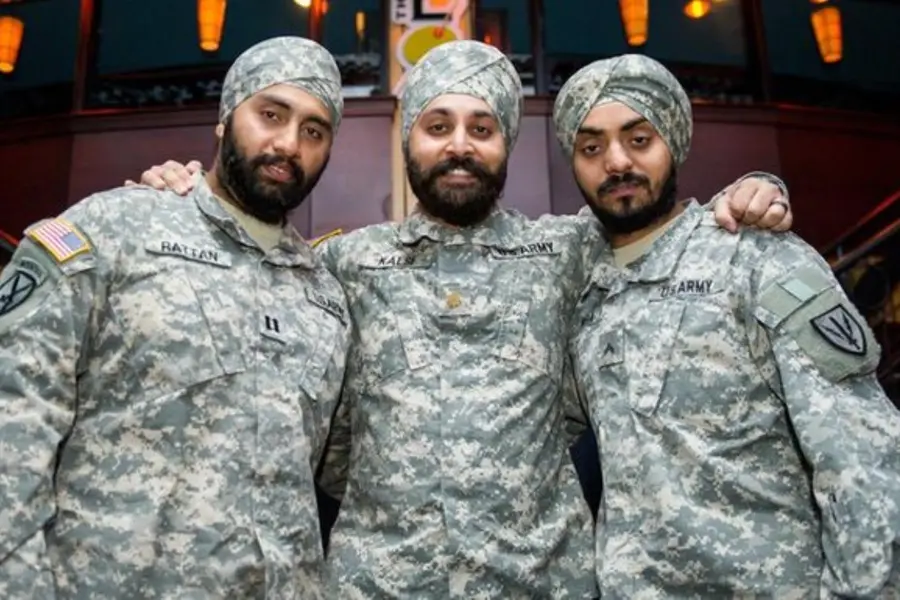
Why has the United States military banned beards, and how does it affect Sikh, Muslim, and Jewish service members? The Defence Department’s new directive, limiting facial hair to only elite special forces, has sparked widespread criticism over religious freedom, minority rights, and the dignity of devout soldiers serving in the armed forces.
Why has the US military restricted beards?
Also Read

The US Defence Department’s recent directive limiting beards in the military has triggered widespread backlash, particularly among Sikhs, Muslims, and Orthodox Jews, whose faiths require facial hair. Announced by Defence Secretary Pete Hegseth on 30 September, the policy rescinds most previously granted beard waivers, allowing exceptions only for elite special forces.
How are civil rights advocates reacting?
Civil rights groups argue the ban undermines decades of progress on inclusion in the armed forces. “This decision is not about discipline or lethality — it strips away the dignity and religious identity of devout soldiers who serve with loyalty and honour,” said Satnam Singh Chahal, Executive Director of the North American Punjabi Association (NAPA). The Sikh Coalition described the policy as “deeply regressive,” while a coalition attorney noted that “for Sikh soldiers, shaving is like cutting off a limb,” referencing a 2022 federal court ruling upholding the right to wear turbans and beards during basic training.
Why is the policy causing concern internationally?
Shiromani Akali Dal (SAD) president Sukhbir Singh Badal urged India’s External Affairs Minister S. Jaishankar to raise the issue with the U.S. administration, highlighting that the policy contradicts the freedom to practise one’s religion — a cornerstone of US democracy. In his letter, Badal emphasised the anguish of Sikhs worldwide and called for an early resolution.
Who else is affected by the beard ban?
The directive could also impact Black troops with medical shaving conditions and other faith groups in the armed forces. Critics argue that forcing service members to choose between religious observance and military service is discriminatory. Former Akal Takht Jathedar Giani Harpreet Singh condemned the policy, recalling the historical contributions of Sikh soldiers in both World Wars.
How has Defence Secretary Hegseth defended the move?
Hegseth stated, “If you want a beard, join special forces. If not, shave.” His remarks were widely condemned as insensitive and dismissive of minority soldiers’ contributions. Faith-based organisations and civil rights advocates are calling for Congressional intervention to protect religious rights in the military.
What does this policy mean for longstanding religious accommodations?
The US military’s grooming rollback threatens to revoke religious accommodations for minority soldiers. Sikh members could previously maintain turbans and beards as part of their faith, following legal victories and Defence Department waivers. The new directive effectively returns standards to “pre-2010” rules, nullifying most exceptions.
What challenges do affected soldiers face?
Sikh, Muslim, and Jewish service members, along with those with medical shaving exemptions, must now choose between compromising religious practices or risking non-compliance with military regulations. Advocates warn that the ban could discourage qualified recruits from minority communities, undermining diversity and inclusion in the armed forces.
Community and legal organisations in the US and India have condemned the policy. SAD chief Sukhbir Singh Badal’s appeal to Minister Jaishankar highlights the international dimension, as Sikh diaspora members advocate for faith-based rights worldwide.
What broader issues does the beard ban raise?
The beard ban debate has reignited discussions about balancing military discipline with religious freedom. It underscores broader concerns over civil rights and minority representation in institutions historically associated with uniformity. Until policy amendments or interventions occur, thousands of devout soldiers may face a difficult choice between service and faith.
Published: 06 Oct 2025, 08:05 am IST
Related Topics
Disclaimer: Kindly avoid objectionable, derogatory, unlawful and lewd comments, while responding to reports. Such comments are punishable under cyber laws. Please keep away from personal attacks. The opinions expressed here are the personal opinions of readers and not that of Mathrubhumi.