
An Iraqi official said the government needed time to reassure the factions and prevent a confrontation between Iraqi security forces and the armed groups.
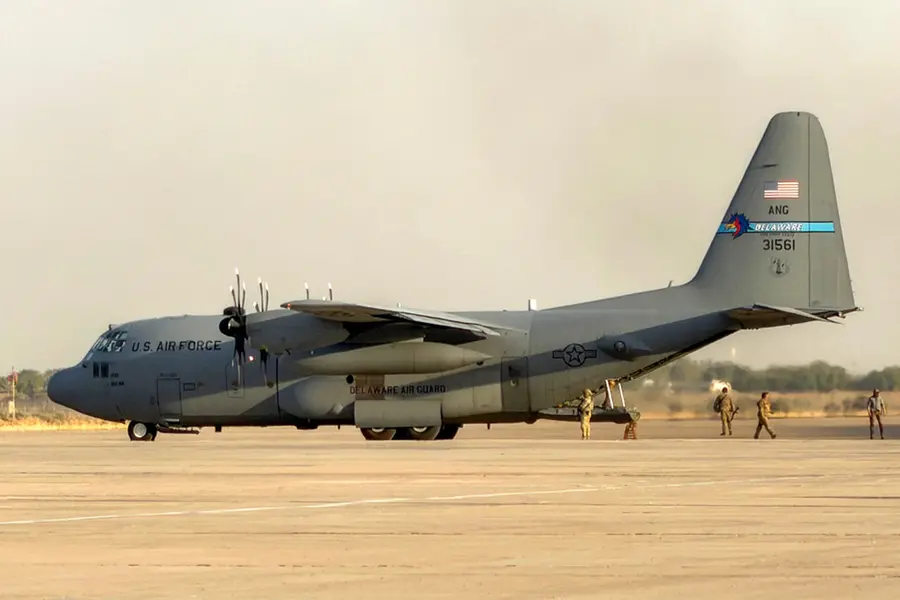
The withdrawal of the US-led anti-jihadist coalition from Iraq is putting pressure on the government to disarm Iran-backed armed groups, a challenge for a country caught between its two powerful allies, Washington and Tehran.
Iraqi Prime Minister Ali al-Zaidi, who took office earlier this year with US backing, has pledged that the pro-Iran factions would hand over their weapons to the state following the coalition's departure on Wednesday.
However, disarming the groups is proving far more complicated than political assurances suggest.
Iraq has long been a battleground for competing US and Iranian interests, with both countries exerting influence over major political decisions and government formation.
The ongoing Middle East war has further complicated the situation, with Iran-backed groups in Iraq targeting US facilities in the country and across the region hundreds of times.
Iran unlikely to agree to disarmament amid regional war
Several senior Iraqi officials told AFP that Tehran would not accept the disarmament of the factions, particularly while the regional conflict continues. Iranian officials have reportedly conveyed that position clearly.
"If there's a deal between the US and Iran, I think that this whole issue becomes very easy to deal with," Iraqi political analyst Sajad Jiyad said.
However, Jiyad said "Iran has been very clear that while there is a conflict going on, they cannot give up their strategic capabilities", including the Iraqi groups and "their ability to attack US interests in Iraq and the region".
At the same time, Tehran does not want Iraq to descend into instability, making the situation a "tricky situation", he said.
"Iran's agenda is to reach a deal with the US, so that these groups will naturally reduce their visibility and activity," without surrendering their capabilities.
The armed factions, meanwhile, want assurances that Washington will not target them before considering handing over their weapons.
Jiyad warned that without progress on disarmament, the US would be unlikely to offer a long-term commitment to refrain from targeting the groups.
"The US is not going to make a longer-term commitment of not targeting them", he said.
Washington is expected to continue applying diplomatic and economic pressure through sanctions, alongside occasional military strikes.
Iran-backed groups seen as a 'liability'
The US-led coalition was deployed to Iraq and Syria in 2014 to fight the Islamic State (IS) group, which had seized large parts of both countries and committed atrocities.
Both the coalition and Iran-backed armed groups fought against IS, despite their broader geopolitical differences.
Following IS's defeat in Iraq in 2017, the Tehran-backed factions demanded the withdrawal of US troops and began targeting them with drones and missiles. The attacks triggered retaliatory US strikes that killed several commanders of the groups over the years.
Washington's pressure on successive Iraqi governments to disarm the factions intensified after they intervened in support of Palestinians during the Gaza war in 2023 and later backed Tehran during the Middle East conflict.
Jiyad said the coalition's withdrawal was unlikely to bring about immediate disarmament.
"We are not going to get disarmament... but there has to be some sort of progress and some plan," he said.
"What is probably going to happen is the process begins" towards a solution, but it would take time and require "trust-building measures".
The armed groups believe the Iraqi government cannot protect them from US attacks, while the government views them as a "liability," Jiyad said.
The factions have also faced accusations of attacking Saudi Arabia recently, further complicating Baghdad's efforts to manage their activities.
Iraqi government lacks a disarmament plan
While some armed groups have expressed willingness to surrender their weapons, several powerful factions have refused to do so.
A diplomatic source in Baghdad told AFP that the government "does not even have a plan" for how it intends to disarm the groups.
Two senior politicians told AFP that Zaidi, who is relatively new to politics, had repeatedly said he was prepared to "confront" the factions if they refused to disarm.
Tensions escalated over several weeks before an unannounced truce was reached through the intervention of senior politicians. They are now seeking to negotiate a settlement.
An Iraqi official said the government needed time to reassure the factions and prevent a confrontation between Iraqi security forces and the armed groups.
Kazem al-Fartoussi, spokesperson for the Kataeb Sayyid al-Shuhada armed group, said the factions did not want a confrontation with the state.
"there will be no winners", he said.
However, Fartoussi maintained that the groups would not surrender their weapons without political concessions.
"Our weapons are precious, so we have said these weapons are in exchange for sovereignty," including the withdrawal of foreign troops and an end to American political and economic interference.
He said the factions were negotiating with the government over the possibility of "regulating" their weapons and redefining their relationship with the state.
However, he expressed distrust of Washington and its intentions.
For the Americans and Israelis, their objective is "nothing other than eliminating the factions, not the weapons," Fartoussi said.
He added that if the issue was the factions' "existence", then "we reject any discussion".
Published: 30 Sept 2026, 07:47 am IST
ABOUT THE AUTHOR

Related Topics
Disclaimer: Kindly avoid objectionable, derogatory, unlawful and lewd comments, while responding to reports. Such comments are punishable under cyber laws. Please keep away from personal attacks. The opinions expressed here are the personal opinions of readers and not that of Mathrubhumi.